comments 9

Taman Baca Kesiman

I know that Denpasar is an urban city which surely comes with creative spaces, but in my clouded touristy mind, I thought those spaces are hubs for traditional arts – the barong dancers, the painters, the carvers. It wasn’t until a friend invited Twosocks and I to Taman Baca Kesiman that I realized that the urban art scene is alive and well in Denpasar.

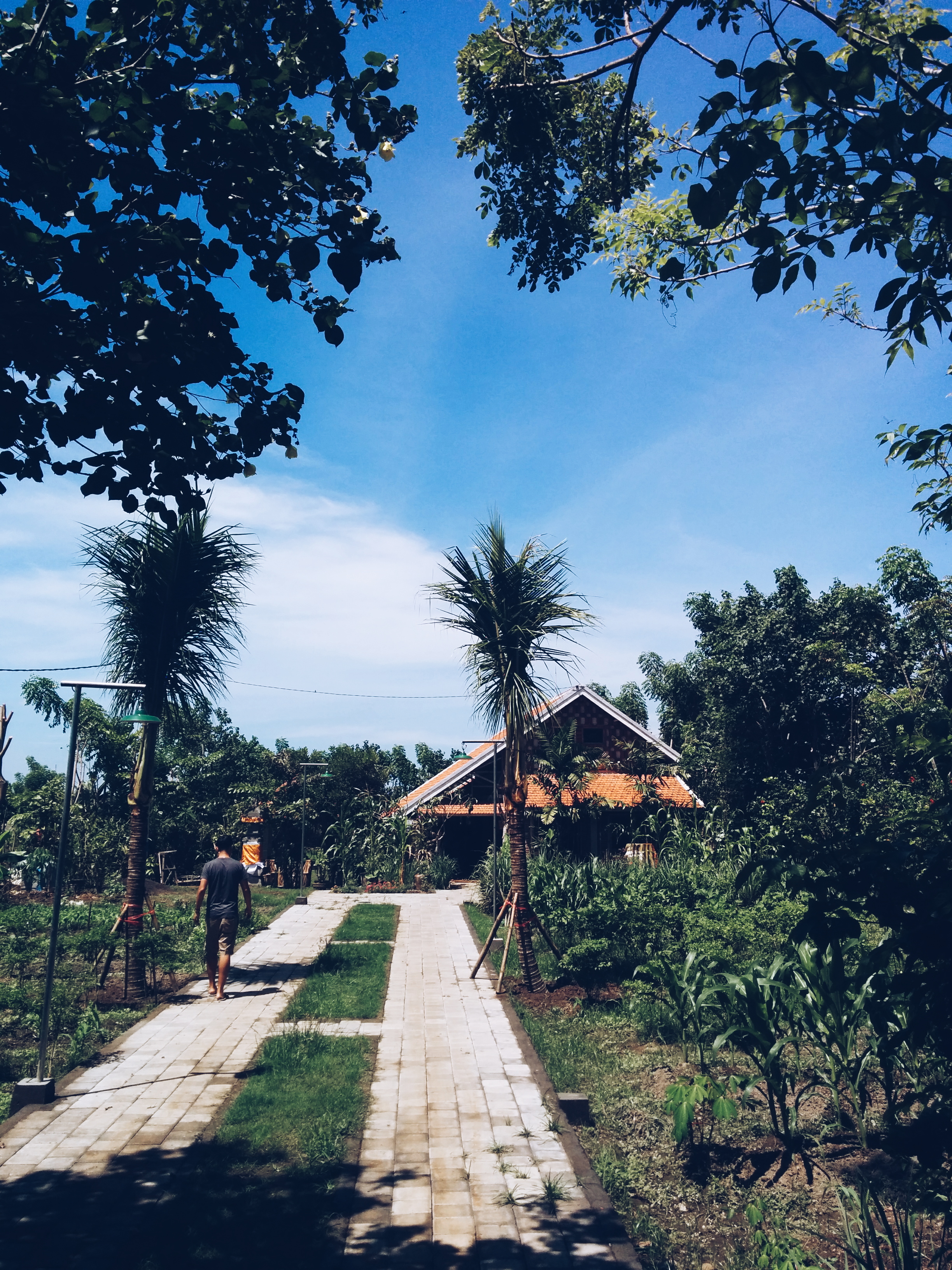
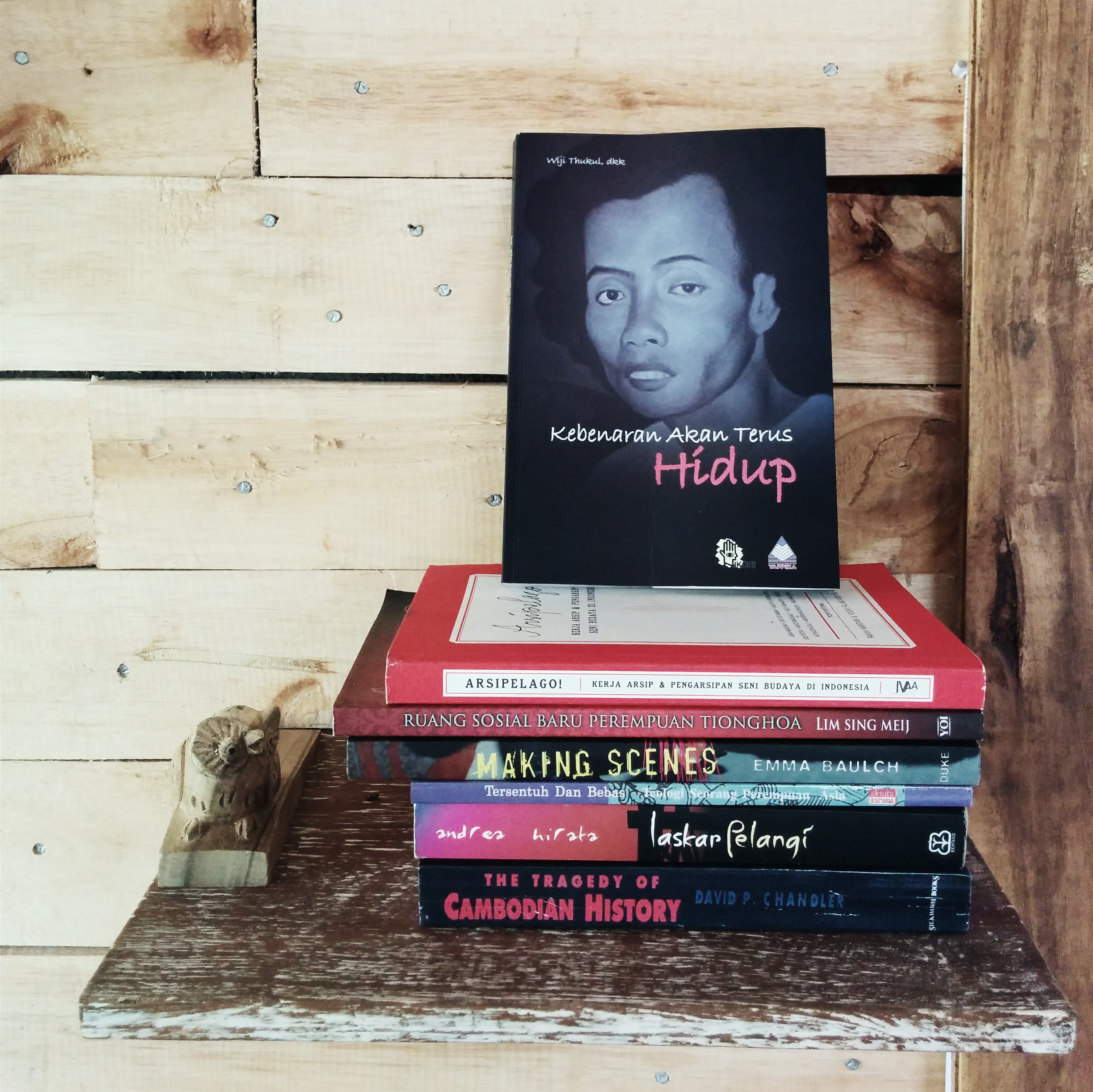
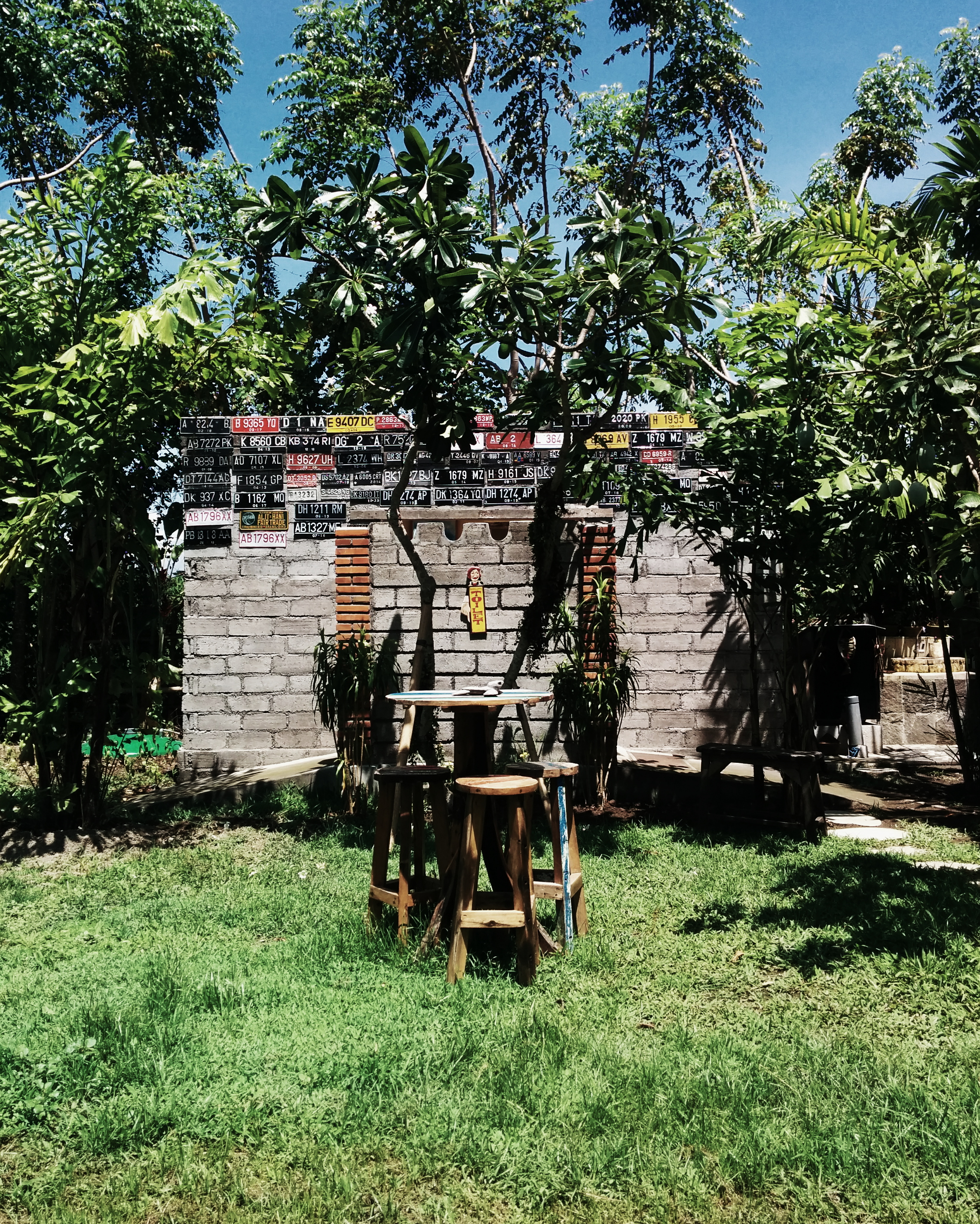
Nestled nearby the Sanur area, Taman Baca Kesiman offers a breezy room surrounded by shelves brimming with books that made me drool – a complete collection of Pramoedya Ananta Toer and YB Mangunwijaya’s works, Planet Banksy, an alternative take to the history of the Communist Party in Indonesia, punk subculture documentation, and many more. We heard that the space is founded by a renowned human rights activist in Bali, which would explain the impressive collection of social science books. The library area is surrounded by outdoor sitting areas, a tiny cafe, a lush frontyard where the owner practices permaculture, and an open backyard where discussions on films as well as concerts by Balinese indie bands take place. The vibe reminds us of a quieter Kineruku in Bandung, a place where we could also easily while the hours away with interesting books. We will definitely return the next time we come to Denpasar, hopefully in time to see a concert or discussion.

Processed with VSCOcam with a5 preset

Processed with VSCOcam with a6 preset

Processed with VSCOcam with a6 preset

Processed with VSCOcam with se3 preset

Processed with VSCOcam with a6 preset

Processed with VSCOcam with hb1 preset

Processed with VSCOcam

Processed with VSCOcam with se3 preset

Processed with VSCOcam

Taman Baca Kesiman
Jl. Sedap Malam 238
Kesiman, Bali


comments 7

An Afternoon of Cups and Pages

To ask someone to talk about a book they love is to ask someone to reveal a piece of themselves.

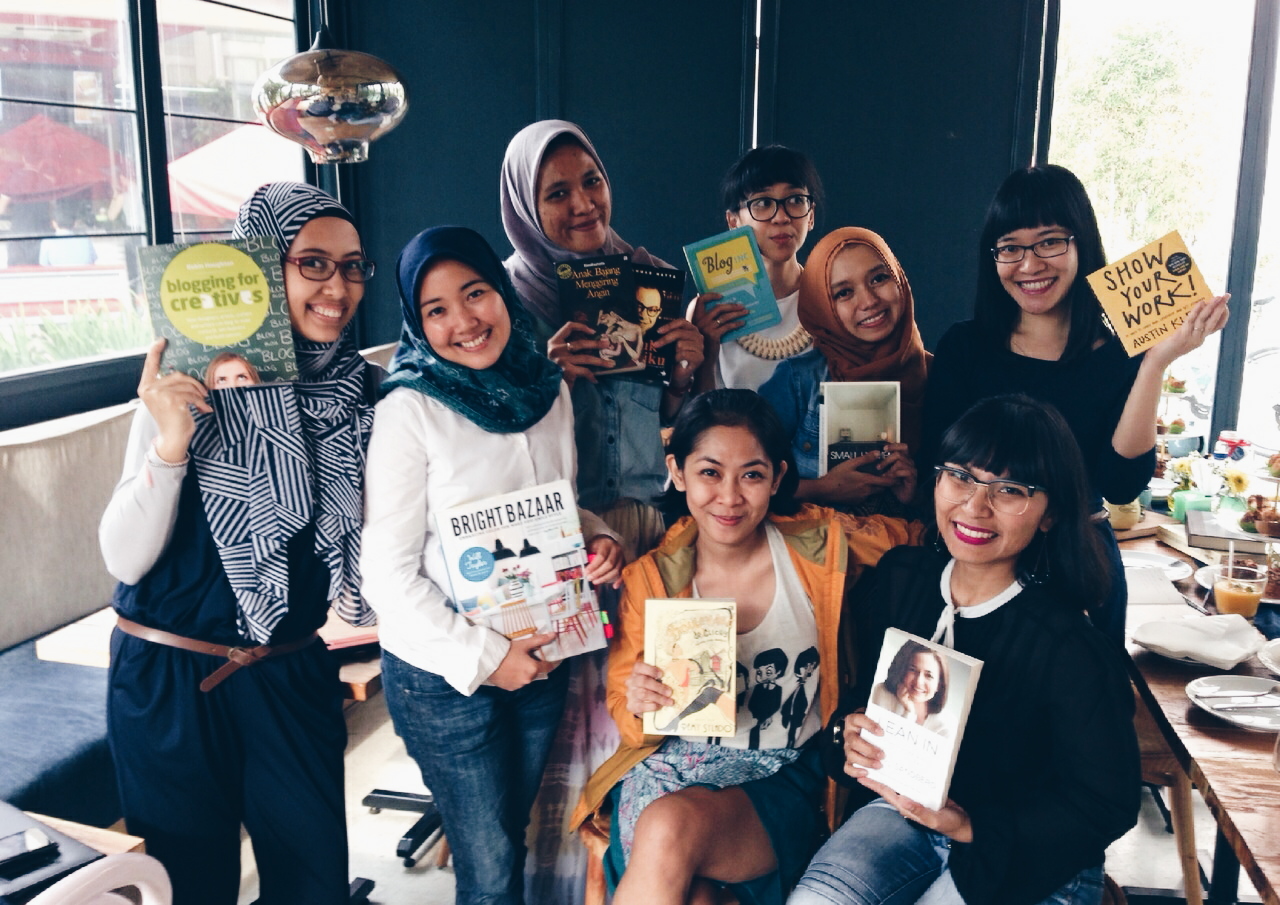
I didn’t know this when Nike, Miranti, Dian and I came up with an idea for Cups and Pages, an afternoon of small gathering on books. We simply thought that it would be fun to meet people behind the blogs we read and share stories about books that inspire our blogging practice over cups of comforting drinks at Casadina, one of my favorite cafes in Jakarta. We weren’t wrong about the fun part, but really, we ended up knowing much more about the women around the table through their favorite boks although some of us met only for the first time.

Photo courtesy of Dian Elvira Rosa

Photo courtesy of Dian Elvira Rosa

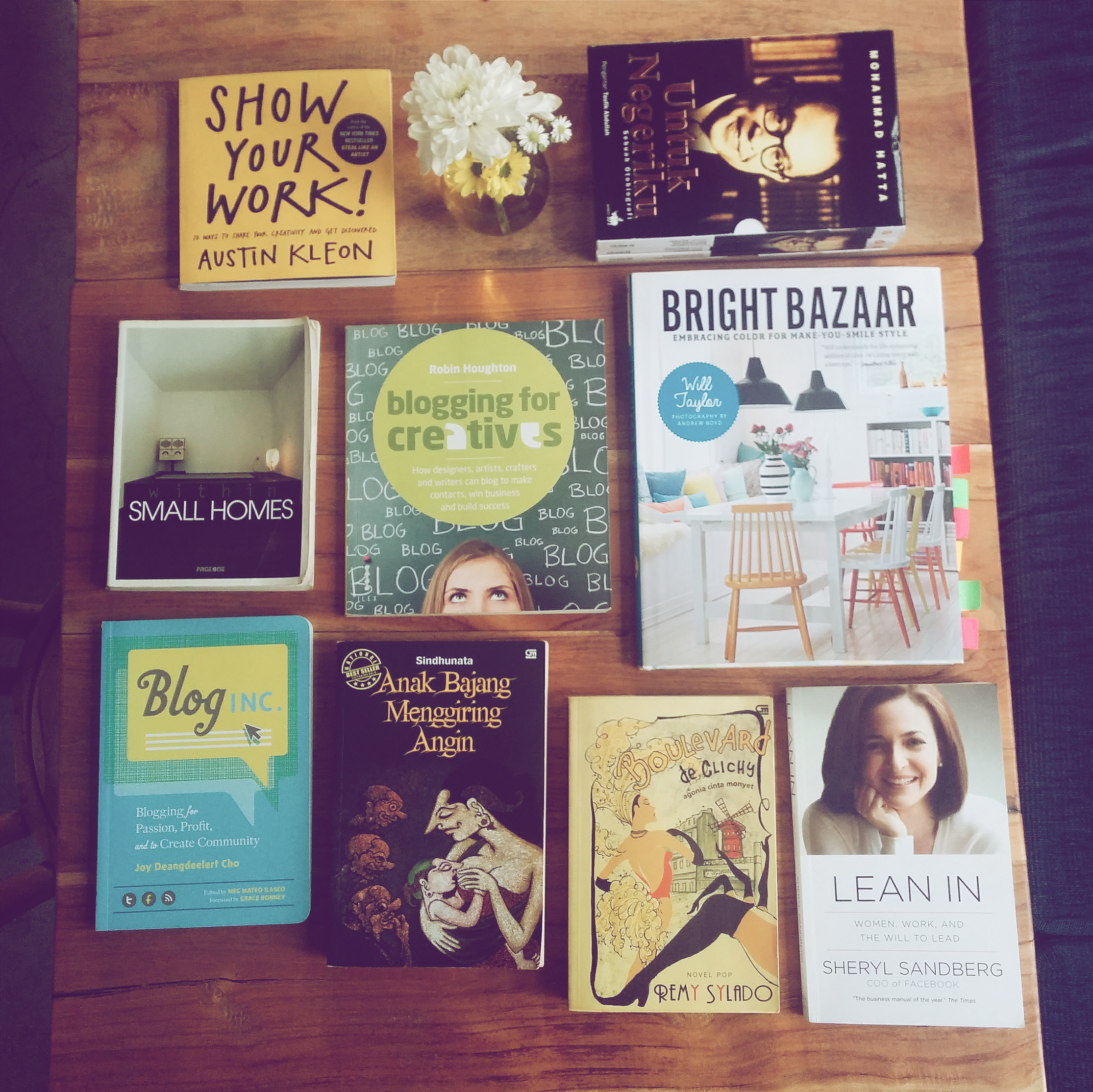
You could tell right away that Dian and Tia are designers, for instance. Dian started Kemala Home Living, her own line of home décor and tableware, last year, so it wasn’t a surprise that she brought a book about how to use colors in decorating a home. Dian loves Will Taylor’s photographs and advice in his book, Bright Bazaar, but most of all, she kept reading because of his friendly way of writing. Tia, an architect who blogs at Rumah Dua Pohon, brought a photo book called within Small Homes, which reminded me that images could tell as powerful a story as words.

It was also easy to see how Nike and Miranti collaborates so well in their blog, LivingLoving. They both talked about books that become their blogging bibles – Nike likes Joy Cho’s Blog Inc because it emphasizes the importance of blogging as a way to build communities, while Miranti finds many practical tips to design and operate a blog in Robin Houghton’s Blogging for Creatives. No wonder I enjoy reading LivingLoving so much; not only it is one of the best designed blogs in Indonesia, I also always learn about other Indonesian creative from their events and stories.

Processed with VSCOcam with a6 preset

Vina and I shared the books that broke our own inhibitions to write. Vina, half of the duo behind Bracodemag, said that Sheryl Sandberg’s Lean In inspired her to write about feminism in her daily life as an urban, middle class woman. The book was bashed by many feminists for only talking about a white, upper class woman’s struggle in advancing her career, while neglecting the realities of women from different backgrounds, but for Vina, someone could only speak truthfully about their own reality because it is the only one they experience. I found inspiration in Austin Kleon’s Show Your Work, which breaks the myth that you should only show a final, polished piece of work instead of a work in progress. Sharing your process, questions, and inspiration can help your audience get a sense of who you are and even spark collaboration with like-minded people.

Titiw agreed with me. One of her favorite Indonesian authors, Remy Sylado, told her that the best thing one can do is to continue writing as long as we could because there is a chance that someone will find it helpful. That’s why she pushes all desires for perfection and keeps blogging as often as she could, on topics ranging from her travels to her wedding preparation, for sharing is the ultimate way of caring.

Photo courtesy of Nike Prima

Photo courtesy of Nike Prima

Tyas maintains her personal blog to reflect out loud and came with books that helped her face with challenges that she is facing. Bung Hatta’s tetralogy, Bagimu Negeri, reminded her of one’s responsibilities to contribute to their nation, while Romo Sindhunata’s reinterpretation of the Ramayana epic opened her eyes to the laws of nature that humans might not be immediately aware of.

Our small gathering ended with new books for my reading list and new friends I would love to keep in touch with. Someone said to me lately that one shouldn’t start a conversation with a stranger with a question of what they do, for someone is defined by so much more than how they earn their living. After our afternoon of cups and pages, I might start asking them what their favorite books are instead.

Processed with VSCOcam with hb1 preset

Jakarta, December 2014

Gypsytoes

P.S: For more stories of the first Cups and Pages, visit Tyas’s blog and LivingLoving.

P.P.S: We had the second Cups and Pages themed ‘The Object of My Affection’ on Valentine 2015. You can read Miranti’s account of the event on her and Nike’s blog, LivingLoving.

This post was written during the 4-Hours Writing Challenge at POST, a space for books, gatherings and all things creative in Pasar Santa that I started with Twosocks and our friend Steven.

comments 17

Wajah yang Tak Enak Dilihat

Pria setengah baya penjual nasi goreng itu mengaduk-aduk nasi goreng dengan ketangkasan yang didapat dari pengalaman bertahun-tahun. Di lehernya tergantung handuk yang sudah kecoklatan. Pada handuk itu ia mengelap keringat yang sesekali bercucuran di dahi. Saya duduk memperhatikannya. Seorang pejalan yang cekatan dalam memainkan kamera tentu akan mendapatkan momen bagus untuk mengambil gambar. Dengan sudut yang tepat, sedikit edit sana sini, ditambah kata-kata yang menggugah, akan tercipta sebuah foto wajah kemanusiaan yang dapat menerbitkan haru. Akan tampak seorang bapak pekerja keras, yang menghidupi keluarganya dengan berjualan hingga menjelang tengah malam, dengan anak-anak yang mungkin bisa disekolahkan tinggi dari hasil tabungannya berjualan nasi goreng, dan yang dari mulutnya akan muncul kebijaksanaan seorang penduduk setempat yang ramah dan bersahaja. Pak Heru, begitu namanya, memang tak berkeberatan untuk sekadar omong-omong dengan pelanggannya.

Namun, seperti banyak hal lain, kenyataan sering tak seindah gambar yang ditampilkan.

Semua dimulai dari perbincangan tentang sebuah tanda di pintu masuk komplek perumahan di seberang gerobak nasi goreng Pak Heru. Saat itu menjelang tengah malam sedikit di pinggir kota Denpasar. Di depan komplek perumahan itu terpampang tulisan besar-besar, “Pemulung dilarang masuk”. Saya ingat pernah memperhatikan tanda larangan masuk kepada pengemis, pengamen, atau penjual MLM, tetapi larangan untuk pemulung sedikit baru untuk saya. Saya bertanya kepada Pak Heru apa ada alasan khusus soal ini.

“Alasannya gampang saja, Dik. Mereka tak enak dilihat. “

Jawaban yang membuat nasi goreng yang saya kunyah terasa hambar. Ia masih melanjutkan,

“Lagipula, Dik, ini komplek perumahan, hilang asrinya kalau banyak pemulung berkeliaran.”

Pikiran saya melayang ke wajah-wajah yang saya pikir tak enak di pandang dalam arti sesungguhnya. Saya katakan padanya wajah Fadli Zon, atau Fahri Hamzah, jauh lebih menimbulkan geram dibandingkan banyak pemulung. Cukup wajahnya saja, belum kalau mereka bicara hal-hal yang membuat saya kepengin mengayunkan tinju dengan membabi buta.

“Tapi mereka itu pejabat, Dik, ya beda.” Pak Heru masih menguji kesabaran saya.

Saya terbayang jika seorang pejabat betulan datang ke komplek perumahan itu. Tentu ia akan disambut baik, sedegil apapun ia, dengan barisan pegawai pemda yang membungkuk-bungkuk, barisan hansip, kelompok petugas dengan seragam batik lengkap dengan lagak penting dan HT ditangan, atau tari-tarian anak kecil yang kemudian mengalungkan bunga.

Pembicaraan berlanjut dengan Pak Heru yang berkata bahwa konon para pemulung sering mencuri di komplek perumahan. Saya katakan maling bisa siapa saja, tukang ojek, tukang nasi goreng, pemuda pengangguran, pemuda mata keranjang, penjual parfum, macam-macam. Kalaupun ada pemulung yang mencuri, kasihan betul mereka. Kesalahan satu orang harus ditanggung seluruh kelompok. Karena nila setitik rusak susu sebelanga. Mungkin karena terlalu banyak minum kopi sebelumnya, saya jadi sedikit merangsek dengan gusar. Saya katakan pemulung justru bisa bantu-bantu urusan sampah di Bali yang semakin kacau. Setiap hari lebih dari 10,000 meter kubik sampah dihasilkan dengan hanya kurang dari setengahnya yang bisa ditangani pemda setempat. Tempat pembuangan akhir Suwung sudah semakin tak terurus. Sampah menggunung semakin tak kuasa lagi untuk dipisahkan mana yang bisa didaur ulang mana yang tidak. Semakin lama gunung sampah semakin meninggi,  menimbulkan bau dan penyakit.

“Sudahlah, Dik, lagi pula, pemulung-pemulung itu pendatang semua di sini.“

Baiklah. Ini sudah semakin tak masuk akal. Urbanisasi adalah masalah sendiri yang tidak lantas membuat pelarangan masuk komplek perumahan untuk mencari rezeki menjadi patut. Bahkan Pak Heru sendiri juga adalah pendatang. Bersama keluarganya ia datang ke Bali dari Pasuruan belasan tahun lalu dan menjadikan Bali rumahnya. Lokal, non lokal, pendatang, penduduk asli, memiliki batas-batas yang semakin tipis sekarang ini. Dan mengapa ini menjadi masalah betul? Bahkan hampir seluruh penduduk Bali pun pada sebuah masa adalah pendatang.

Saya membayar nasi goreng lantas pamit. Dari jauh saya memperhatikan Pak Heru yang sedang merapikan dan mencuci piring kotor. Dari jauh, ia kembali tampak sebagai sosok pria setengah baya yang bersahaja, pekerja keras, dan akan menimbulkan haru bila difoto dengan sudut, rekayasa gambar, dan kata-kata yang tepat.

Di perjalanan pulang saya membayangkan foto seorang pemulung tua, dengan kerut di wajahnya, luka busuk di kaki, mengais sampah yang menggunung, dengan keranjang sampah yang dipanggul hingga tubuhnya membungkuk. Sebuah foto berwarna hitam putih yang dibingkai indah dan ditampilkan di sebuah galeri foto yang sangat berkelas. Pengunjung datang dengan pakaian rapi, mengamati dan memberi komentar pintar tentang teknik pengambilan foto serta wajah kemanusiaan yang ditampilkan. Di sebuah galeri indah, di antara denting sampanye dan tawa genit, sang pemulung menjadi sebuah karya indah yang dikagumi.

Saya lantas membayangkan jika sang pemulung keriput itu betul-betul muncul di galeri tersebut. Dengan pakaian seperti saat di foto, tidak mandi seperti di foto, dengan bau sampah seperti di foto, dan luka busuk di kaki yang tidak diobati. Bagaimanakah sang pengunjung akan bereaksi terhadap wujud nyata karya seni yang baru saja dikaguminya itu? Apakah sang pemulung mendapat tempat di galeri itu hanya saat ia ada di dalam bentuk foto dan ide? Karena dalam wujud sebenarnya, ia terlalu tak enak untuk dilihat.

Saya duduk di jok belakang taksi memandangi lampu jalan yang berjajar-jajar. Lampu terkadang berlalu cepat, terkadang lambat, tergantung kecepatan taksi. Pikiran saya melompat-lompat dari wajah pak Heru, wajah pemulung tua, wajah Fahri Hamzah, dan segala konsepsi soal batas-batas kepatutan dan stereotip kelompok masyarakat itu. Malam menjadi panjang karena kopi yang terlalu banyak saya minum. Sayang saya tak punya cukup kemudaan dan kemarahan untuk mencabut larangan masuk untuk pemulung di komplek perumahan tadi.

Twosocks

Foto depan diambil dari karya Rikki Riswansyah ( Rozeki.deviantart.com)

comments 2

The Blue Book Travels Too

We arrived at the doors of Portibi Farm with two tall backpacks on our shoulders. Jocean, the head of the Portibi clan, welcomed us with hugs and a frown. We were just staying for the weekend, but our carry-ons were as big as they were when we stayed for four days. It’s the books, you see. Whenever we travel, Twosocks and I would spend most of our packing time to choose which books would come for the journey and the same happened for this short weekend getaway.

The first book we chose was our own blue book, and no, it wasn’t because we are so narcissistic we read our own book when we travel. Half of the book was written in the Portibi Farm last year, so it is only natural for the Farm to have a copy of the book. The next books selected were the books we were currently reading – Terry Pratchett’s A Slip of the Keyboard for me and FX Toole’s Million Dollar Baby for Twosocks. It became more challenging to select the next ones, books we wanted to read after we were done with the current reads. We settled on borrowed books, Najib’s copy of Cooked by Michael Pollan for me and Budi Darma’s Orang-Orang Bloomington for Twosocks, borrowed from a fellow traveler. Then came the difficult question: which books should we take in case we want a change of mood? We rummaged through our books and stared at our shelves, hemming and hawing, picking and unpicking, until I crammed Roald Dahl’s BFG in my backpack and Twosocks slipped in Frank Sinatra Has a Cold. So yes, our bags were big and heavy, but they were heavy with adventures and friends.

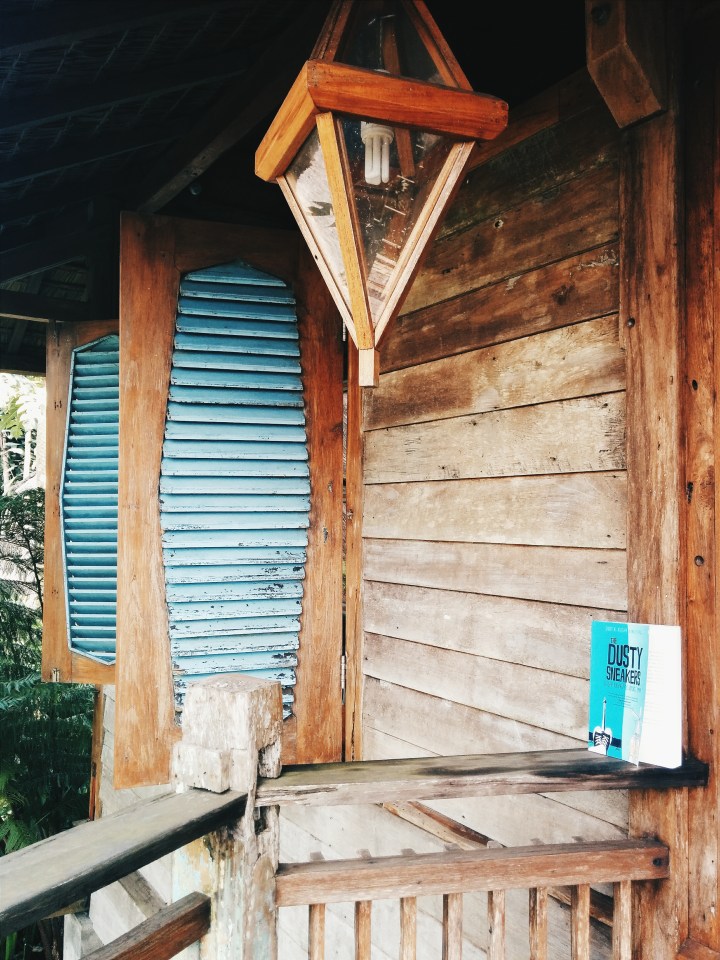
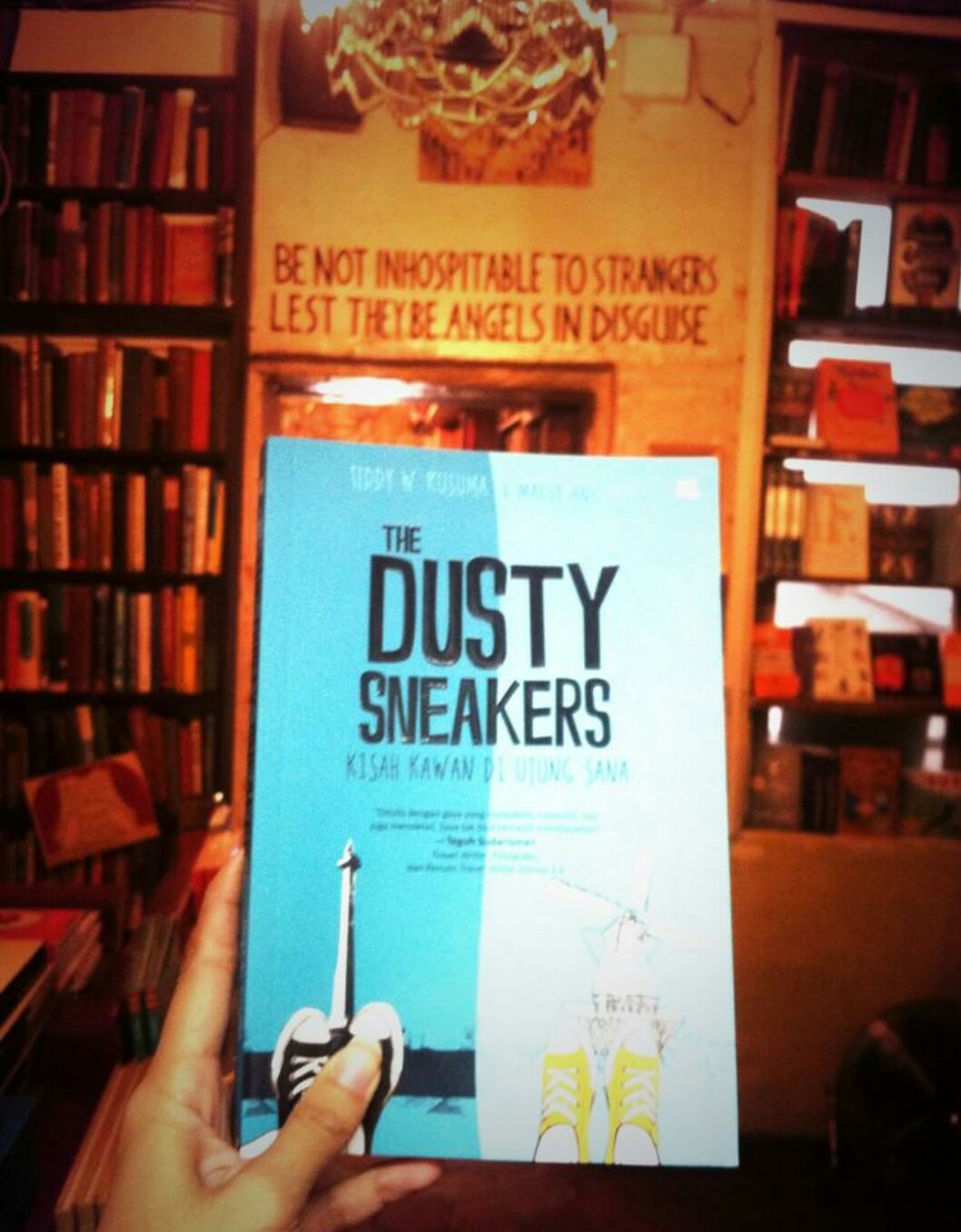
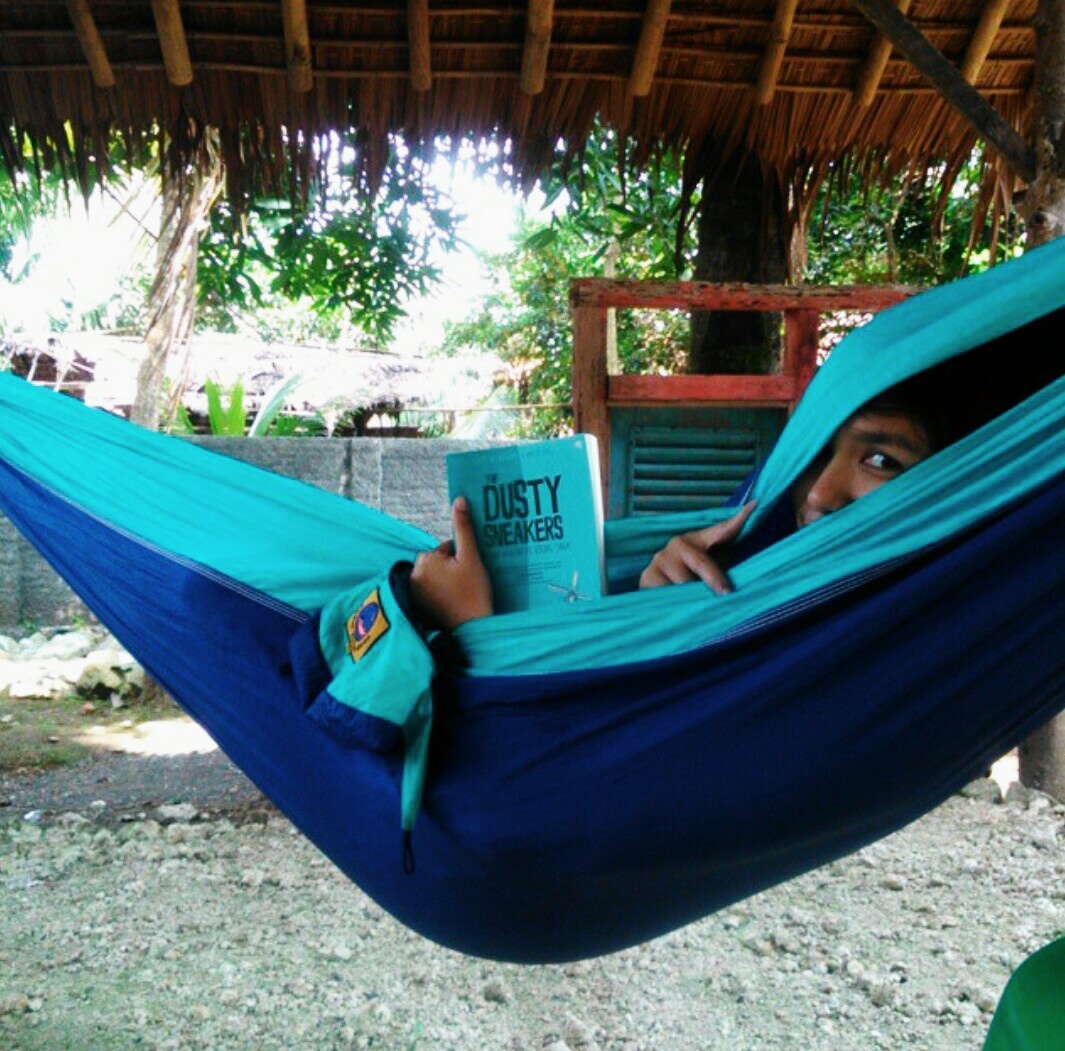
Books really are excellent companions for travelling. A book could bring you friends when you travel alone and solitude when you travel in groups; it offers you adventures while you are waiting to move or sends a wave of calm when you yearn to stay still. A book on the place you’re traveling to can shed a different light to what you’re seeing, a familiar story can curb homesickness, and fantastical tales helps you experience a world from someone else’s eyes. Knowing this, we are ecstatic to find that there are those who trusted our blue book to become their traveling companions and can’t help but share some photos of where The Dusty Sneakers: Kisah Kawan di Ujung Sana has travelled to.

The Dusty Sneakers book_Shakespeare and Co

In Paris with Yuki, our lovely friend who took the blue book to Shakespeare and Co, a bookshop I hold most sacred and is the subject of my first chapter in the book. I was so moved when I saw this, there were tears involved.

The Dusty Sneakers book_Komodo

In Komodo Island with Vindhya. I’ve traded sand and sea for trees and soil this year, but now I really yearn for the beach!

The Dusty Sneakers book_Batu Karas

In Batu Karas with Vira, where the hammock matches the book perfectly.

The Dusty Sneakers book_Uluwatu

In Uluwatu with Iin, who has read the book twice.

The Dusty Sneakers book_Ubud

In Ubud with Vina, during the Ubud Readers and Writers Festival.

The Dusty Sneakers book_Sydney

In Sydney with Ben. You would think that book’s mortal enemy is water, but not for the blue book!

Other than seeing the blue book travel, we also felt honored finding readers that have taken the time to write reviews or stories of their reading experience: Luckty the book blogger; Sastri, the traveling woman of learning; Ayu, who lets books swallow her up; and of course, the fellows on Goodreads.

Thank you, readers. Because of you the blue book travels too, even more than we do. Every time we see a review, a tweet, or an Instagram photo with #thedustysneakersbook tag, our hearts skip a beat. From the bottom of our quivering hearts, thank you.

Your Gypsytoes