comments 22

Tahun dengan Corat-Coret di Dinding Kamar, Mungkin.

Maesy dan saya belakangan punya kebiasaan baru. Satu atau dua kali seminggu kami memulai hari di sebuah kedai kopi di wilayah selatan Jakarta. Sebelum jam tujuh kami sudah mandi bersih dan berangkat. Saat kami datang, kedai masih sepi. Barista kerap terlihat masih mengantuk. Suatu kali ia bahkan sangat mengantuk dengan muka teler. Kantung matanya seperti kemasukan kelereng. Pesta semalam sedikit gila-gilaan, begitu katanya.

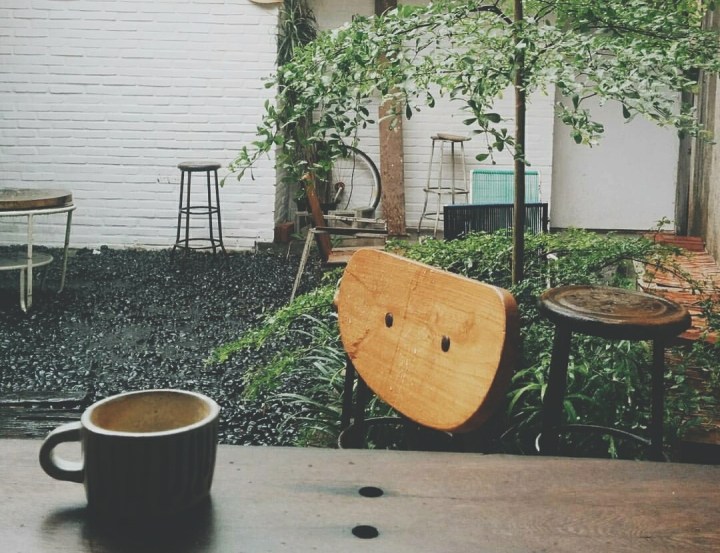
Memulai hari di sana dan di rumah sebetulnya sama saja. Kami minum kopi dan omong-omong ringan. Terkadang soal pekerjaan, tapi lebih banyak soal hal lain. Soal buku, teman, atau sekadar adu jahil. Tetapi beberapa waktu lalu, sebuah pagi di sana menjadi cukup istimewa. Di antara percakapan tiba-tiba tercetus sebuah gagasan baru untuk kami menulis bersama. Semuanya dimulai dari sebuah esai yang kami baca di bangku kayu dekat jendela, Memory Lane judulnya. Esai itu bertutur soal perjalanan darat jarak jauh sebuah keluarga serta soal kenangan masa kecil. Esai itu ditulis dengan penuh nostalgia, sehingga kami ikut teringat akan memori-memori kami sendiri, soal remah makanan penuh micin di jok belakang, permainan-permainan kecil untuk membunuh waktu, tangan mungil yang dijulurkan keluar jendela, dan lain-lain. Saat membincangkannya, Maesy — yang di atas kepalanya kerap timbul bola lampu — tiba-tiba muncul dengan ide sebuah novel pendek. Tidak hanya ide cerita, tapi juga bagaimana ia akan disampaikan.

Maesy selalu lebih nyaman menulis dalam bahasa Inggris. Buku kami yang lalu, walau kami sangat bergembira akannya, tetap memiliki ganjalan. Itu disebabkan tulisan Maesy, mau tak mau, harus saya terjemahkan. Sekeras apa pun saya berusaha, tentu ada suara Maesy yang gagal saya sampaikan dengan tuntas. Pagi itu di kedai kopi, di mana sinar matahari terasa hangat di kulit, Maesy muncul dengan sebuah plot cerita yang dapat disampaikan dengan dua bahasa, dari dua sisi yang saling melengkapi. Tentu ide ini masih ruwet di kepala, tapi kemunculannya tetap kami sambut dengan sulangan dua gelas kopi. Kami bersalaman dan menjalani sisa hari dengan berbinar.

Terlepas dari apakah ini akan berujung pada sebuah karya jadi atau tidak, saya menyambutnya juga karena prospek melakukan kerja penulisan buku bersama lagi. Buku pertama kami ditulis lebih dari setahun yang lalu. Karenanya, timbul juga rindu kami akan prosesnya. Saat-saat Maesy menghias tembok kamar dengan post-it aneka warna, saat saya cemas ketika Maesy membaca naskah awal dengan kening yang berkerut, saat kami menulis bersebelahan hingga larut, dengan Kings of Convenience, Tom Waits, Sidney Bechet, juga poci-poci teh yang diisi lagi, lagi, dan lagi.

Pertengahan Desember lalu, bulan di mana Jakarta terasa masuk akal, kami teringat betapa kami senang membuat karya tulisan bersama. Betapa ia adalah proses panjang yang menyenangkan sekaligus mendekatkan kami. Di bulan Desember itu kami menulis untuk Pindai, sebuah portal yang memuat tulisan-tulisan non-fiksi naratif. Kami menyukai situs yang digagas anak-anak muda di Yogyakarta itu. Ia mengobati rindu pembaca non-fiksi akan tulisan berbentuk narasi panjang dan mendalam. Beberapa tulisan di sana, yang kemudaan penulisnya membuat kami merasa renta sekali, masih kami bicarakan jauh sesudah membacanya untuk pertama kali. Ada tulisan Dea Anugerah soal dampak karya Proust pada kepenulisan seseorang, juga tulisan Dewi Kharisma Michellia soal penerbit buku independen — Marjin Kiri dan Kobam — yang setia bekerja di pasar yang sepi, juga beberapa tulisan yang lain. Saat Fahri Salam, editor Pindai, mengajak kami menulis di sana, kami tak perlu waktu lama untuk mengiyakan.

Di sana kami menulis soal amatan kami terhadap perkembangan tulisan perjalanan di Indonesia. Soal apakah jenis tulisan ini masih bisa berkembang dalam hal kualitas dan keberagaman, atau ia akan semakin gaduh dengan promosi pariwisata, deskripsi tempat yang melulu indah, atau orang lokal yang melulu bijaksana. Proses menulisnya menyenangkan, mulai saat menyusun argumentasi, mencari referensi yang pas, mewawancarai Windy Ariestanty dan Farid Gaban, mendengarkan ulang rekaman percakapannya, membangun kerangka tulisan, hingga menyelesaikannya. Dalam prosesnya, sedikit perselisihan tentu terjadi. Ini lebih karena cara menulis saya yang main terobos sementara Maesy memiliki obsesi berlebih pada kematangan struktur sebelum bergerak maju. Namun akhirnya, saat di penghujung Desember tulisan itu selesai, kami bergembira akan dua hal, menyelesaikan tulisan itu dan menyelesaikannya bersama. Untuk kami, ia menjadi kado tutup tahun yang manis.

Tentang rencana menulis novela, tentu ini masih akan menjadi perjalanan panjang. Mungkin setahun, mungkin dua tahun. Kami bahkan tidak tahu apakah ia akan berhasil diselesaikan atau akan terlantar begitu saja. Banyak hal yang kami mulai bersama dan kandas, seperti halnya banyak hal yang kemudian berbuah manis. Saya teringat sebuah coret-coret awal naskah novel tentang kakek penggerutu yang hingga sekarang masih tersendat-sendat. Bagaimana pun, menulis fiksi adalah hal baru yang membuat kami gugup juga. Mungkin menulis catatan ini adalah bagian dari menciptakan tekanan pada diri sendiri untuk menyelesaikannya.

Namun di atas semuanya, pagi itu di kedai kopi, di bangku kayu dekat jendela di mana sinar matahari terasa hangat di kulit, kami bergembira untuk sebuah kerja penulisan yang akan kami lakukan bersama lagi. Pagi itu kami merasa bahwa tahun ini akan menjadi tahun yang menyenangkan. Tahun dengan corat-coret di dinding kamar, malam-malam panjang saat kami menulis bersisian, pagi yang dimulai lebih awal, kening yang berkerut, Kings of Convenience, Tom Waits, Sidney Bechet, juga poci-poci teh yang diisi lagi, lagi, dan lagi.

______


*tulisan kami di Pindai, “Menari di Medan yang Riuh”, dapat dilihat di tautan ini.

comments 7

Yodakin, the Bookshop That is No More

What happens after a bookshop closed it door for the last time? Were there eulogies and marches, or did it disappear without a sound? Are they well remembered, are they loved? Did they matter at all?

*

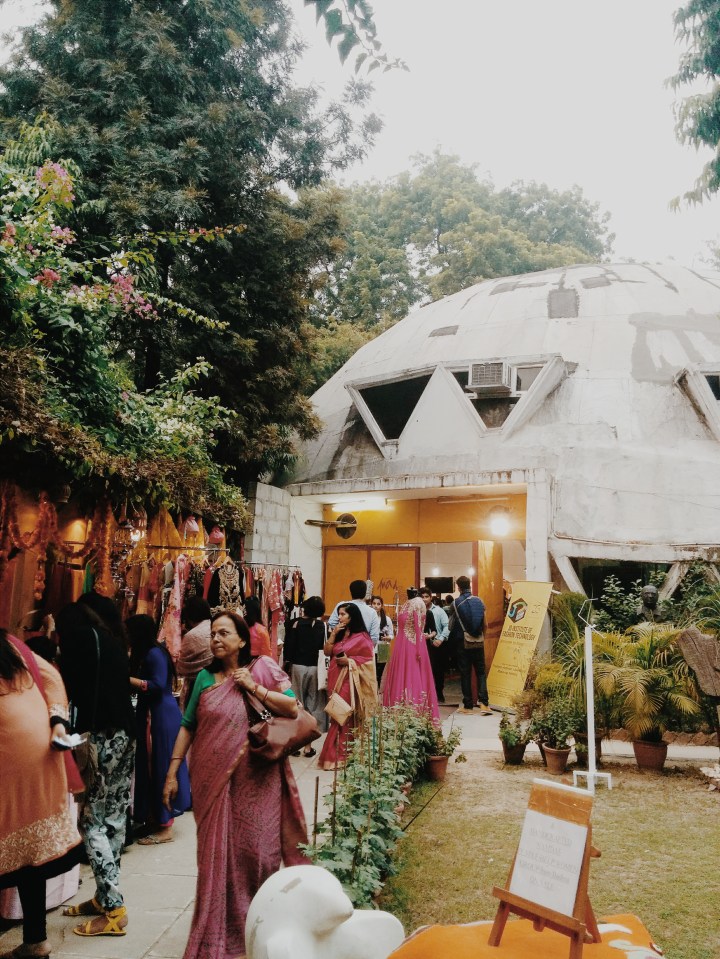
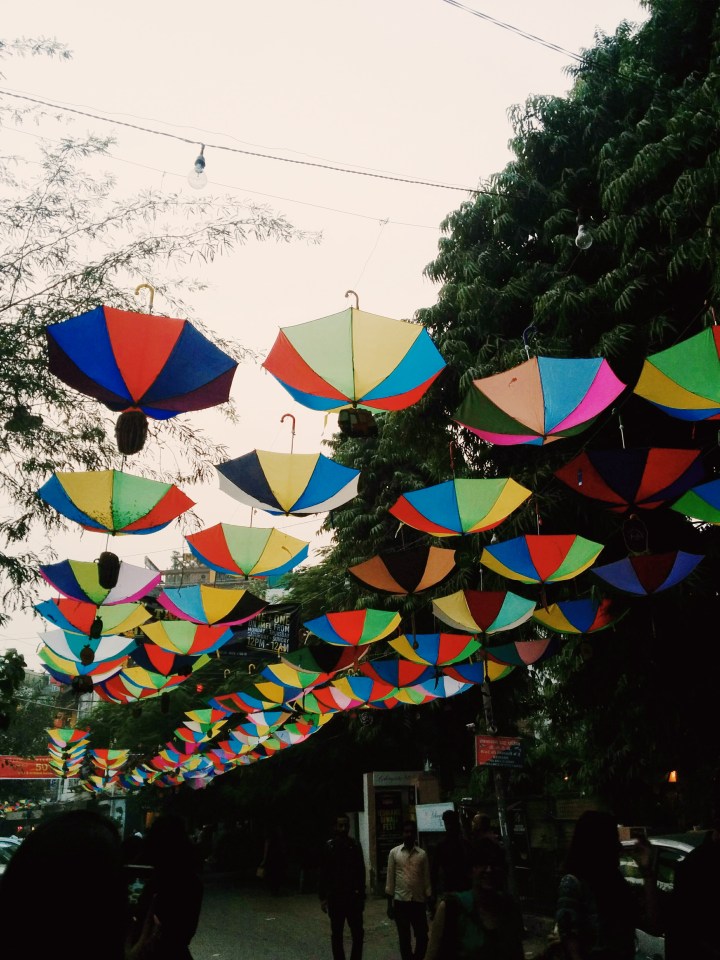
On the first week of October 2015, I walked around Hauz Khas Village in New Delhi under a string of rainbow-colored umbrellas, looking for a bookshop. India is my favorite place in the world to hunt for books. Not only because it is one of the most affordable countries to do so, but also because it is rich with authors and independent publishers that could shift the way you look at the world. There was an envelope full of rupees in a secret compartment in my bag, the rupees I’ve put aside to bring home books for my own little bookshop; books by Indian authors that the bookshop keeper think Indonesian readers should get to know. I have come to learn that where we put our money matters. Spending a few extra dollars to support an independent bookshop that makes books matter whenever I could does make a difference, and that in Delhi, that bookshop is called Yodakin.

I have heard of Yodakin long before I have plans to set foot in Delhi. I read about it in New Yorker in 2013, an article that paints it as one of those legendary bookshops that seem to symbolize hope in a weary, nearly forsaken metropolis.

Yodakin is a kin of Yoda Press, an independent publisher for feminist and alternative work founded by Arpita Das in 2004. She wondered whether it would make sense to establish a space that is the antithesis to mega-bookstores, one that celebrates alternative writers and the values they stand for. She decided to experiment, and so Yodakin opened its doors in 2009 at Hauz Khas Village, then a sleepy residential neighborhood that was just beginning to enjoy the energy brought by artists and entrepreneurs setting up shop in the area.

The Hauz Khas of today was certainly not sleepy. My travel companion brought us to the back alleys instead of the main street to avoid the crowd, commenting on which shops that wasn’t there when he last visited (the leather goods shop that sold a patent leather turquoise trunk) and which have been there for years (the antique shop that calls its maps “wintage”). None of the shops were Yodakin, though. We checked Google Maps, which told us that the bookshop was open. We asked some of the shops about where it might be, but no one seemed to have heard of the bookshop.

I found it strange. This was the bookshop that New Yorker wrote about because it had been more than just a bookshop. It was a place where people could easily read books written by authors who support Kashmir’s independence from India, a space where initiatives such as the Pleasure Project gathered people for a night to read their personal sexual fantasies out loud, believing that they could make sex safer. Yodakin was where activists and students came together with fury after a student was brutally gang raped in a bus. They shared personal experiences with harassment, discussed other cases of violence against women that had been flying under the radar, read out poems – feeling that they were together in a safe space. “I’ve been taken by surprise how much Yodakin has come to mean to people in city,” Das said in the New Yorker piece. “It stands for something that reassures them.”

“It might have recently moved,” I said to another shopkeeper we stopped by to ask, this time an aromatherapy place with a Scandinavian décor. Reassuring as Yodakin might have been to the people, it was not immune to the skyrocketing rent in Hauz Khas. Das shared her plans to move to a smaller space in one of the back alleys after the landlord decided to double her rent. The shopkeeper shook her head.

My travel companion had the brilliant idea to ask one of the few surviving first generation tenants of Hauz Khas, a travel café called Kunzum. A smattering of words in Hindi, and then in English. “It’s closed, for good. Yodakin is no more.”

Processed with VSCO with m5 preset

*

“They are emerging, these creatives, in spite of everything, and they are essential because they are the signs of hope in a place that, like all other places on the limited earth, needs hope.”

And so Teju Cole wrote of Jazzhole, an independent music and book shop, the only one that sells Michael Oondatje’s book in Lagos, in his novel, Everyday is for the Thief.  His sentiment is echoed by many other writers in many other places, so much that there is a book in which 84 American authors write about their favorite independent bookstores across the country and another that documents unique independent bookshops across the world. Every bookshop has a story, they wrote. Every bookshop does so much more than sell books, they are the place where books find people and people find themselves. Independent bookshops are symbols of hope, indeed.

The problem with symbols, however, is that they stand to inspire and reassure others. Their very existence is enough of a statement; their vulnerabilities render them charming and endearing, but never serious enough to raise alarm and action.

The same goes with independent bookshops. They are portrayed as David to the Goliath that algorithm-based e-bookstores and price-slashing chain bookstores are. There are certainly examples where this is true. Ann Patchett’s Parnassus Books, which started and thrived after all bookstores in Nashville closed down. The legendary Shakespeare and Co in Paris, the Strand in New York and Powell’s in Portland are landmark destinations. If only all independent bookshops should be so lucky. Atlantis Books, that dreamy underground bookshop in Oia, is under threat of closing down a few months after they successfully brought David Sedaris to their book festival. Jen Campbell wrote the Bookshop Book while working for an eighty year old bookshop called Ripping Yarns in London, only to see the bookshop closed permanently a few months after her book was published. The fact is independent bookshops are always a small business that require all wits in full gear to survive, but between soaring rent and the shift to online reading and purchase, surviving another year is a clear and present challenge for almost every bookshop in the world.

The same goes for Yodakin. Apparently, it does not matter what kind of symbol an independent bookshop is and the hope it has given a city. Sometimes, a bookshop could close down and its neighbors did not even know it existed.

Processed with VSCO with a6 preset

*

Yodakin haunted my mind even long after I left Delhi. I didn’t know the bookshop that it was, but there is a hurt in my chest every time I thought of the evening when we searched for it in Hauz Khas Village. Leafing through web pages for Yodakin did not ease my obsession, so I started searching for Arpita Das, the woman behind the bookstore, and found a blog post, simply titled ‘What Yodakin Did For Me’.

Written on the eve of the close of the first Yodakin shop in May 2013, Das shared what life was like for her in the days leading to Yodakin’s opening. Her then four year old daughter suffered a terrible burn on a Diwali night, and days of working to construct Yodakin interlaced with nights at the hospital’s burn ward. Her daughter was still in the process of recovery when Yodakin finally opened its doors. In the six months leading to the time where she could go back to school, Das’ daughter spent her time among the shelves of Yodakin, and when she got bored, in neighboring shops at Hauz Khas Village. She found friends at the shops, people who took her in as one of their own, although the only name I recognized from my visit was Kunzum. Of this time, Das wrote: “This was also when I stopped saying I hated Delhi for the first time in a decade. I had found my physical niche in the city at last, and my new community of friends seemed to me to be a long-lost band of soulmates.”

She ended her blog post with a reassurance for the readers. Although rent hike has forced the first Yodakin shop to close, they will soon reopen. Somewhat smaller, but with the same spirit and vibrancy. How could she not, when the bookshop has meant so much for her personally?

Arpita’s – yes, Arpita, for I could not keep referring to her with an impersonal last name after reading such a heartfelt, personal revelation – made me understood that the narrative around independent bookshops does not represent the entire story. It is never about the symbol, the bookshop, you see. It has always been about the people behind them, the one whose passion and hard work results in the symbols so cherished by anyone who finds life in books.

I suppose I understand why it’s easier to focus on symbols. Symbols are neat and could reflect people’s ideals. People are messy, much less predictable, and bound to disappoint once you hold them to ideals. Despite her heartfelt note and opening another Yodakin two months after it first closed, Arpita decided to permanently close Yodakin in July 2015 because she could no longer keep up with the soaring rent.

I looked her up again. After closing Yodakin, she has since taken up post in a business school in Delhi, where she is currently mentoring students who are planning for a cooperative campus bookstore. She co-launched a self-publishing platform called Authors Upfront, and as it has been for a decade, runs Yoda Press. Arpita’s world is still a world of books, although Yodakin has ceased to exist without any of the eulogies and uproar I think it deserves.

People may be messy and they may disappoint, but they often are more resilient than symbols. The person and the passion behind the symbol is alive and well, pressing on and moving ahead even after the symbol ceased to exist.

Processed with VSCO with kk2 preset


*

What happens after a bookshop closed its doors for the last time? The person behind the bookshop takes the fire that help her lit the bookshop somewhere else and start anew, perhaps in a different form, for people who have committed themselves to books will never let their fire be blown away until it is no more.


Jakarta, 31 January 2016

Maesy


.

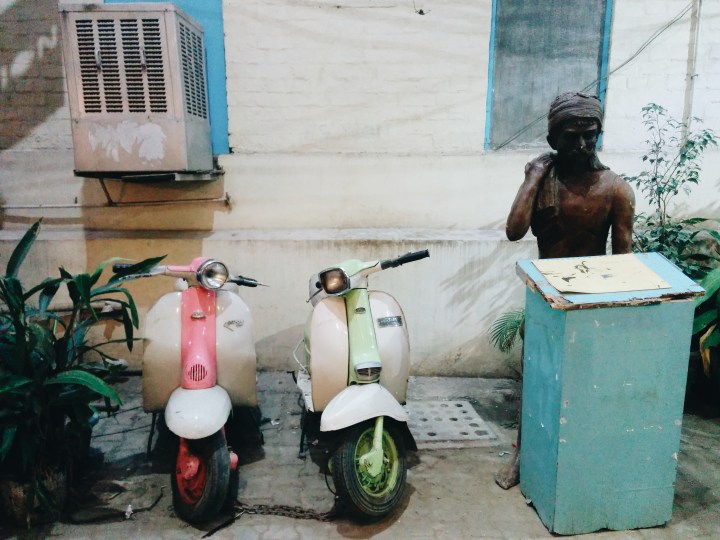
All photos were taken at Hauz Khas Village, New Delhi.


comments 9

Menyebar Berita Baik Tentang Buku Baik

Beberapa waktu lalu, seorang kawan memberi kabar ia dan beberapa temannya baru saja merintis usaha penerbitan fiksi terjemahan. “Down and Out in Paris and London” karangan George Orwell menjadi karya pertama yang diterbitkan. Menurutnya ini karya penting. Walau Orwell menjadi termashyur karena “1984” dan “Animal Farm”, konon inilah karya yang mengantar Orwell ke kancah sastra di Inggris, lantas dunia. Kisahnya pun menarik, diambil dari perjalanan kepenulisan Orwell sendiri saat ia luntang luntung dan melarat di Paris lalu London.

Kabar di media sosial ini disambut meriah oleh kawan sesama pencinta buku. Semua memberi selamat, semua ikut nimbrung memberi usulan sampul buku yang pas, semua berkata betapa mereka tak sabar untuk segera memilikinya. Ini adalah pemandangan pagi hari yang indah. Saat akan hadirnya buku bagus dirayakan dengan gembira.

Hanya saja, pada saat yang sama saya juga berpikir, sampai seluas apa kabar gembira ini akan dirayakan?

Membuat sebuah usaha penerbitan independen, dan menerjemahkan karya klasik seperti ini, tentu sesuatu yang dilakukan atas dasar cinta yang besar pada buku serta penyebarluasan pemikiran. Ia jelas bukan pilihan yang dibuat semata dengan alasan ekonomi. Dengan minat baca yang masih kurang, jalur penjualan buku yang dikuasai satu jaringan toko buku besar saja, dan modal penerbitan independen yang pas-pasan dalam mencetak dan memasarkan buku, tentu akan menyulitkan buku bersangkutan beredar luas di masyarakat.

Jangankan buku dari penerbit kecil, buku penerbit besar pun terkadang tak bisa bertahan lama di toko buku. Jika sebuah angka ribu penjualan tertentu tak dicapai dalam dua bulan maka buku mesti kembali ke gudang. Saat ribuan judul baru terbit setiap bulannya, persaingan menjadi demikian ketat.

Penjualan sebuah buku sering tidak berbanding lurus dengan kualitas kepenulisannya. Saya ingat bagaimana, misalnya, buku ‘Semusim dan Semusim Lagi” karya Andina Dwifatma yang menang sayembara novel Dewan Kesenian Jakarta (DKJ), cukup sulit ditemui di toko buku setahun saja sesudah ia terbit. Beberapa buku terkadang terlambat panas, tetapi nasibnya harus ditentukan hanya pada bulan-bulan awal keberadaannya. Beberapa buku bagus dari penulis yang kurang terkenal bahkan harus teronggok sedih di rak belakang pada minggu-minggu awal terbitnya. Beberapa waktu lalu saya membaca novel berjudul “Kamu” karya Sabda Armandio. Walau masih ada lubang di beberapa tempat, buku “Kamu” menunjukkan bakat besar si penulis muda. Dan dibanding buku tentang remaja yang beredar sekarang, ia jelas banyak unggulnya. Namun, buku ini kerap saya lihat berada jauh di rak belakang pada minggu awal ia beredar. Bahkan buku “Kambing dan Hujan” yang tahun lalu  memenangkan sayembara novel DKJ pun saya beli di rak belakang, jauh dari kemencolokan. Buku karya Mahfud Ikhwan ini bagus, sungguh. Ia menggugat kesempitan cara berpikir dalam beragama dengan tidak menertawakannya. Tapi ya begitu, ia harus berdesakan bersama ratusan judul lain yang mungkin lebih diterima pasar.

Seorang kawan editor pernah berkata, seorang penulis harus juga bisa menjadi pemasar yang baik. Betul, tentu. Hanya saja, ini sering ada dalam urutan yang rasanya tidak pas. Pemasar yang baik walau dengan kualitas penulisan yang biasa-biasa saja, sering malah unggul. Apalagi, penulis bagus terkadang terlalu sungkan untuk berkoar-koar cari perhatian.

Tempo hari saya ke salah satu toko buku besar di Jakarta dan secara iseng bertanya pada beberapa penjaga apa rekomendasi buku yang wajib dibaca jika ingin mulai membaca sastra Indonesia. Para penjaga sedikit bingung bahwa ada yang meminta rekomendasi kepadanya. Saya diantar ke rak bertuliskan sastra dan diminta untuk memilih sendiri. Saya tetap bertanya apa yang menurut mereka buku wajib, mereka menggeleng. Seandainya toko buku besar mendedikasikan sebuah sudut kecil saja di depan, yang secara konsisten merekomendasikan buku karena kepenulisan yang baik terlepas dari jumlah eksemplar penjualannya, tentu toko buku dapat tetap menjadi tempat yang merayakan karya baik, bukan karya laku semata, atau bahkan pernak-pernik lucu.

Betapapun, seperti hal-hal murung yang lain, harapan-harapan tentu masih selalu ada.

Penerbitan-penerbitan independen dengan jalur distribusi alternatif pelan-pelan bergeliat. Aktivis perbukuan di Yogyakarta misalnya, membuat acara Kampung Buku Jogja yang mewadahi berbagai penerbit independen Jogja. Anak-anak muda ini bergerak sendiri, memburu penulis muda berbakat, menerjemahkan karya-karya klasik, memasarkan secara online. Mereka juga bekerja sama dengan aktivis buku di berbagai kampus, atau sekadar mahasiswa yang cari-cari tambahan uang saku, untuk membantu pemasaran. Mereka menolak kalah dari selera pasar dan manantang hegemoni distribusi buku. Mereka bergerak bersama penggerak penerbitan independen yang lebih dulu seperti, misalnya, Ronny Agustinus yang berkreasi melalui Marjin Kiri, penerbitannya yang konsisten menghadirkan wacana-wacana alternatif dan ulasan mendalam.

Saat jalur pendistribusian utama buku masih mengedepankan akumulasi modal sebagai panglima, jalur-jalur alternatif bisa menjadi oase.

Beberapa tahun lalu saya secara tidak sengaja menemukan buku ‘Rumah Kopi Singa Tertawa” karya Yusi Avianto Pareanom di Kineruku, toko buku dan perpustakaan indepeden di Bandung. Tanpa Kineruku tentu saya tidak akan berkenalan dengan cerita-cerita pendek ganjil yang bagus itu. Tanpa ruang alternatif seperti Kineruku, atau obrolan dari mulut ke mulut para pencinta buku, mungkin ‘Rumah Kopi Singa Tertawa” yang terbit 2011 lalu harus teronggok lama di gudang Banana, penerbitnya. Sayang sekali untuk buku ajaib yang bikin banyak kawan saya menyumpah-nyumpah karena kepiawaian si penulis meramu cerita.

Ruang buku independen seperti Kineruku memberikan kesempatan bagi penerbit-penerbit independen untuk memajang karyanya, juga penulis-penulis dengan karya yang tak melulu sesuai selera pasar untuk mendapatkan ruang. Senang rasanya melihat ruang-ruang alternatif seperti ini bermunculan, ada ‘Kata Kerja’ di Makasar, ‘C2O’ di Surabaya, ‘Taman Baca Kesiman’ di Denpasar, dan lain-lain. Ruang-ruang ini  juga didirikan oleh orang yang juga mencintai buku dan merupakan pembaca yang baik. Ada alasan mengapa setiap buku menjadi koleksi di perpustakaannya. Dan dialog-dialog soal ini dapat selalu terjadi dalam interaksi di ruang alternatif ini, juga dalam diskusi-diskusi buku yang kerap digagas. Dialog-dialog mengenai mengapa sebuah buku bagus, bagaimana pengembangan plot dan karakternya, bagaimana diksinya, juga di mana tempat buku tersebut dalam karya-karya lain. Mereka, para penerbit independen, juga toko buku independen, tidak hanya menjual buku dan menjadikannya sebagai barang dagangan. Mereka merayakan kegiatan membaca karya baik.

Bulan Oktober ini Indonesia sedang menjadi tamu kehormatan festival buku di Frankfurt. Terlepas dari silang pendapat soal apakah Indonesia telah memanfaatkan kesempatan ini dengan maksimal, ia tetap menerbitkan harapan. Senang rasanya melihat Eka Kurniawan menjadi perbincangan hangat karena mutu karya-karyanya semakin diakui. Ini tidak hanya dapat lebih membuka jalan bagi dikenalnya karya dari Indonesia, tapi juga bisa menjadi kampanye bagi pembaca Indonesia sendiri untuk menghargai karya-karya baik. Atau mendefinisikan kembali karya baik.

Hadirnya buku bagus adalah kabar baik. Dan kabar baik, sebaiknyalah disebar. Ia penting untuk digaungkan seluas-luasnya, didiskusikan sebanyak-banyaknya, tidak hanya di kalangan terbatas komunitas sastra, tapi kepada para pembaca umum, atau mereka yang baru hendak mulai membaca.

Saya percaya, literasi masih bisa dibangun. Jalan yang panjang, tentu, tapi mungkin. Jalan yang dirintis karena kecintaan pada buku semata, bukan yang lain. Seperti apa yang dikatakan salah satu komentar di status kawan yang menggagas penerbitan independen tadi, ucapan penyemangat untuk mereka yang bergerak di dunia perbukuan, “selamat menempuh jalur surga.

(Tulisan ini pertama kali dipublikasikan di Midjournal )

comments 10

Bluestockings and the World They Believe In

I am tempted to say that Bluestockings is not just another independent bookshop, but I caught myself. In this day and age, is there any independent bookshop that is just a place to sell and buy books? Independent bookshops that survive are places where knowledge is exchanged, a place that can tell you why they decide to stock a book and why you might be interested to read it. A place that you can walk into with a book in mind or even not knowing what you want, and leave with a book you never knew you wanted. A place that stays alive precisely because they offer you what algorithms and best seller lists cannot. Character.

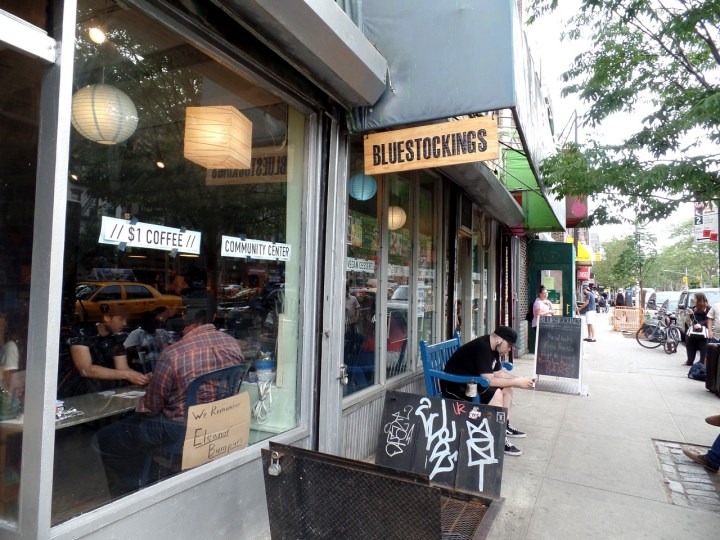
Bluestockings, an independent bookshop at Lower East Side in New York, definitely has character. And like any good characters in a novel, you get to know Bluestockings because it shows you who they are instead of telling you what they are like.

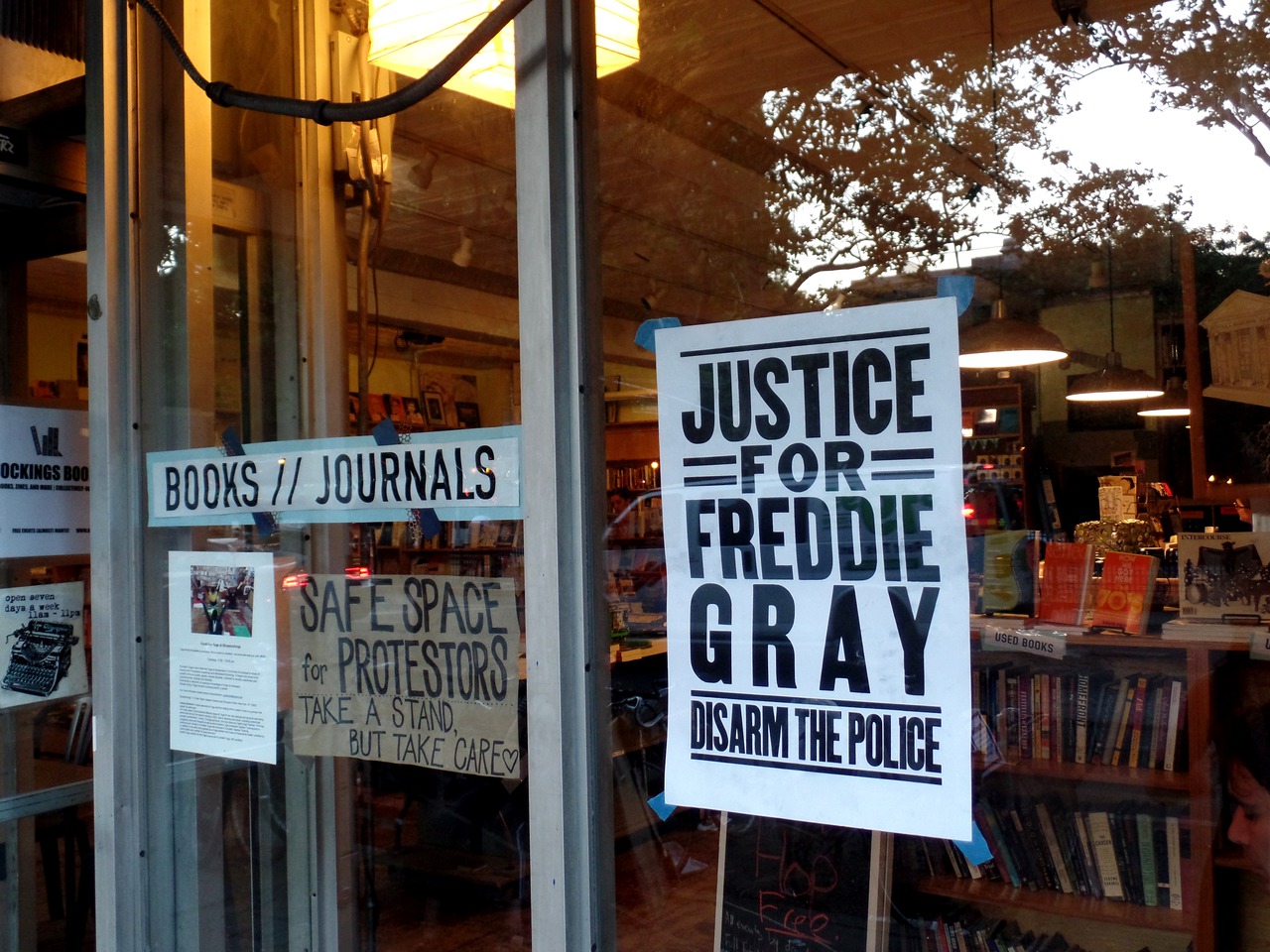
Bluestockings was alive. Not just alive with readers getting lost in books or hushed chatters, but alive with ruckus and rumpus. My greeting to the bookshop were screams and shouts from a corner by the window, where apparently a vicious game of monopoly were at its most heated point. Two tote bags were on display on the wall, one says “Read fucking books all damn day” and the other “Speak up, this isn’t a library.” One of the teenage girl monopoly player stood up and broke into a victory song and dance, her friends laughing. This definitely isn’t a quiet library.

The Dusty Sneakers I Bluestockings New York 4

The books on the shelves look like they like each other, that they are friends who see the world the same way. Feminist books and books about racism were bridged by books on black feminism. The section on queer studies have as many books on butch culture as on sexual fluidity. The travel section, tiny as it is, contains a gem called Radical Walking Tours of New York City. Teddy took the book and told me that he is going to get a cup of coffee – free trade and only for 1 dollar – and sit by the window. I walked around the shelves some more and found a book by my thesis adviser in grad school, a book on youth activism in Egypt during the Arab Spring that she started when I graduated. I grabbed the book and blurted to the nearest person I could see, a staff behind the counter, that I know the author. She smiled.

I felt a bit embarrassed for blurting off, so I asked whether she has any other books to recommend. She said that she is an environmentalist and feel particularly proud of their animal rights section. I told her that I thought Bluestockings is a feminist bookshop, so she corrected me.

“Bluestockings did start as a feminist bookshop and we still are, but we’ve expanded our collection to include books about any kind of oppression, community organizing, activism, and stories of marginalized people. Feminism is intersectional, so if we want people to learn about feminism from the shelves and from one another, they need to see that we’re behind other issues that are intersecting with feminism.”

“How long have you been part of Bluestockings?” I asked.

“Oh, almost two years. I volunteer here once a week, but other volunteers come every day or every month. Bluestockings must have had about 500 volunteers since it opened in late 1990s, but I was born in 1992 so I was an incoherent child when it first opened.”

I got myself a piece of vegan chocolate chip cookie and joined Teddy by the window. Instead of browsing through my thesis adviser’s book, I decided to look up what Bluestockings was like when it first opened and learned several things.

I learned that Bluestockings hosts events almost every night and that there would be a spoken word performance the next day. I learned that it is a safe space for activists, that it has an explicit policy against any form of discrimination and oppression in their premises, whether it is based on gender, age, or experience in activism. I learned that Bluestockings really take their safe space policy seriously, so much that two Pussy Riot members trusted the bookshop enough to organize a talk with them back in 2013. I learned that it asked its visitors to be mindful of other people’s privacy, rights, and comfort or they will be kicked out, so I tried very hard not to eavesdrop on the conversation on the next table, even when I couldn’t help overhearing sentences as intriguing as “I had to throw away all my condoms, my girlfriend is coming” or “So where else have you been arrested in the U.S.?”

Most of all, I learned that the girl behind the counter isn’t one of the volunteers who come and go in the space to lend an extra hand. Bluestockings is entirely powered by volunteers. The bookshop was first established in 1999 and had to be sold four years later because it wasn’t financially viable, so the people who bought Bluestockings decided to run it as a collective on a break-even model. As a collective, they distribute responsibilities among volunteers based on the time they could commit and decisions are made together, while the break-even model means that their main goal is to continue to exist.

I took a bite out of my cookie, which turned out to be warm and gooey and not like what I imagined vegan cookies are like – a poor substitute for the real thing. Bluestockings sounds utopic, being run entirely by people whose incentives are not monetary, with a system that tries to stay away from hierarchy, and for a cause that hasn’t wavered in the face of gentrification and skyrocketing rent in the Lower East Side.

But Bluestockings is not a utopia, I don’t think; it is more an exercise in making a world where there are alternatives to capitalism. Considering that Bluestockings has remained open for 15 years, I would say that they succeeded in visioning a world they want and that they consistently inch closer to make such a world come true.

Bluestockings is not just a character with an attitude. It is persistent and it works hard. It has an unwavering belief that another world is possible, and actually show that it is.

Maesy

The Dusty Sneakers I Bluestockings New York 2

Bluestockings

172 Allen St, New York, NY 10002, United States