comments 10

A Letter for Toru

Dear Toru,

I didn’t think of beauty when I first saw sakura in full bloom. I thought of you instead.

We were shivering in our sweaters, unprepared for the biting cold of early spring in Tokyo and exhausted after a long train ride in the morning rush hour, when we arrived in our apartment for the week. Through my bleary, post red-eye flight eyes I saw a shock of pink by the door, a stark contrast to the ashen sky and weather-beaten brick walls, and the words that came to mind were yours: In the spring gloom, they looked like flesh that had burst through the skin over festering wounds.

Of course they were beautiful, those early blooming pink petals. But beauty can be momentarily forgotten when you heart is not at ease; mine has not since I read your story on the plane. Your loneliness peaked once upon a spring, when you started detesting the sight of sakura and wrote a letter saying that you would rather have three Februaries than a spring so painful. Your shadows crept out from the pages and into my skin, and there it stayed as I adjusted to Tokyo.

Adjusting to Tokyo means adjusting to Shinjuku Station, the nearest station to our apartment. We thought we made a wise choice, knowing that the station is the largest in Tokyo and should be a convenient hub for any spontaneous out-of-town trips we might want to take. Knowing and understanding are two different things, though. As our days started and ended at the station, I began to understand what it means to spend time in the busiest train station in the world.

It means navigating your way in a station with dozens of connecting lines and hundreds of exits. It means being one over three million people who are in the station every day, most of them in a hurry and all seem to know exactly where to go. It means rushing yourself to keep up with the pace of the crowd, feeling like you are a part in an assembly line. It means having people bump into you when you had to stop to look for signs or change directions, feeling more and more incompetent with every sumimasen you hear. It means feeling like you’re drowning the longer you are at the station, losing the will to swim and stay afloat. It means, at one point, wanting to stop in your tracks and curl up into a fetal position right there and then until you disappear.

Shinjuku Station made me want to disappear. It hurts to admit that, to see it on paper. I was born and raised in Jakarta, I thrived in New York and Mumbai. I am supposed to be a city girl who could effortlessly fall into rhythm with Tokyo, yet being in Shinjuku Station made me feel so small and insignificant that feeling lonely in a crowd no longer seem like a cliché.
Processed with VSCO with hb1 preset

Toru, you might scoff at me. My discomfort is not even remotely comparable to your pain. How could they be, when I traveled to Tokyo for adventures while you came to the city to escape the death of your best friend? I will never know how it feels to carry such deep sorrow, but as I said, you were under my skin. I remember you finding relief from loneliness among the crowds of Shinjuku and Shibuya, and if you could, perhaps I can too.

When you travel, you give meanings to what you see and do based on what you have in your head. Since you were in mine, I experienced Shinjuku and Shibuya through Toru-tinted glasses. We passed many bars outside of Shinjuku Station, all closed in daytime, and I thought of your evenings out with Nagasawa. Those were evenings when you most needed another human’s touch and hoped to spend the night with girls who need it as much as you did. We walked by love hotels in Kabukicho and I wondered which ones you had your fleeting affairs in. We didn’t find any conspicuous cinemas while we were in the red light district, but this must be where you and Midori went to see porn after her father died. The further we went from the station, the more jazz bars we saw. There is one that I think you might like, it has a poster of Charles Bukowski plastered on its window and promised bossa nova. We heard jazz streaming out of cafes and saw people reading inside, as you did when you were upset. We couldn’t help but go into every bookstore we saw, from small ones that mostly sell manga and magazines to the book section of the nine-floors Tower Records in Shibuya, and in each of them I looked for The Great Gatsby because it was your favorite book.

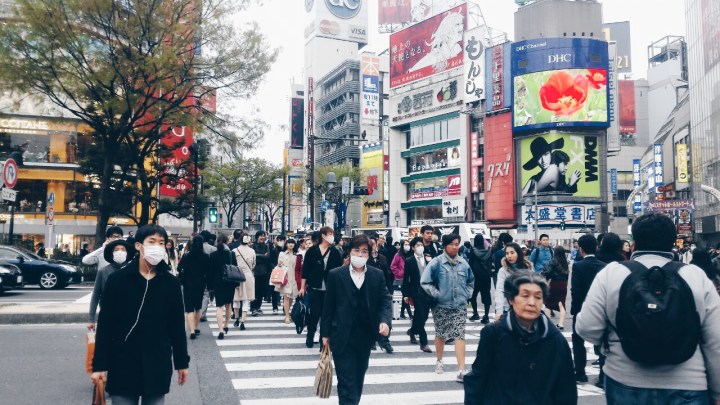
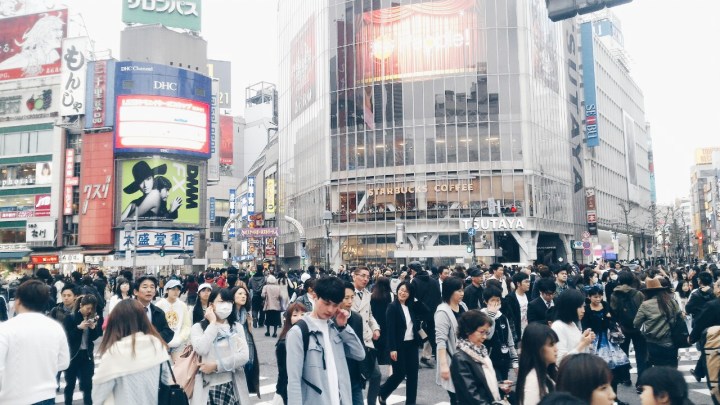
I remember feeling upbeat, at least until we found ourselves at the Shibuya crossing. As all the traffic lights turned red at the same time and pedestrians from all edges crossed simultaneously in different directions, I felt a tension creeping up my neck. I held on tight to my partner as we poured into the streets, feeling like a tossed marble, bumping against other marbles tossed in opposite directions.

We landed in front of the Hachiko statue in front of the Shibuya Station, where people in ball gowns and professional photographers queued along with tourists and their mobile phones to take pictures. Shibuya Station might not be as big as Shinjuku, but there will be the same swarm of people rushing and that tension on my neck had settled into a throbbing pain on my forehead. We were supposed to catch a train to Ebisu to visit an independent bookshop, but I couldn’t make myself go into the station.
Processed with VSCO with hb1 preset

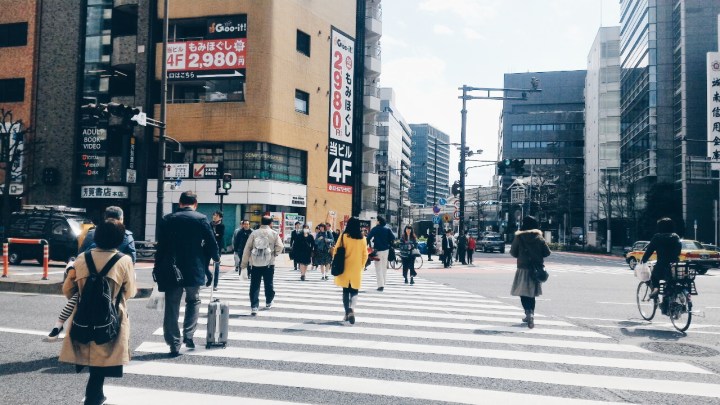
So we walked. My partner held my hand as we turned our back to the Shibuya Station and walked ahead, letting go only when we found a narrow street by the railway. It was a long walk, from Shibuya to Daikanyama to Ebisu, with stops at small neighborhood shops in back alleys and sidewalk vending machines every time we needed something warm to hold in our hands. It was then I realized that Tokyo is not flat and saw some of its rivers, and it was then I felt calmest since we arrived.

You once told me about a time in your life when weekends meant walking all around Tokyo with Naoko, the girl you loved and longed to save. At first you were walking a few steps behind her as the two of you climbed hills and crossed rail lines; a year later, you were in love and walking side by side. You said you were thankful that Tokyo is such a big city that you and Naoko would never run out of paths to walk on. Toru, I am thankful for that too.

I remembered another letter of yours as I saw the sakura tree in front of our apartment. You once wrote letters only about the wonderful things in life, like sakura blossoms and the smell of grass, so that you’d feel that life is truly wonderful when you re-read the letters. You know, Toru, travelers often do the same and I am no different. It’s the secret that lurks behind every photograph, every journal entry recording our time in a foreign land, every story we tell our friends at home. We tell ourselves that no one wants to hear stories of when we felt overwhelmed or embarrassed of ourselves. Nobody needs to know about moments when our travels are not ecstatic or poignant. The truth is, we do it to trick ourselves to remember only the wonderful parts of our travels, just like the letters where you wrote only the wonderful things in spring.

That night, I wondered whether the moments we tend to gloss over are worth written about and shared. It is hard for me to admit to myself that I was weak, that I crumbled among the crowds in a metropolitan like Tokyo, a place much more benign than my own hometown. It is embarrassing to let other people read about the time when I didn’t overcome myself, when almost all the travel stories you read are about how it allows people to bloom. But perhaps letting this out in the open is what will allow me to embrace myself, in all its strengths and weaknesses and, if I’m lucky, to bloom like the sakura outside the apartment. I think you would agree, for it was when you wrote about how lonely you felt that spring that you reached the company you were looking for.

The next day I felt lighter as I left the apartment, although my heart was already bracing itself for the heaviness that would come once I arrive at the Shinjuku Station. The sky was even gloomier than the day before and the pink sakura still looked shocking against it, but this time the sight of the tree made me feel hopeful for a sunny afternoon. Like you, Toru, I have chosen to acknowledge my weakness, and I hope that in turn, you too could find spring to be hopeful once again.

Yours sincerely,

Maesy
Processed with VSCO with hb1 preset

Toru Watanabe is the main character in Haruki Murakami’s Norwegian Wood, one of the books I read when traveling to Japan a few weeks ago. A special thank you for my friend, Syarafina Vidyadhana, for reading and editing an earlier version of this letter. Your feedback means a lot to me, Avi!

comments 12

Dari Sisi Ibu yang Memilah Kartu

Kartu-kartu nama itu ia tumpahkan di meja lipat di depan bangku kereta. Perlahan si ibu tua memilah dan mengelompokkannya; kartu potongan harga, kartu anggota toko kelontong, kartu anggota klab senam, kartu nama orang-orang, kartu nama tukang ledeng, toko perkakas, dan entah. Ada kartu dengan gambar kartun perempuan pirang yang memegang buah pisang dan botol minuman keras (apa pula itu?). Album penyimpan kartu nama ada di pangkuannya. Masih kosong, mungkin baru dibeli. Tiap kelompok sepertinya akan ia masukkan ke bilik-bilik di sana.

Kereta mulai berjalan kencang, terus ke barat menjauhi Tokyo. Di luar terlintas barisan perumahan, lalu padang rumput, lalu sawah, lalu barisan pohon sakura. Beberapa sudah berbunga, sebagian besar masih gundul. Si ibu tua tidak melihat ke jendela, matanya terpaku pada kartu-kartu itu. Gayanya tekun sekali. Sebelum sebuah kartu ditaruh pada kelompok tertentu, ia menimbang dengan kening berkerut, seolah berada dalam pilihan sulit. Kami tidak bicara. Tadi sebelum kereta bergerak ia sempat tersenyum dan berbasa-basi kecil sebelum mulai dengan urusan kartu nama itu. Saya memperhatikan saja. Mana berani saya mengganggu ibu tua yang sedang tekun begitu.

Maesy ada beberapa bangku di depan. Tadi kami masuk kereta agak terlambat. Tak ada lagi bangku yang bersisian.  Kami sedang menuju Tsumago, sebuah desa di lembah Kiso, sekitar empat jam perjalanan kereta dari Tokyo.

Menumpang kereta dengan kawan yang sibuk memilih kartu nama pada dasarnya sama saja dengan berjalan sendiri. Ia diisi dengan soal-soal yang terlintas di pikiranmu saja. Si Ibu masih sibuk dengan urusannya. Ia baru mengeluarkan album kosong baru lagi, punya beberapa ia rupanya. Apa yang akan dilakukan dengan album-album itu, hanya dia yang tahu.

Betapa Jepang dipenuhi mereka yang melakukan hal-hal secara telaten, tekun, atau, dalam beberapa hal, penuh obsesi. Muncul ingatan soal otaku kereta, mereka yang terobsesi akan kereta. Mereka hapal semua jalur, jenis, dan tahun pembuatannya. Mereka menghabiskan waktu berlebihan untuk putar-putar naik kereta, dan selalu unggul jika ada kuis cepat tepat soal jalur kereta apa pergi ke mana. Dengar-dengar mereka bisa menebak tepat nama kereta hanya dari foto pemandangan samping jendelanya (entah ini bercanda atau tidak). Si Ibu tua bukan otaku kereta, sepertinya, ia hanya gemar menyusun kartu nama, atau menyibukkan diri agar tak diajak bicara orang asing, atau apalah.

Saya terbayang wajah otaku kereta, anak dengan tampang lugu yang kebingungan bagaimana menggunakan otak cemerlangnya. Jika suatu kali saya bertemu otaku yang sedang mabuk, mungkin ia akan bercerita lebih banyak. Soal mabuk ini juga membawa pikiran pada bagaimana orang Jepang meminum sakenya. Ritual minum dilakukan dengan bergaya. Kendi sakenya, cawan kecilnya, gaya menuang dengan siku terangkat itu, tertib dan berbudaya. Bandingkan dengan para peminum bir dengan gelas-gelas tinggi besar dan suara yang dimenggelegar-gelegarkan itu. Keras betul usahanya untuk tampil gagah. Bahwa sesudah minum terlalu banyak, apa pun minumannya, semua akan mulai meracau, lalu kehilangan segala keberbudayaan, ya, wajar saja.

Processed with VSCO with a5 preset

Di sisi jendela yang lain, duduk pasangan kakek nenek yang saling bicara. Apa yang mereka omongkan, tentu tak saya mengerti. Namun, pada satu titik bisa ditangkap bahwa mereka sedang berdebat soal telepon genggam siapa yang sedang berbunyi. Si kakek menunjuk tas tangan si nenek, sebaliknya si nenek menunjuk tas si kakek. Si kakek merogoh tas mencari telepon genggamnya, sedikit kesulitan, sampai ketika wajahnya menampilkan paras puas saat telepon dikeluarkan. Bukan teleponnya yang berbunyi. Giliran si nenek yang merogoh tas dan menemukan bahwa teleponnyalah yang berdering. Senyum si kakek semakin lebar.

Kereta ini dipenuhi penumpang berusia lanjut. Kakek nenek yang saling bicara, Ibu tua yang menata kartu, pria paruh baya yang tertidur, pria paruh baya yang membaca buku dengan mulut ditutupi masker. Soal ini mau tak mau menjadi perhatian kami beberapa hari belakangan. Setiap kali sedikit keluar kota, kebanyakan penduduk yang kami temui berusia lanjut. Di Hakone saat kami naik ke sebuah bukit, atau saat duduk-duduk memperhatikan para pemancing di sekitar Danau Ashi. Di kereta ini tak terkecuali. Saya teringat ucapan Danny, seorang kawan sarapan, yang mengatakan selain tingkat kelahiran yang terus menurun, para pemuda Jepang kebanyakan bergegas pindah ke kota begitu usianya menginjak dewasa. Pinggiran kota akhirnya diisi mereka yang berusia lanjut, banyak yang sendiri. Ada fenomena khusus soal ini, Kodokushi, mereka yang meninggal sendiri di usia tua, dan baru ditemukan lama sesudahnya. Sedih sekali. Saya membayangkan menjadi tua sendiri, meninggal diam-diam, dan baru ditemui beberapa minggu kemudian dengan bau busuk. Kesedihan macam begini, mau diromantisir dengan cara apa pun, tetap saja bikin meringis. Kampanye soal ini mulai tumbuh, ajakan agar para pemuda kembali ke desa, juga ajakan untuk lebih sering mengunjungi kerabat berusia lanjut.

Processed with VSCO with a5 preset

Ketiadaan anak muda juga dirasakan Noa, penjaga penginapan kami di Tsumago. Di desa di lembah Kiso itu pemuda berusia 20-25 tahunan nyaris tiada. Satu-satunya kawan seumuran Noa adalah putri pemilik penginapan tempatnya bekerja.

“Kami sering menghabiskan waktu bersama,” kata Noa. “Namun demikian aku harus tetap jaga jarak. Aku menghormatinya, tapi kau tahu, di sini sepi dan dingin. Kalau hal-hal terlalu jauh, urusan pekerjaanku bisa runyam.“

Maka pemuda Noa lebih sering menghabiskan waktu di kamar, atau pekarangan rumah, minum sake, melamun. Sendiri saja.  Kalau dia pembuat haiku, tentu banyak yang bisa dihasilkannya. Saya teringat salah satu tulisan Kawabata tentang pria yang begitu terpesona pada seorang gadis, hingga setiap kali si gadis berseru, si pria begitu senang mendengar suaranya. Sebegitu senangnya sehingga ia menunggu gema suara si gadis memantul, agar ia bisa mendengarnya lagi. Kawabata berpanjang-panjang soal momen menunggu gema itu kembali. Ini jenis hal yang dilakukan mereka yang sendiri dan memiliki waktu berlebih.

Processed with VSCO with a5 preset

Di perjalanan kali ini Maesy dan saya membaca beberapa buku karya pengarang Jepang. Ryu Murakami, Yasunari Kawabata, Haruki Murakami, dan Hiromi Kawakami. Ternyata soal-soal kesendirian ini muncul di semua karya yang kami baca. Beberapa dibuat subtil, yang lain terang-terangan. Tokoh Tsukiko di “Strange Weather in Tokyo” hampir setiap hari pergi ke Izakaya yang sama, sendiri saja, minum sake bergelas-gelas, kebanyakan sekali teguk tandas, hingga teler. Sampai ia bertemu Sensei Matsumato, pensiunan guru yang sama kesepiannya. Tokoh Kenji di “In the Miso Soup” berkata pada Frank, seorang Gaijin, saat mereka putar-putar di Kabukicho, sebuah distrik merah di Tokyo,

“Perempuan-perempuan Amerika Latin itu menjadi pelacur di sini karena sekarat perlu uang. Kau tahu kenapa perempuan-perempuan muda Jepang itu menjual tubuhnya di sini? Kau tahu, Frank? Karena mereka kesepian bukan kepalang.”

Mungkin itu ungkapan sambil lalu pria yang minum terlalu banyak sake murah, tetapi soal kesepian yang menggigit memang sering muncul setiap kali kami terlibat pembicaraan soal penduduk Jepang, utamanya Tokyo. Di Shinjuku, stasiun kereta yang hiruk pikuk itu, setiap hari bercampur aduk jutaan manusia yang juga memendam sepi, begitu orang bilang. Maesy sepertinya akan menulis lebih panjang soal ini, jadi saya sudahi dulu.

Saya tertidur di tengah buku “In the Miso Soup”. Saat terbangun, kereta sedang berhenti di stasiun entah apa. Si Ibu pemilah kartu nama sedang tertidur juga. Keningnya menempel di jendela kereta. Beberapa bangku di depan, saya melihat penumpang di sisi Maesy beranjak. Saya mengambil tas lalu maju ke depan, menghempaskan diri di bangku sebelah Maesy. Ia sedang tekun membaca.

“Hei, kau mau menggangguku, ya?” kata Maesy.

“Lihat saja nanti.” Jawab saya.

Kereta kembali berjalan. Terus ke barat. Perlahan semakin kencang. Melewati padang rumput, lalu sawah, lalu barisan pohon sakura. Beberapa sudah berbunga, sebagian besar masih gundul.

comments 3

The Mad Ones: Seumpama Books

We first met Seumpama Books at the 2015 Christmas Bazaar at 1/15 Coffee and thought they were completely mad. They have to be, why else would someone start a book studio in Jakarta when the space for books in bookstores across the city is shrinking, replaced by more shelves stationery and knick-knacks?

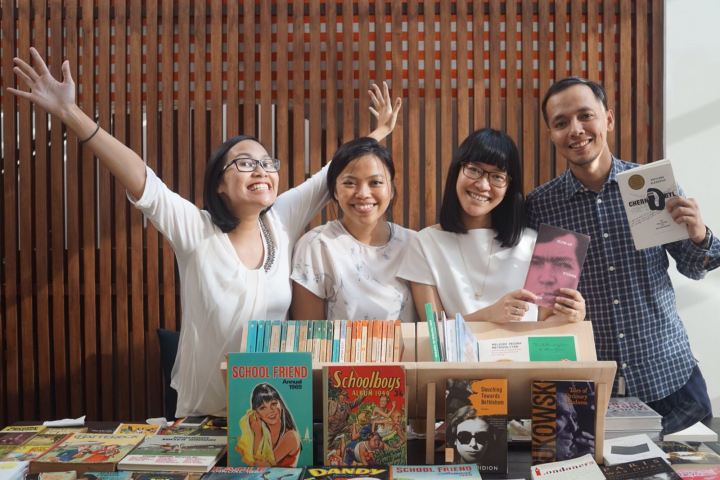
Since we are always drawn to the mad ones, we started cooking up a collaboration idea when we met again at Suar Art Space, which then turned into a three-week long Pojok Buku event at 1/15 Coffee in February. We have gotten to know Rassi Narika (Rassi) and Referika Rahmi (Ninit) better in the process and think that anyone who loves reading and books should get to know them too.

The Dusty Sneakers I Seumpama 8

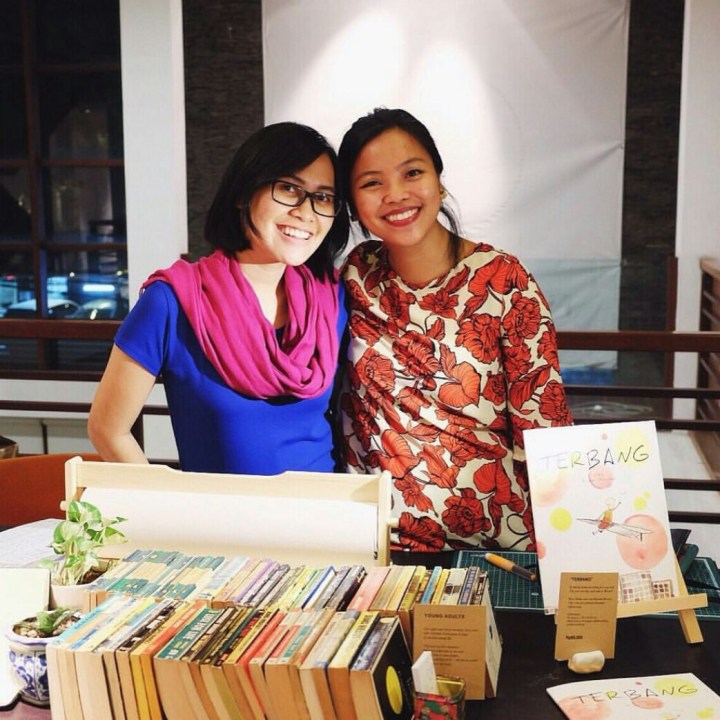
Ninit and Rassi at Seumpama’s first pop-up shop

Hello, Rassi and Ninit, tell us the story behind Seumpama Books.

Ninit: We refer to Seumpama as a book studio. A studio is a room where artists sculpt or paint, music and films are made, performers practices; and it is exactly how we’ve been working with books at Seumpama. We curate titles, study and practice our skill in story making, learn the market, and stay connected to the book audiences. The bookstore and publisher role that we have is our translation of the studio to make it relevant to the society.

The story of how it came together is a story of how time put things into places. Rassi and I have been best friend for ten years. At the end of 2014, Rassi just got back from her study in London and I had been a mother for over a year. We were really close but then we hadn’t met for almost 1.5 years and were in completely different places in life.

I learnt French literature as an undergraduate and being a mother put me back in touch with written works through the materials I was reading for my daughter. There was a big gap in the selection of children books, especially the Indonesian ones. Something was missing, so I thought I should write something to fill the gap. I knew Rassi had been writing creatively and that she had been illustrating in her leisure time. So I thought it was worth to mention this idea to her. Apparently it was also something she already had in mind, so things roll pretty consistently from there.

Rassi: For me it was an obvious choice. I love reading books and had always dreamt of having a bookstore of some sort. But doesn’t every book lover dream of that too? I took the idea seriously after coming back from my study. I wanted to start my own thing and a couple of friends had been mentioning that children’s book is something that I should do. I liked the idea but wasn’t quite sure how to follow it up, so I had a couple of back-up ideas in my mind. When Ninit mentioned her agony with finding children’s books, I was ecstatic and concerned. It felt so right, but I’ve heard too many discouraging story of friendship-based co-ops and I didn’t want to ruin our friendship. Yet Ninit’s idea was relevant for me, and the timing seemed right. The next thing we did was quite pragmatic, we made a small research about the market and the industry just to see how viable this is. We had never wanted this to be a one-off thing.

The Dusty Sneakers I Seumpama 4

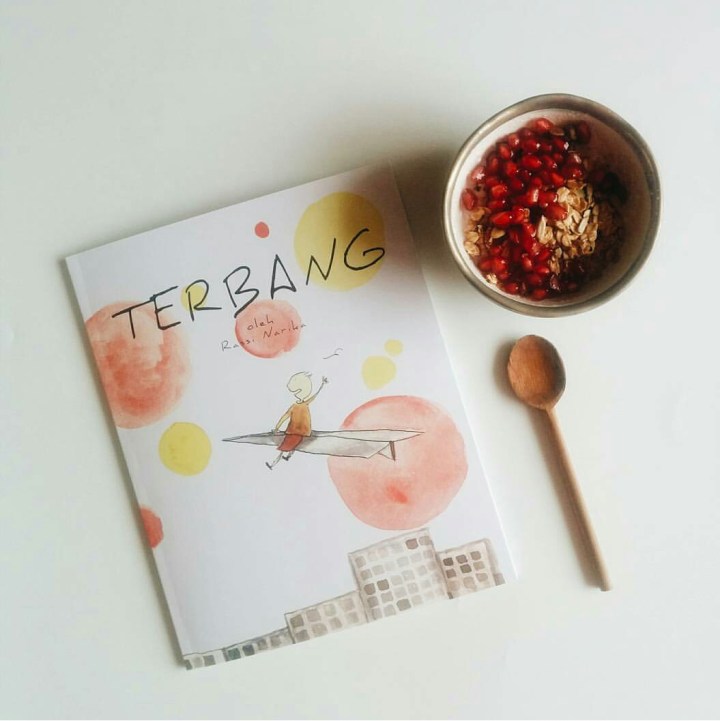
Congratulations on the publication of your first book, Terbang, especially for Rassi who is also the author and illustrator of the book. What kind of books are you planning to publish in the future?

Rassi: Thank you! Although Seumpama is not made specifically for children, I personally will still be working on children illustrated books. Right now I’m working on a couple of title for another children’s book already. I think we have often overlooked the wisdom in children’s words and perspective, so I’m still quite intrigued to play around in this segment.

Other than writing books for children, Seumpama also ran storytelling sessions for children during the Pojok Buku collaboration with POST and 1/15 Coffee. Can you tell us more about how you ran these sessions?

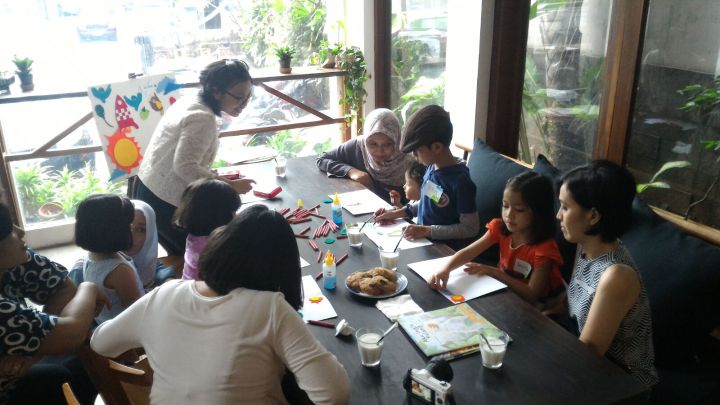
Ninit: It was really fun. We tried some new methods that we have never used before. The two main activities were storytelling and story making. Storytelling is quite common, but story making was new for us. We did some research and decided that we needed to make age groupings to make the activities more effective. We had two age groups, the 2-3 years old and 4-6 years old.

In both groups we made a storyboard and prepared props that enable the children to participate in the storytelling. For the story making we put some tools that they can work with, the younger audiences get a pack of cut out flannel fabric that they can stick on a piece of paper with their parents, while the older ones get to draw and make their own storybook that they can keep. It was really fun to see how the children responded to the activities.

The Dusty Sneakers I Seumpama 3

Seumpama’s storytelling and storymaking session in action

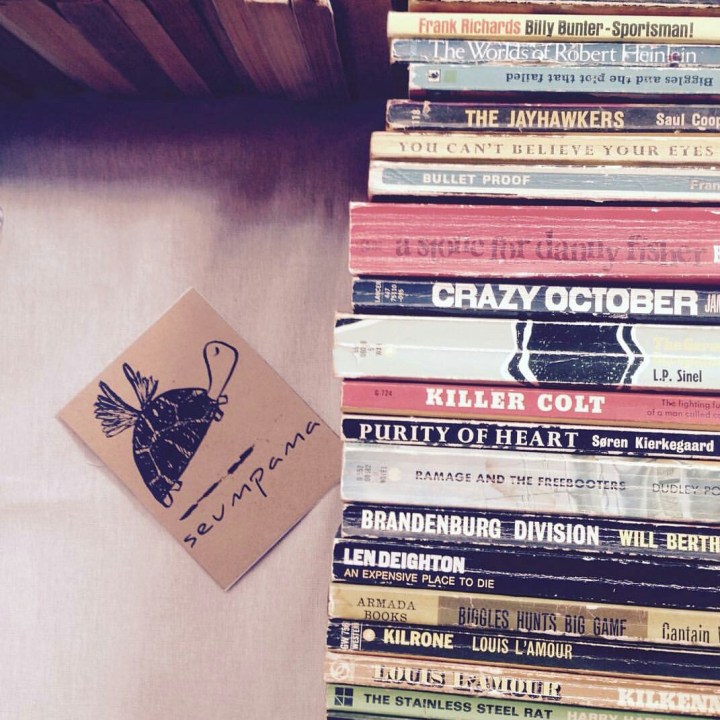
 Seumpama’s collection mostly consists of vintage books from the U.K. Why do you choose to carry books from that era, and which two books you would you strongly recommend to readers?

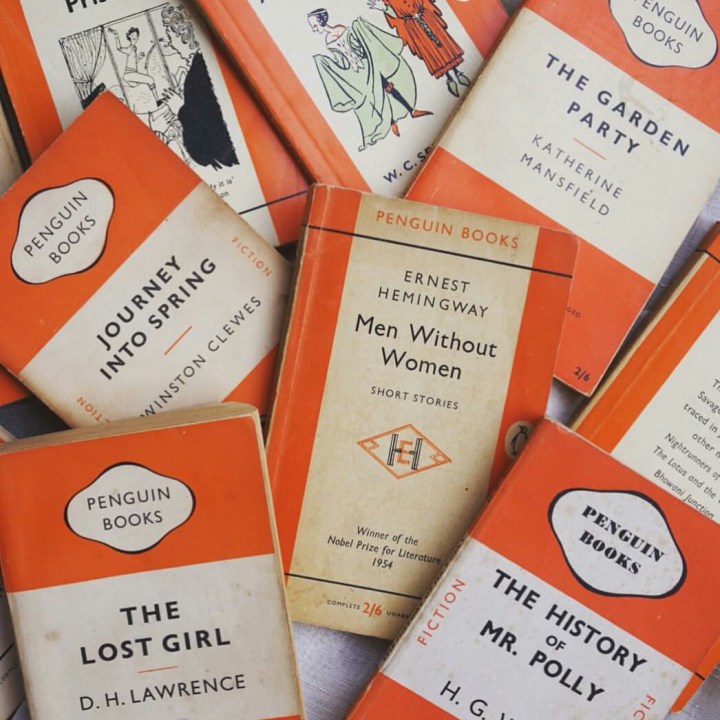
 Rassi: We grew up reading classics, and Penguin took a significant part of our reading materials. We love its consistent looks and friendly feel; taking a Penguin never feels intimidating. The titles that we have mainly come from the early days of Penguin, we notice that the written works on this period of time celebrate the essence of fiction and the need to distribute ideas. We think authors of that time had the best foundation in writing. They didn’t have as many distractions as we do today, which makes their work – and words – feel so thorough and focused.

Finally, vintage books capture the birth, growth, and evolution of ideas. A lot of books have scribbles, note to love ones, or highlighted quotes dating back to the 1940s. It feels like holding a time travel machine.

We would recommend Margery Allingham’s books. She writes in the genre of crime and mystery. One may compare her to Agatha Christie, but we find that her stories have a strong depiction of the society and the social issues. You can check her books Sweet Danger and Hide My Eyes. Virginibus Puerisque by Robert Louis Stevenson is also another that you might want to check from our line-ups. This book compiles his essays on mundane topics like marriage, youth, illness, and the mesmerizing gas lamps. But remember, he wrote Dr. Jeckyll and Mr. Hyde too, so the seemingly mundane topic is actually quite intriguing.

The Dusty Sneakers I Seumpama 9

Seumpama’s interaction with the public so far have taken place during pop-up events, such as the Christmas Market and Pojok Buku at 1/15 Coffee as well as Kenduri Kata at Suar Art Space. What are your most interesting insights about readers in Jakarta from these events?

Ninit: We are really humbled with people’s responses. It was really pleasant to meet people with the same – if not more – passion in books and narratives. We had our doubts on whether or not books – especially physical ones – would remain relevant. But our experience had shown that people would always be hungry for stories that could captivate them. Moreover, the publication of Terbang had also confirmed that books and narratives are still essentials for the next generation. It pushes us to look for more stories that could fill in the realm of storytelling, not only for children but also for a wider audience.

In another note, though, we do feel that some still perceive books as exclusive and different, a more ‘expensive’ activity. We’ve expected this to happen. We need to make book fun, less intimidating, more inclusive, but remain enlightening.

The Dusty Sneakers I Seumpama 7

 What can we expect to see from Seumpama Books in the near future? What do you have up your sleeves?

Rassi: The closest exciting thing is our website. We’ve been working on it in the past couple of months and hopefully it’ll be up sometime in April. When that happens, readers can browse through our complete list of books conveniently and make their purchase from there.

After that, we are going to launch a new original story. I’ve already started in some new titles and Ninit is writing a new material of her own.

Later in the year, we are looking to include works from other writers, illustrators, and story-makers in our publication. We are still preparing the details for this initiative, but we’re really excited about it.

The Dusty Sneakers I Seumpama 10

 How do we get in touch with you? 

We are active on Instagram as @seumpamabooks and on Facebook as Seumpama. You can catch our latest update there. If you’re looking for a more extended response, you can always reach us at seumpamabooks@gmail.com or via Whatsapp at 0815 1418 1964.

The Dusty Sneakers I Seumpama 1

When POST and Seumpama teamed up for Pojok Buku at 1/15 Coffee

“The only people for me are the mad ones, the ones who are mad to live, mad to talk, mad to be saved, desirous of everything at the same time, the ones who never yawn or say a commonplace thing, but burn, burn, burn like fabulous yellow roman candles exploding like spiders across the stars and in the middle you see the blue centerlight pop and everybody goes ‘Awww’!” – Jack Kerouac. There are many kinds of madness, but our favorite is the kind where it drives someone to purse their creative passion and embrace others to join them in being mad together. The Mad Ones is our periodic column, in which we interview people who inspire us through their madness.


*Other than the photo of Terbang, all photos are courtesy of Seumpama Books.

comment 0

Two Months of Breathing Books

Teddy and I breathe books. We make sense of the world through stories, we travel because of books, and the best friendships in our lives are intertwined by reading. POST, our independent bookshop in Pasar Santa, is a way for us to bring together our love for books and our desire to connect with new people who feel as strongly as we do about books. We are lucky that the first two months of 2016, two months that seemed to have flown by, were filled by people who wanted to collaborate with POST in new ways outside of Pasar Santa. Here is short note to celebrate our collaborators, the people who have written about their experiences in our experimental events, and the people we met.

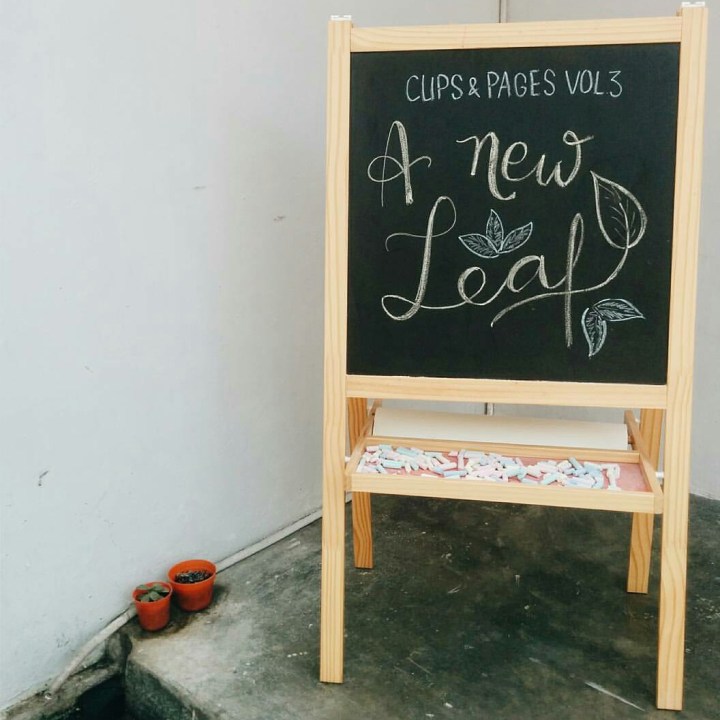
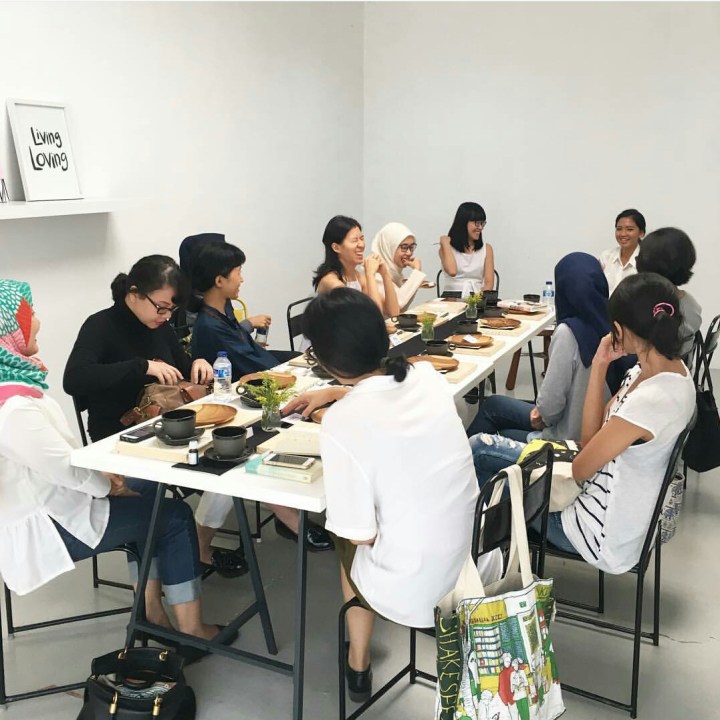
Cups and Pages Vol. 3 : A New Leaf with Living Loving and Kemala Home Living

The Dusty Sneakers I Cups and Pages 2

The Dusty Sneakers I Cups and Pages 3

Photo courtesy of Kania Annisa

The Dusty Sneakers I Living Loving - Cups and Pages

Photo courtesy of Living Loving

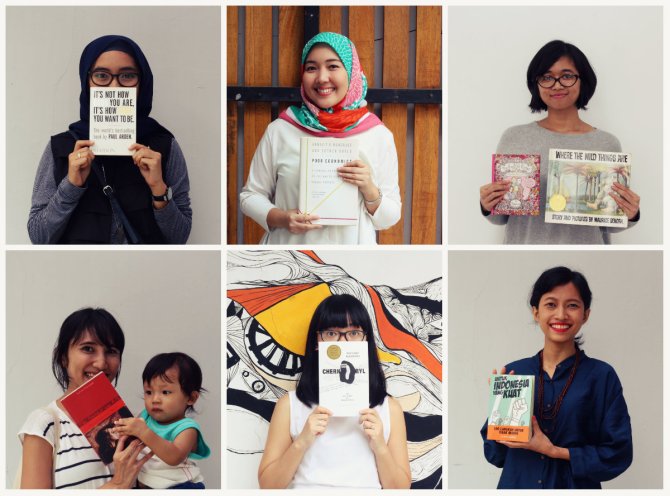
Cups and Pages started as a small gathering for us to meet new people and get to know them through books, and in January, we decided to tweak the format to include more people and have deeper conversations. To celebrate the new year, we chose the theme A New Leaf and invited Ayu Larasati and Kania Annisa to share books that shaped their journeys of turning over a new leaf as creative entrepreneurs. Miranti wrote about the gathering in the LivingLoving blog.

Kenduri Kata with Suar Art Space

The Dusty Sneakers I Kenduri Kata 2

The Dusty Sneakers I Kenduri Kata 3

The Dusty Sneakers I Kenduri Kata 1

Photo courtesy of Suar Art Space

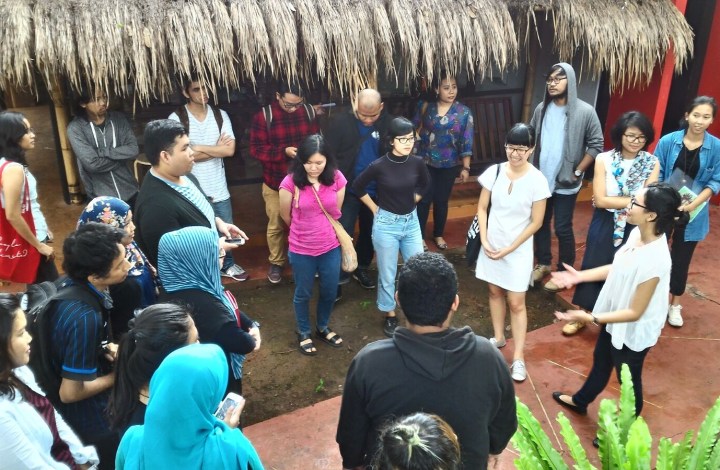
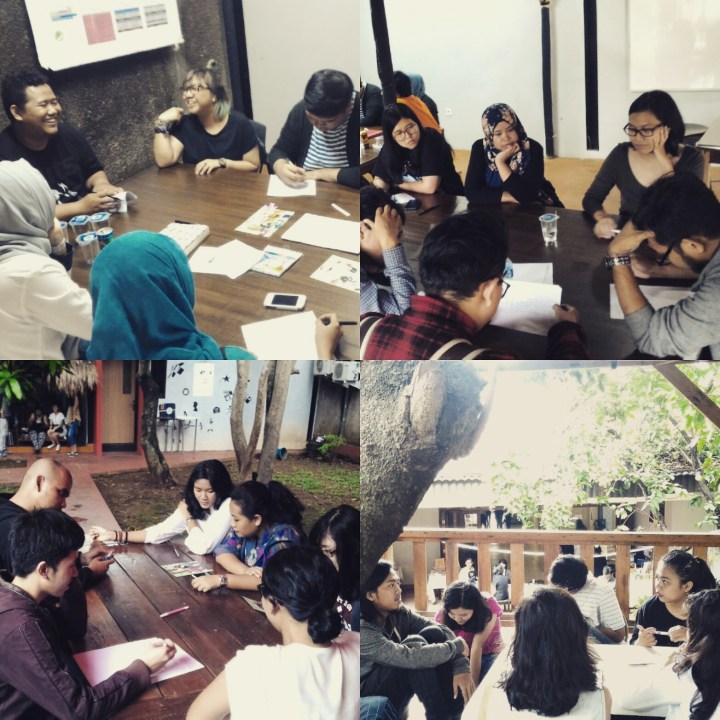
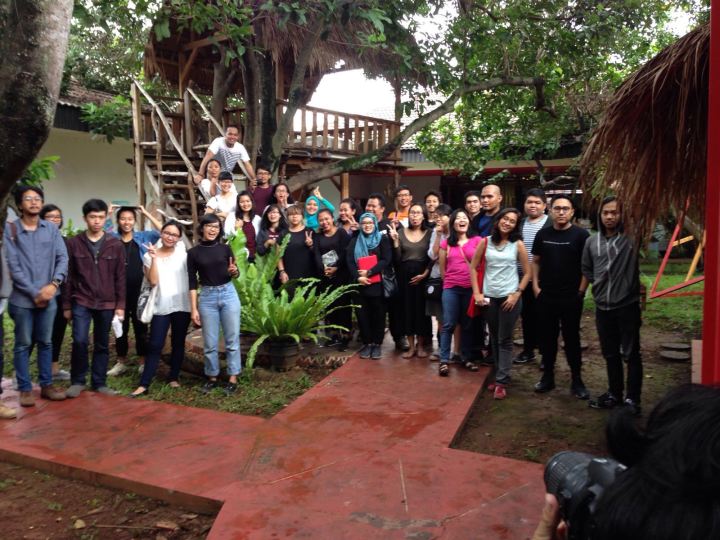
Back in December, Suar Art Space told us about their plans to debut their first event with writers and we jumped at the opportunity to try a writing jamming session, where different people write one story by taking turns in writing sentences. The process was facilitated by four writers who are also friends of POST: Adimas Immanuel the poet, Arman Dhani the essayist, Irfan Ramli the screenwriter, and Syarafina Vidyadhana the writer who co-founded The Murmur House. Nico Novito wrote a lively report of the event for The Jakarta Globe.

Wego Hangout: Travel for Books 

The Dusty Sneakers I Wego Hangout 2

The Dusty Sneakers I Wego Hangout 4

The Dusty Sneakers I Wego Hangout 3

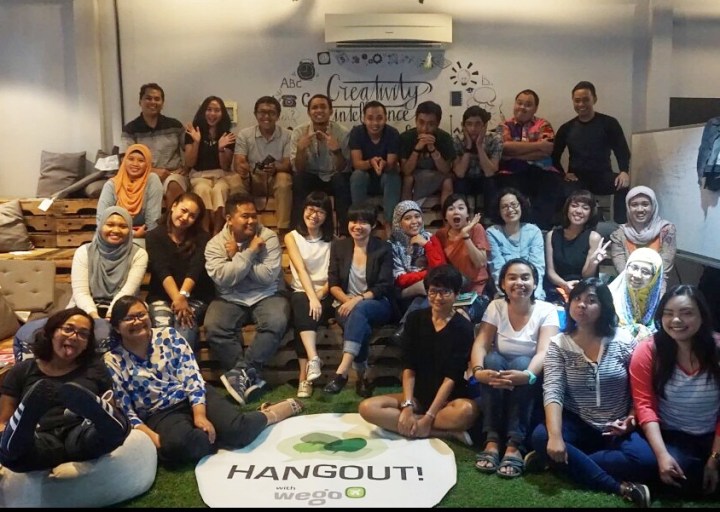
Travel stories about books have a special place in our hearts, so we’re ecstatic that Wego wanted to collaborate with us to include that as a theme in their Hangout series. I had the chance to share POST’s book hunting experience in London, Hanny Kusumawati talked about how books brought her to India and Pakistan, and Arman Dhani showed us libraries and independent bookshops across Indonesia. You can read a recap at the Wego site.

Pojok Buku with Seumpama Books and 1/15 Coffee

The Dusty Sneakers I Pojok Buku 1

Photo courtesy of Seumpama Books

The Dusty Sneakers I Pojok Buku 4

The Dusty Sneakers I Pojok Buku 3

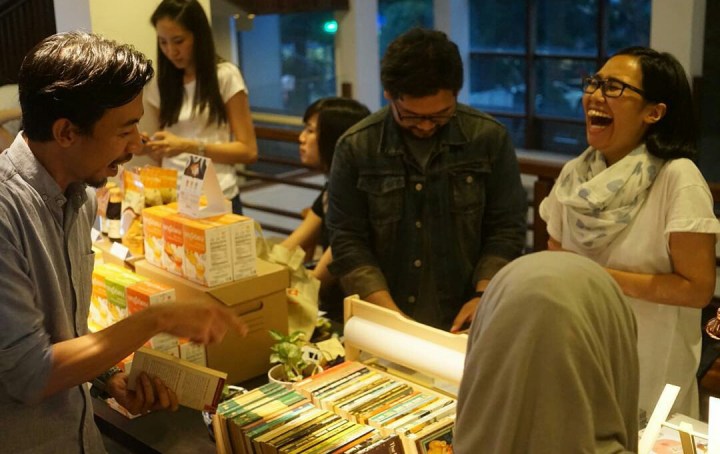
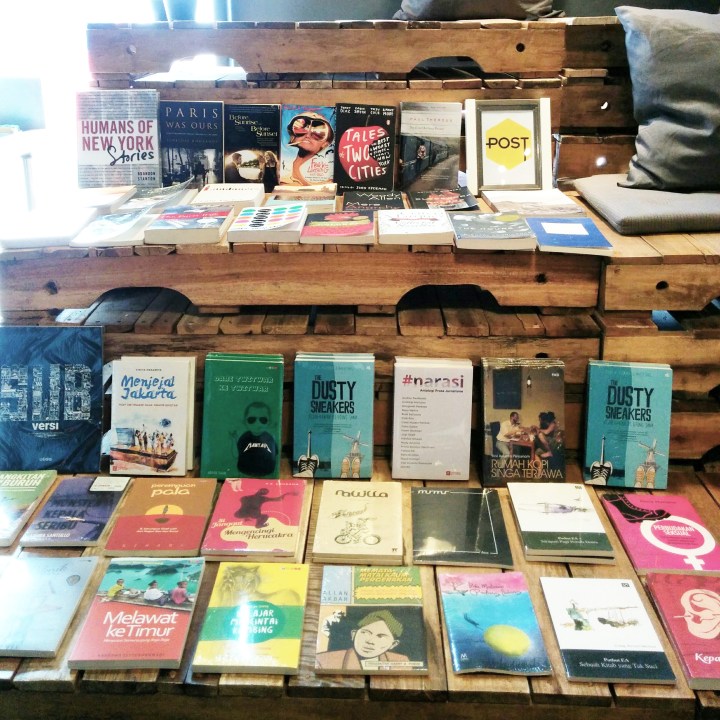
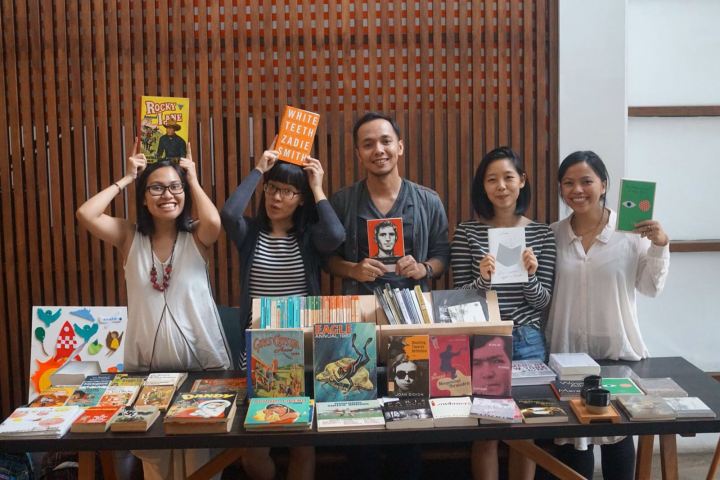
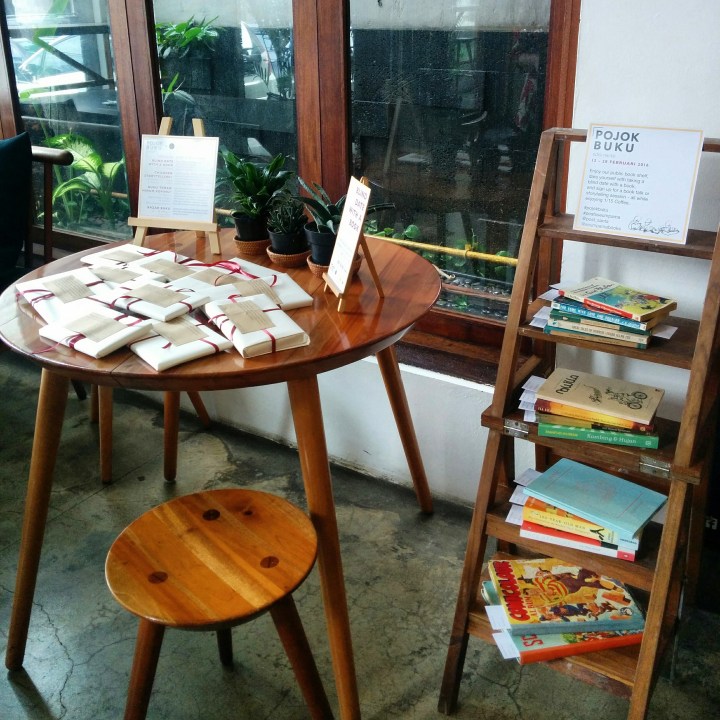
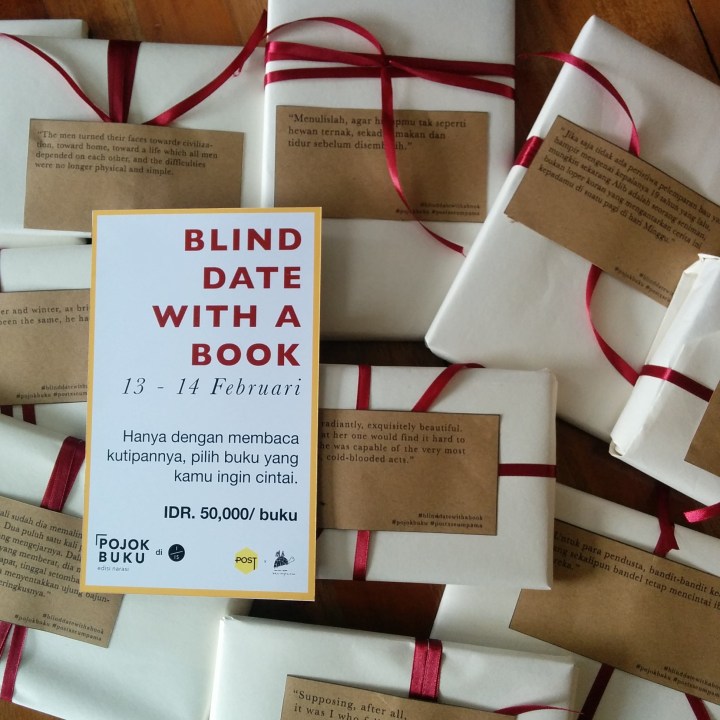
Cafes are one of our favorite places to read, so we’ve always wanted to create different experiences related to books and reading in a cozy cafe in Jakarta. Seumpama Books, a new independent book studio powered by two dynamic ladies, had the same idea. We both brainstormed with 1/15 Coffee and came up with Pojok Buku, a three-week initiative throughout February that included a reading corner in the cafe, a Blind Date with a Book for Valentine’s Day, storytelling sessions for children by Seumpama, readers gathering by POST, and a final hurrah in the form of a book bazaar. Media Indonesia covered the collaboration in their Sunday edition.

The first two months of 2016 were ones filled with books, ideas, and collaboration with people – artists, cafes, travelers, writers, entrepreneurs – who have a special place for the written word in their lives. Other than these events, weekends at POST were also filled with art exhibitions, book launches, writing workshops, and conversations that we won’t be able to always write about.

In March, we are looking forward to slowing down. POST will continue its activities in Pasar Santa, I’ll keep documenting the books I read on Instagram, but we’ll be making more time to write and travel. We’ll be heading to Japan in a few weeks and the list of bookshops to visit are already longer than temples and parks. We breathe books, after all.

Cheers,

Maesy