comments 8

A Love Note for Ullen Sentalu

Do you have one of those places you’ve always gone to but never really explore? Jogja is such a place for me and Twosocks. Work would send us there nearly every other month, but it has been more than a decade since I properly explored the place as a traveller. It’s not the Malioboro or the Kraton we yearned to revisit, or the gudeg and lesehan we crave in our palate.  It was going outside the bounds of the provincial capital and experiencing what the other four regencies have to offer that compelled us to hoist our backpacks, book a room for IDR150k/night in a small guest house, and hire a car to take us around Jogja last Easter weekend.

There really were a lot to see and do in the short span of three days. We cartwheeled and sand-surfed around the magnificent dunes of Gumuk Pasir, the closest thing Indonesia has to a desert. We rented a motorbike and explored the slopes of the Merapi volcano and enjoying the cool mountain air. We climbed over three hundred steps to take a peek at the tombs of the Sultans of Yogyakarta and Surakarta. We visited Beringharjo village, the prima donna du jour for tourist destination in Jogja, and lazily floated in a tube to see fruit bats hanging at the roof of the limestone cave in Pindul. We climbed aboard a pick-up truck running off-road to a river where we body-rafted, jumped off cliffs, and had a spiteful water fight. We splashed, crouched, and climbed across the long, dark, underground, bad ass cave that was Gua Cerme. We sipped countless clay cups of teh poci, devoured dozens of rabbit satay, and inhaled Indomie and nasi rames at sidewalk warungs like no tomorrow. We took roads that snaked around lush paddy fields and cuts through forests while our driver shared anecdotes of rural life in Jogja, from the struggles of farmers in Gunung Kidul during dry season to the many wives of a kyai who supposedly masters black magic.

They were all thrilling and wonderful, but above all, there was Ullen Sentalu.

Ullen Sentalu is a museum of Javanese culture and art in Kaliurang, which I have heard friends gush about and understand within minutes of setting foot on its door why such gushing is warranted. It was a treat for all five senses – I am just not that lucky to have a sixth sense.

There was the perennial petrichor – the scent the rain makes when it kisses the soil and one of the universally most beloved scents. The museum complex consists of several buildings and gardens sprawled over a huge complex surrounded by pine and cinnamon forest. The cool breeze of Kaliurang gently carried the petrichor around and accompanied us as we walked the maze-like corridors connecting one building to the other.
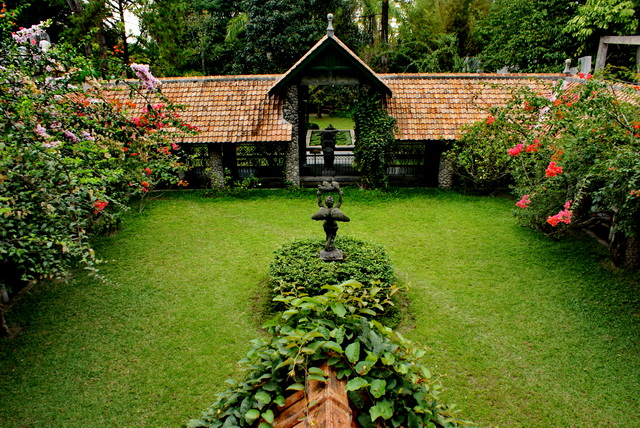
The sights were breathtaking, and no, I am not exaggerating. The European, colonial stone buildings, the tall trees in the surrounding forest and the well-tended gardens, the sculptures displayed outdoor – the architecture was enough reason to declare the place a museum. Some galleries were located underground, others were small rooms interconnected within a labyrinth. The art collection housed by the museum was no less impressive. Three-dimensional paintings of kraton princesses and sultans with eyes that followed us as we moved past it, handwritten letters and love notes of the royal family, the intricate gamelan and batik collections, and the black-and-white childhood photographs of royal family members with yellowing tattered edges were elegantly displayed under warm golden lights. There were no camera flashes or smartphone clicks to disrupt the visual joy, as the museum strictly forbids picture-taking. There were excited smiles and curious stares from the visitors, instead of the usual bored expressions I so often see in museum visitors.

We were not allowed to touch any of the displays, but our shoulders brushed against other visitors in our group. Ullen Sentalu breaks the visitors into several groups per hour and assigns a guide to escort the group into the museum and share the stories of the person immortalized in the painting or the message painted into the batik patterns. I normally hate being in group tours, but the Ullen Sentalu experience was made special also because of the people in our group. There were small things people did, like saying “Excuse me, Mbah” whenever he entered a new room, which reminded me of old Javanese belief that antique things contain a spirit within them. There were funny jokes and questions addressed to the guide, which I enjoyed and in turn allowed me to recognize how others also enjoyed being in the museum.

 And of course, there were the stories we got to hear. There was the Sultan in his fifties who married a kraton princess in her teens, choosing her because she was the only one among her sisters to steal a glance at his face and made him fall in love at first sight. There was the surprise upon hearing the Western nicknames of sultans and princesses, such as Bobby and Tineke, which reminded me just how close the priyayis were to our Dutch colonizers. But for me, the most captivating story of all is the story of Gusti Nurul, the only daughter of Sultan Mangkunegara the seventh.
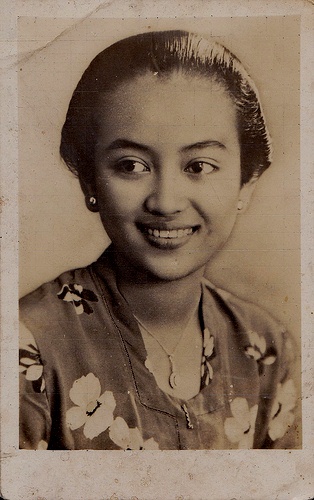
The room hosting Gusti Nurul’s paraphernalia is called Ruang Putri Dambaan – Room of the Desired Princess – because she really was desired by many important men in Indonesia’s history. The pictures from her youth showed how classically Javanese her beauty was, but they also showed her many talents. She was an equestrian, a rare feat for any woman at that time, and a remarkable Javanese classical dancer who sailed for a month to the Netherlands in her teens to dance for Princess Juliana’s wedding to a tele-conferenced gamelan orchestra through a gramophone.  With such beauty and talent, Soekarno, Sutan Sjahrir, and Sultan Hamengkubuwono the ninth have all proposed to her, only to be turned down because she refused to be in a polygamous marriage. She ended up marrying a quiet, low profile soldier when she was 30 years old and led a happy life in Bandung away from the public eye.  I have always had a penchant for stubborn Javanese ladies, ignited by the amazing Indonesian author N.H. Dini who wrote about sex so honestly in her books laden with strong female characters, and I admired her even more for standing up to tradition of marrying at a young age in a household where polygamy has always been the norm.

The cherry on top of the Ullen Sentalu experience was the jamu served to us at the end of the tour. The herbal drink made of tangerine, lemongrass, and curcuma was taken from one of the Sultan’s recipe book and it warmed us after walking through the nippy underground galleries and the cool Kaliurang breeze in the gardens. The jamu was not listed in the menu of its charming colonial restaurant, the Beukenhof, but the place served one of the tastiest chocolate mousse Twosocks and I have ever had.

Ullen Sentalu may not boast a vast collection in the calibre of the Louvre or displays as enigmatic and enthralling as the mathematical paintings in Den Haag’s Escher museum, but it was the only one that offered us such a lavish feast for the five senses. Hands down, it was the most beautiful museum I have ever seen and the best museum experience I have ever had, and I am very happy to have found it in one of Jogja’s corners, a mere hour flight from my hometown.

Jakarta, 1 April 2013

Gypsytoes


P.S: I just noticed the date. Trust me, folks, the sentiment expressed in this love note to Ullen Sentalu is not an April Fool joke!
comments 5

Luang Prabang: A Place Where Time Stood Still

Robert Deep, Jr. nama pria 52 tahun itu. Seorang koki sekaligus pecandu petualangan. Hampir 15 tahun ia jadi tukang masak di sebuah keluarga di New York. Oleh mereka, Bob, panggilannya, selalu diberi tiga bulan penuh libur dalam setahun. Tentu Bob melakukan hal yang paling dicintainya selain memasak: Keliling Dunia. Bob sudah kemana-mana, Amerika Selatan, Timur Tengah, Afrika Utara, macam-macam. Ia juga pernah dua minggu duduk melihat laut di Halmahera di sekitar awal tahun 2000. Sebagian besar perjalanannya dilakukan sendiri saja. Banyak teman yang belum tahu ia punyai tersebar di mana-mana, begitu katanya. Ia berkeliling untuk menyapa mereka. Hari itu saya bertemu dengannya, berbicara ke sana kemari sambil minum beerlao di pinggir sungai Mekong di Luang Prabang.

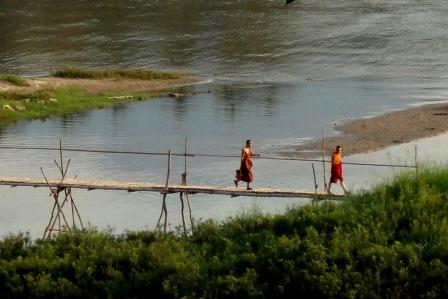
Ini adalah tiga hari saat saya berjalan sendiri di Luang Prabang. Banyak sisi menenteramkan di kota yang dikelilingi perbukitan ini. Bangun pagi-pagi melihat barisan biksu yang berjalan mengumpulkan bahan makanan dari masyarakat setempat, duduk di kafe-kafe di pinggir jalan, menelusup di gang-gang kecilnya yang ber-paving merah, masuk ke kuil-kuilnya yang hening, atau melihat matahari terbenam dari atas bukit Phousi. “This is a place where time stood still,” begitu para pejalan menyebut kota ini.

Kota yang kalem ini membuat setiap orang seolah ada dalam suasanan hati yang baik. Setiap pejalan menyapa dengan ramah. Selain Bob, perjalanan seorang diri ini membuat saya berbicara dengan banyak orang lain. Isabella, arsitek Portugal yang baru kehilangan pekerjaannya lalu memutuskan berjalan keliling Asia, Dauei pekerja real estate asal Jepang yang ingin hidup tanpa harus menepati janji atau datang tepat waktu, juga Somvit tukang perahu yang membawa saya melihat matahari terbenam di sepanjang sungai Mekhong. Perahu yang kami naiki dibuat oleh tangan Somvit sendiri, pria gundul 25 tahun yang berwajah seperti bocah 17 tahun. Ia mengoperasikan perahunya setiap sore bersama Kinipela, istrinya. Betapa ia bangga akan perahu dan istrinya itu. Ia memamerkan album foto pernikahahnya yang dilakukan dalam tradisi Laos sembari Kinipela memegang kendali perahu. Kinipela juga cukup fasih mengendalikan perahu. Selain membawa pengunjung melihat matahari terbenam, mereka pernah membawa perahunya menyusuri sungai Mekong sampai ke Thailand. Saya berkata pada Somvit betapa mereka begitu romantis. Setiap sore Somvit memberikan matahari terbenam untuk istrinya di atas perahu yang ia buat sendiri. Saat Somvit menerjemahkannya untuk Kinipela mereka tertawa geli dan saling memandang dengan sayang.

Lama juga sejak terakhir kali saya melakukan perjalanan sendirian. Di beberapa sudut Luang Prabang terkadang saya kangen Gypsytoes dan membayangkan bagaimana ia tentu girang kalau juga ada di sini. Namun, Luang Prabang juga adalah kota bagi mereka para penyendiri, mereka yang datang tak berkawan. Senang rasanya duduk memperhatikan barisan biksu yang berjalan dikala fajar atau melamun melihat matahari terbenam sambil minum kopi Lao. Saya terpanggil untuk sedikit berdoa di sebuah kuil yang hening yang tersebar di banyak sudutnya. Kota ini pun menawarkan petualangan-petualangan yang saya lakukan dengan berbinar. Trekking seharian menemui penduduk suku Khmu dan Hmong, atau empat jam kayak diantara arus sungai Nam Ou yang terkadang deras juga. Arus yang sempat membuat saya terlempar ke sungai dan membenturkan mulut di kayak saya sendiri. Kota ini juga menawarkan keramahan para pemuda setempat. Pada malam di hari perempuan internasional, Euling, pemandu saya saat trekking ke desa suku Khmu mengundang saya untuk merayakannya dengan cara khas pemuda Luang Prabang. Di hari perempuan internasional, para pemuda akan membeli minuman gratis untuk para perempuan Laos. Jadi itulah yang kami lakukan. Saya ikut dalam sambutan ramah para pemuda pemudi setempat sampai lewat tengah malam saat mereka mulai meracau dalam bahasa Laos yang tentu tidak saya mengerti. Lewat tengah malam saya pamit karena tidak mau tertinggal untuk sekali lagi melihat datangnya barisan para biksu saat fajar datang.

Perjalanan sendiri ke tempat yang sama sekali baru terkadang menciptakan perasaan nelangsa atau tak tentu arah. Namun, berada di kota yang dapat membuai para penyendiri ini serta mengetahui bahwa saat pulang nati ada kawan berjalan yang masih akan selalu ada membuat kebahagiaan saya ada di titik yang tinggi. Malam itu saya meninggalkan Luang Prabang dengan tersenyum. Terbang menuju Hanoi masih dengan celana pendek yang sama yang saya gunakan saat tercebur di sungai Nam Ou sore harinya. Dengan bangga saya bercerita ke Gypsytoes, celana dalam saya yang belum benar-benar kering setelah tercebur sungai melakukan penerbangan antar Negara. Sonk dee deuh, Luang Prabang. Sampai Jumpa, Luang Prabang.

Twosocks, Maret 2013.

comments 5

Akhir Pekan Saat Kami Berjalan ke Masa Lalu

Saya adalah pria dari masa lalu. Saya kerap melihat hal-hal di sekeliling seolah dalam gambar hitam putih dengan latar belakang lagu-lagu jazz tua. Saya senang membayangkan tahun 60an sebagai masa yang romantis, saat para pemuda dan pemudi haus akan karya sastra dan The Beatles, saat mereka jauh cinta dan berbicara dengan santun, saat mereka mengenakan pakaian berwarna dengan bunga di tangannya. Tentu ini bukan gambar-gambar yang secara keseluruhan mewakili jaman terdahulu, tapi memandangnya dengan cara itu selalu membuat perasaan saya menjadi melankolis. Dan saya menyukainya.

Akhir pekan lalu, sisi saya ini seolah mendapatkan kemanjaan yang diidamkannya. Dimulai di hari Jumat malam di Tryst’s Kemang. Gypsytoes, sahabat saya yang ceria itu, mengatakan di sana sedang ada pesta bertema tahun 80 an. Mata saya lantas berbinar. Terbayanglah remaja-remaja dengan ikat kepala break dance nya, lagu ‘Jalan Sore’ Denny Malik yang menggemaskan itu, Phil Collins saat dalam formasi Genesis, dan tentu saja munculnya sekelompok pemuda nan energik New Kids on the Block! Tanpa berpikir panjang saya menyanggupi ajakan Gypsytoes untuk pergi ke Kemang.

Memasuki Tryst’s kami seolah memasuki sebuah kereta waktu penuh nostalgia. Kami disambut dengan slide show hal-hal yang begitu ikonik dari tahun-tahun itu. Gambar Koes Hendratmo yang anggun membawakan acara ‘Berpacu dalam Melodi’, foto Ralph Macchio lengkap dengan ikat kepala nya di film ‘Karate Kid’, logo siaran Dunia dalam Berita, foto Ateng dan Iskak, video game Sega, dan banyak lagi. Setiap slide berganti kami bersama- sama berteriak sambil menunjuk-nunjuk slide: Richie Ricardooo!! Gabann!! Jaka Sembungg!! Rocky Balboa!!! dan seterusnya. Dan saya semakin ke puncak saat Diskopantera, sang DJ yang eksentrik itu, memainkan lagu ‘Aku suka kamu’ dari Trio Libels. Saya berjoget dengan riang dan menyanyikan setiap liriknya dengan fasih. Sungguh saya senorak itu. Dalam acara clubbing dan sejenisnya saya biasanya adalah anak yang duduk di belakang, meminum minuman saya perlahan, dan memperhatikan sekeliling dengan tenang. Namun malam itu, saya lepas kendali. Saya nandak-nandak kegirangangan mengikuti lagu ‘Karma Chameleon’ dari Culture Club, melompat-lompat mengikuti rap Iwa K, melakukan moonwalk diantara lagu ‘Beat It’, dan menirukan suara sember Danny Wood di lagu ‘Step by Step’. Sungguh perjalanan kereta waktu ini begitu menyenangkan. Saya adalah penyanyi yang buruk dan penari yang menyedihkan, namun itu adalah malam yang penuh nostalgia. Sedikit tidak tahu malu tentu tidaklah mengapa.

Dan perjalanan waktu tidak berhenti di sana. Keesokan harinya, di Sabtu sore yang baru saja berhujan, kami ada di taman belakang Dia.Lo.Gue Kemang yang asri. Di sana kami menyaksikan konser mini White Shoes And The Couples Company. Dengan melihat gaya berpakaian retro mereka saja, kami sudah dibawa ke suasana tahun 60-70an yang berbunga. Ditambah suara tabla yang bertalu halus, alunan cello yang mendayu, dan kerlip lampu taman di kala senja membuat suasana menjadi semakin ramah. Namun suara dan gerak tubuh Sari sang vokalis lah yang sungguh membawa kami ke masa lalu yang bersahaja itu. Saat menyanyikan lagu seperti ‘Nothing to Fear’ atau ‘Kisah dari Selatan Jakarta’ , suara Sari yang begitu lembut dan gerak tangannya yang sangat anggun menciptakan suasana masa lalu yang begitu kental. Komunikasi dengan penonton pun dilakukan dengan bahasa Indonesia yang tertata rapi dan sederhana. Sungguh kami dibawa ke sebuah masa saat remaja jatuh cinta dengan santun dan terobsesi akan karya-karya seni yang indah. Sore itu kami merayakan sebuah kegiatan berkesenian yang ramah, bersahaja, anggun, dari sebuah masa yang penuh romansa. Sebuah masa yang juga melahirkan Galih dan Ratna, The Beatles, atau film ‘Annie Hall’.

Taken from WSATCC's official website

Akhir pekan itu membuat saya teringat akan film Woody Allen berjudul ‘Midnight in Paris’ dimana sang tokoh utama begitu terobsesi akan Paris masa lalu. Masa yang ia anggap mewakili segala keindahan kesenian. Sebuah perjalanan waktu membawanya kembali ke Paris di tahun 1920an dan memberinya kesempatan berinteraksi dengan Ernest Hemingway, Cole Porter, F. Scott Fitzgerald dan semua nama-nama besar itu. Film itu kemudian bercerita bagaimana masa lalu memang selalu jauh lebih indah di mata orang masa depan yang meromantisasinya. Tentu saja itu ada benarnya. Namun tentu itu juga tidak mengurangi indahnya nostalgia perjalanan waktu. Indahnya melihat kembali masa di mana ayah ibu kita pertama kali jatuh cinta, atau mendengar kembali lagu-lagu yang menghantarkan tidur saat kita dahulu membayangkan cinta monyet masa kanak-kanak. Pojok-pojok Jakarta memang selalu memberikan kejutannya. Dan akhir pekan itu ia memberikan bingkisan sepotong masa lalu untuk kami.

Februari 2013, Twosocks

Salam hangat untuk kawan-kawan perjalanan: Gypsytoes, Jurist Tan, Ben Davis, dan Soichiro Shibata

comment 0

Of Child-like Excitement, Christmas Market, and Hitler

It’s December. It’s that time of the year again when the world seems to spin at a slower pace, when things become mellow no matter rain or shine, and when reminiscing becomes inevitable. Living in Indonesia almost all my life, the Christmas tree I know are plastic fakes and snow is the Styrofoam particles shot from the highest story of a mall in the heart of Jakarta. But there was a time when I got to feel snow on my nose, sipping mulled wine to warm my veins, and find no shortage of sausage or cakes in a tinsel-filled outdoor market near Christmas time. I accidentally found a memento of such a time three years ago, which for some strange reason never made it to the blog. I sounded so child-like in my excitement – I have grown up a little bit by now but I fondly remember the excited kid I was. I decide to share the belated post as a homage to that wonderful time, to the wonderful friends I shared the memory with and to that child I am sure is still hiding somewhere in me. It is December after all, when it is okay to reminisce.

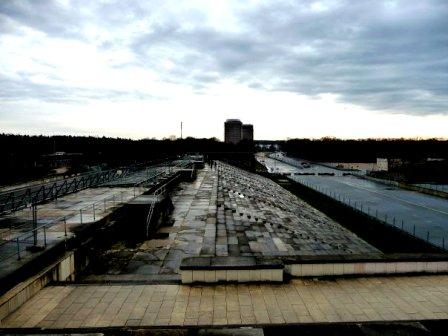
The nine of us were solemn as we approached the vast, empty concrete field. We were at the site where one of the most grotesque slices of the recent human history occurred. We were in the little known of Nuremberg, or Nurnberg in Deutsch, of Germany. Precisely, we were at the Zeppelin Field, where Hitler used to address his public and conducted Nazi party rallies. We were standing where Hitler once stood, and the feeling was overwhelming.

shuai hitler park

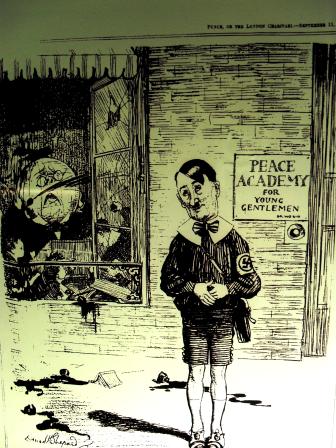
Right next to the field was the Hitler Documentation Center, which hosts everything there is to know about Hitler from his birth to his fall from power, although how he died was still a mystery even in the center. Films and pictures explained the meticulous method of building the Fuhrer propaganda, through angles of photographs and films and architecture as well as mobilizing youth. Newspaper clips from around the globe responding to his rise to power were also on display, showing how the world reacted to Hitler.

It was fascinating. It was emotional. It was what we came to Nuremberg for.

Yeah right.

The reason why nine students endured 11 hours bus ride (each way!) on a weekend with essays and debates due on Tuesday was that intellectual. Honest to goodness, the Nazi reminiscing was fascinating, but we were there for the Christmas market!

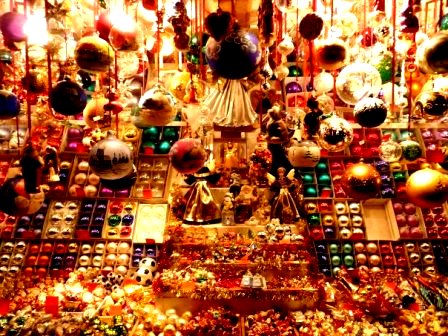
shuai tinsel

Christmas markets have always been a regular feature of the winter festivities in Europe, but this tropical girl had been deprived of that experience her whole life and would like to make the most out of it. And what would be a better place than Nuremberg, which is reputed as one of the best Christmas markets in the continent?

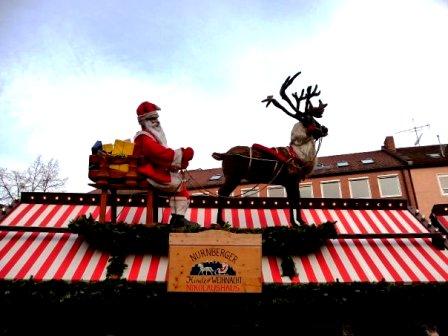
shuai santa

Most of the two days we spent in Nuremberg were spent in its Old Town area, where the Christmas markets were held. Oh yes, markets in the plural! There was one serious Christmas market with all the tinsels and food stands and there was another one for children, with joy rides and food stalls with fairy tale characters on their awnings.

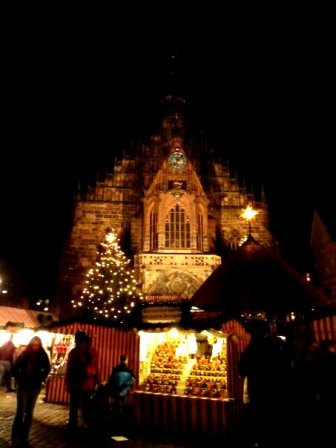
shuai stand and church

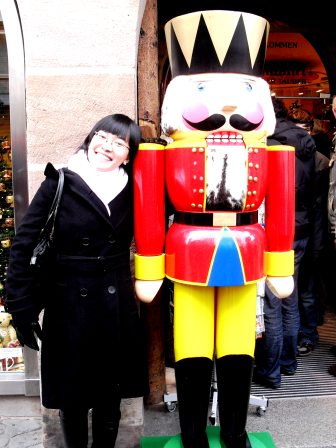
Of course, I made everyone go to the kiddie one first. Amidst munches of crepes and fish burgers and cotton candies, we watched as children rode the carousel and the trains. I was sorry that I no longer look like one, so I couldn’t join the merriment by hopping into the merry-go-round with them.  But at least I could still take a picture with a life-size Nutcracker and pretend to be Clara!

The adult Christmas market was even more fun than the kiddie one! I discovered the delight of drinking gluhwein, a spiced hot wine that would warm you instantly, outdoors. Drinking is not complete without eating, and boy, we did munch like champions. Wursts, potato fried cakes with apple sauce, baguettes, cheese fondue, hot dogs, candied nuts, chocolates, Christmas cookies – and all eaten not only once but over and over and over again.

There was something about the atmosphere that made me feel excited, and despite of wearing a mafia-like wool black grown up coat, I really felt like a kid again. It felt good.

Den Haag, 1 March 2010

Gypsytoes – of a trip in November 2009