comments 9

Di Atas Langit Papua

Kali ini saya meminta kawan lama saya, Rini Hanifa, untuk berbagi tentang Papua, tempatnya tinggal selama satu tahun terakhir. Sebelum tinggal di Papua, Rini sempat menghabiskan satu tahun sebagai relawan di sebuah kampung kecil bernama Rupununi di Guyana, Amerika Selatan. Pengalaman uniknya di Guyana bisa dibaca di kumpulan tulisannya dalam blog Indonesian Volunteer atau di buku ‘God, Do You Speak English?’. Selamat membaca kisah Rini kala terbang melintasi langit Papua! – Gypsytoes

Jikalau kita berbicara mengenai Papua, tidak akan pernah luput dari keindahan alamnya. Keindahan alam yang selalu membuat saya berdecak kagum dan tidak akan pernah merasa bosan. Mau dari sudut manapun, Papua itu indah. Baik dilihat dari laut, dari gunung, dari mobil, dari kapal – keindahan alamnya tidak terbantahkan. Termasuk pemandangan Papua dari udara.

Sejak pertengahan 2012 lalu, saya tinggal di sebuah pulau kecil bernama Pulau Yapen, tepatnya di ibukotanya yang bernama Serui. Untuk mencapai Serui, saya harus menggunakan jasa Susi Air, maskapai pesawat-pesawat kecil dengan kapasitas penumpang 10 hingga 12 orang.

Terbang dengan pesawat kecil ternyata cukup mengesankan. Pesawat Susi Air biasanya terbang cukup rendah, sehingga batas kita dengan keindahan alam dibawahnya sangat tipis. Penerbangan dengan pesawat Susi Air baik dari Biak ke Serui, atau sebaliknya dari Serui ke Biak, adalah bagian yang paling saya sukai dalam setiap perjalanan saya di Papua. Ada satu lokasi pemandangan favorit dilihat dari atas pesawat Susi Air, yaitu Sarawandori. Saya bahkan sudah hafal harus duduk dimana agar bisa melihat pemandangan ini. Jikalau dari Biak, saya harus duduk di jendela sebelah kiri, kursi satu. Dan sebaliknya jikalau dari Serui saya harus duduk di jendela sebelah kanan, di kursi dua.

Bagi saya Sarawandori ibarat melihat versi mini dari Wayag, Raja Ampat. Karena biaya ke Raja Ampat begitu mahal, tidak masuk dalam hitungan saya, saya cukup berpuas diri untuk menyaksikan keindahan Sarawandori. Selama 1 tahun pertama saya di Yapen, Papua, saya sudah bepergian dengan Susi Air sekitar 16-18 kali. Cukup sering. Dan dalam setiap penerbangan itu, saya hampir tak pernah lupa untuk mengabadikan keindahan alam Papua dengan kamera yang saya miliki. Keindahan yang masih belum banyak diketahui orang.

Bepergian dengan pesawat Susi Air adalah salah satu warna dari serangkaian pengalaman bepergian di Papua. Pilot dan co-pilot pesawat Susi Air selalu orang asing, dan mereka selalu berganti, shift pergantian mereka juga termasuk cepat. Saya hampir tidak pernah bepergian dengan pilot yang sama, jikalaupun ada, paling dua kali, kemudian saya akan melihat wajah baru lagi.

Hal yang menarik bagi saya adalah pilot atau co-pilot tersebut tidak hanya laki-laki, banyak juga perempuannya. Dari pengalaman saya bepergian, bisa dibilang ratio-nya sekitar 60:40. 40% untuk pilot dan co-pilot perempuan bagi saya keren. Saya juga pernah bepergian dengan co-pilot perempuan berambut hitam berwajah Asia. Dari aksen, sepertinya co-pilot perempuan tersebut dari Singapura. Melihat wajah Asia dari sekian banyak wajah kulit putih-pilot & co-pilot Susi Air bagi saya menyegarkan.

Bepergian dengan pesawat kecil tidak selalu menyenangkan. Di musim angin dan di musim hujan, bepergian dengan pesawat kecil bisa menyebabkan jantungan. Tak jarang ketika pesawat sudah sampai di tujuan tetapi tidak bisa mendarat dikarenakan angin kencang, sehingga pesawat berputar-putar diudara mencari posisi. Mencoba mendarat, gagal, coba lagi, hingga akhirnya bisa.

Atau dalam beberapa kasus, pesawat yang sudah tiba di Serui tetapi karena faktor cuaca tidak bisa mendarat, terpaksa kembali ke Biak. Untuk yang kedua ini saya sudah pernah mengalami. Cuaca sangat buruk waktu itu, pesawat waktu itu dikemudikan oleh pilot perempuan dan co-pilot laki-laki. Yang menarik dari pengalaman ini adalah sikap “cool” dari pilot tersebut. Si pilot terlihat tenang, cekatan, dan handal.

Menurut saya ini menarik karena mayoritas penumpang adalah laki-laki Papua yang sangat terkenal dengan “kelaki-lakiannya”, dan sekarang yang memegang kuasa di pesawat adalah seorang perempuan. Tetapi ketika saya tatap wajah-wajah penumpang, meski pesawat oleh ke kiri atau ke kanan, berguncang, wajah penumpang sangat tenang. Di Biak penumpang turun kembali menunggu hujan reda, dan penerbangan kedua ini berjalan lancar dan sukses mendarat di Serui. Penumpang menarik nafas lega, dan mengucapkan terima kasih ke pilot.

Ketika turun tangga pesawat, saya sempat mencuri dengar pembicaraan dua bapak Papua. Salah satunya bertutur bagaimana dia awalnya deg-degan, tetapi berangsur menjadi tenang melihat sikap tenang si pilot. “Ah, itu Mace barat bawa pesawat mantap,” begitu katanya.

Kalau di bahasa Indonesia kita secara umum kita menyebut orang barat dengan sebutan bule; bule laki-laki atau bule perempuan. Tetapi, di Papua beberapa kali saya dengar mereka menyebut orang barat dengan Pace barat atau Mace barat. Pace adalah sebutan untuk laki-laki, kurang lebih berarti pak, mas; sedangkan Mace adalah sebutan untuk perempuan, seperti ibu atau mbak.

Menurut saya, beruntung sekali mereka yang berkesempatan melayang di langit Papua bersama pilot-pilot perempuan. Banyak orang di Indonesia yang tidak berkesempatan melihat bahwa perempuan dapat menjadi pilot yang piawai, sehingga berpikir kalau pilot itu hanya laki-laki. Semoga, dengan melihat pilot-pilot perempuan handal tersebut bisa menginspirasi anak-anak muda Papua, termasuk perempuan untuk menjadi pilot juga. Dengan kondisi geografis Papua, dimana banyak tempat masih hanya bisa ditempuh dengan pesawat, Papua akan membutuhkan pilot-pilot yang handal.

Cerita dan foto oleh Rini Hanifa, ia bisa dihubungi di rini.hanifa@gmail.com. Sesekali, kami meminta kawan-kawan kami yang gemar menulis dan senang berjalan-jalan untuk mampir dan menceritakan kisah perjalanan mereka. Kisah kawan-kawan kami bisa dilihat di kategori Guest Writer.
comments 8

The Kama Sutras of Blossom Book House

A day after he flew to Paris, I found the copy of Kama Sutra that was meant for him.

He is a friend, a good friend. A friend who went under the flyovers of Jakarta with me to get an up, close, and personal look at street art; a friend who did that while quoting the American anthropologist David Graeber all the way. Like my other good friends, I got him a copy of Kama Sutra from a special bookshop in Bangalore, but unlike my other good friends, he hasn’t received his copy and the special magic that comes with it.

Dusty Sneakers I Kama Sutra-1

When I said magic, I did not mean the magic of suddenly enhanced sexual prowess. Contrary to popular belief that is partly caused by its modern iterations, the Kama Sutra is not a sex manual. The original manuscript, written by the early centuries Hindu philosopher Vatsyayana, is a collection of prose meant to be a guide on courtship, love, and pleasures in human relationship. Yes, some of its chapters discuss sexual positions, but it does so in a rather academic way and describes at length the types of biting, marking with nails, and slapping along with kissing, embracing, and the standard operating procedure of what to do if a man says the wrong name in bed. The majority of the compendium, which has no illustrations in its original version, also discusses the various forms of marriage, duties and privileges of the wife, how to treat other men’s wives, and courtesans. The original text described one of the characteristics of an undesirable woman as “a woman who smells”. Kama Sutra, in its original version, speaks volumes about the gender relations and stereotypes in ancient India and it does so through the universally enticing topic of love and sex. It is funny, it is eye opening, and it is, to me, perhaps the best thing from a trip to India that I can share with my friends.

Image

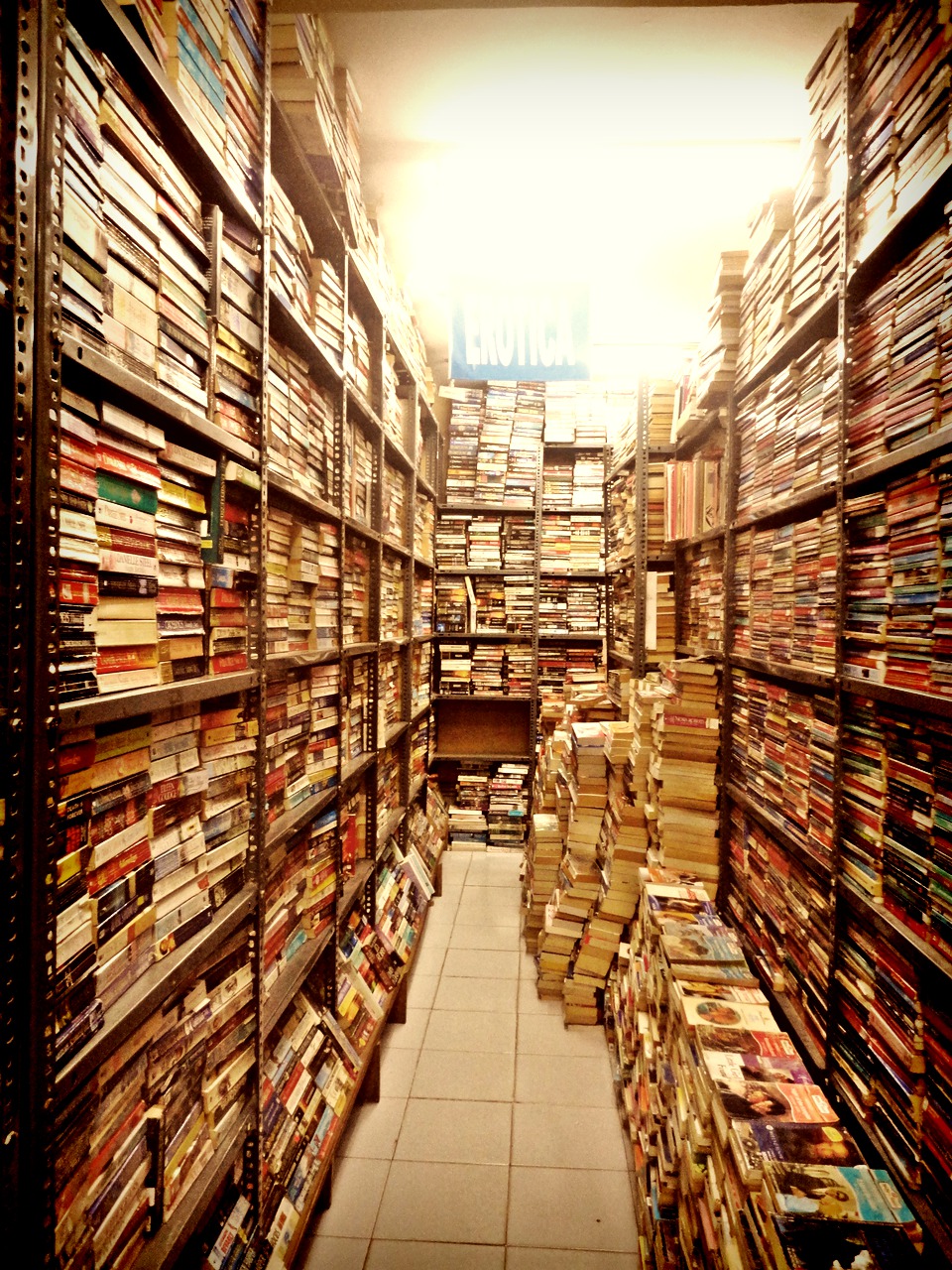
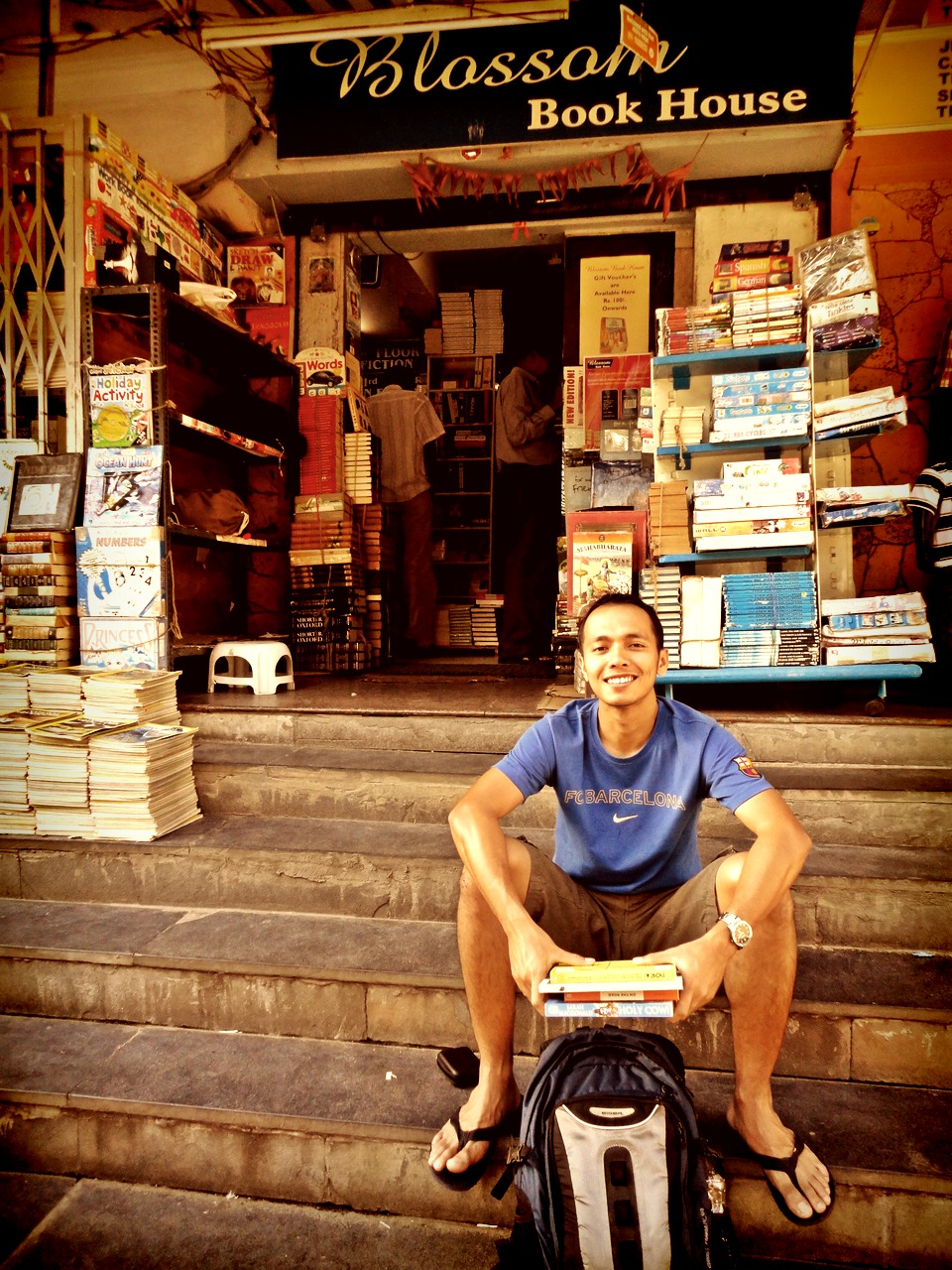
I started the tradition of giving Kama Sutra to my friends in 2010, when I stayed in Bangalore for my field research and discovered the wonder that is the Blossom Book House. The second hand bookshop is a three-story labyrinth where books of nearly every genre snaked in and over their bookshelves – horizontally, vertically, and diagonally at times. It’s a mess of a bookshop, a beautiful mess because it is a mess of a place that loves books to much that they overflow and fill the place with the perfume of old papers that people like me crave constantly.

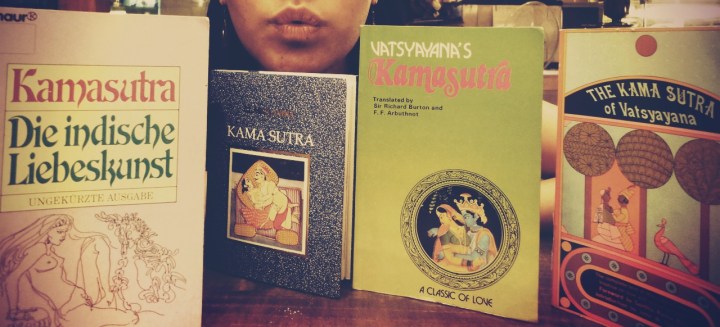
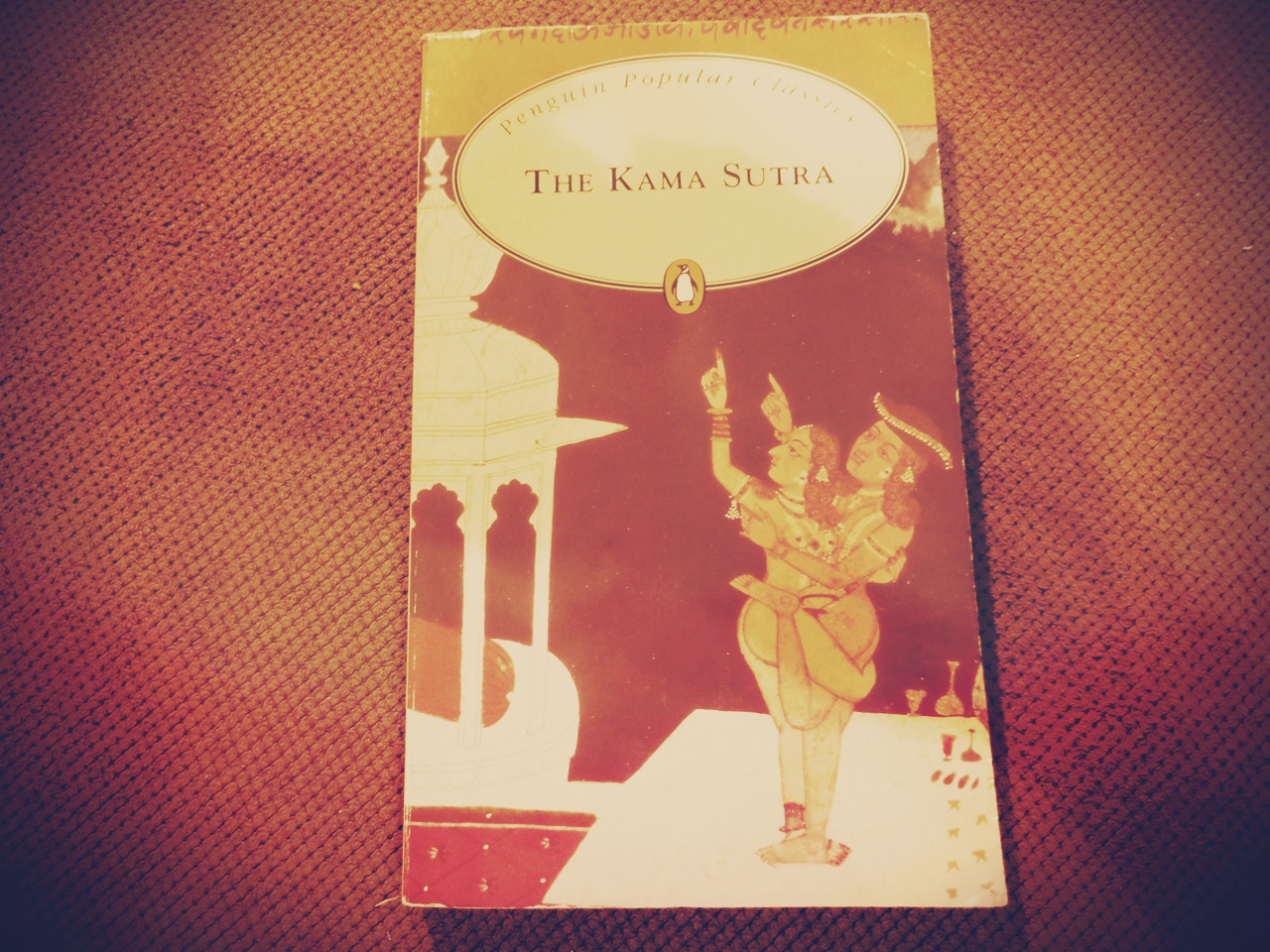
I found a copy of Vatsyayana’s Kama Sutra in Blossoms’ erotica alley and read half of it in one visit. I decided to ask the shop for all of the second hand English copies they have, and they gave me four. I gave each one to my good friends in The Hague: two boys and two girls, all in relationships but only one was long term with plans for marriage. Within a year’s time, all four tied the knot!

When I went back to Blossom in 2012, I again asked for all the second hand copies to give to my good friends in Jakarta. Unfortunately, they only had two. I thought of this friend, the friend whose head is always up in the academia clouds, and his unlucky-in-love history, so I reserved a copy for him. I didn’t have the chance to give it to him upon my return and his Kama Sutra occupied a sliver of my bookshelf until he flew to the land of Michel Foucault, chasing his academia dream and (hopefully) leaving behind his tragic tendencies in romance. I wrote to him and promised to keep his Kama Sutra save until his return, because everyone can always use a little magic when it comes to love.

As for the other copy from 2012, I gave it to Twosocks. You can ask him yourself whether the Kama Sutra of Blossom worked any magic for him. 😉

Image

Jakarta, November 2013

Gypsytoes

P.S: if you’re curious, Project Gutenberg has made the English translation of Kama Sutra by Vatsyayana available in Pdf and e-book formats.

comments 4

Twirling around Japan

Weekends are the time to be adventurous, or, if you are currently under the weather like yours truly, dream about being adventurous. Being an armchair traveler does wonders for letting me forget the aching joints, high temperature, and the tightness in my lungs. In this morning’s armchair travelling, I stumbled across the lady who wears her wedding dress while travelling around the world and the guy who photographs his girlfriend leading him across their many escapades.

Twosocks and I, as perennial budget travelers, only take photos home as souvenirs from our trips, so these are brilliant inspirations for how we can make the pictures more memorable and show more of our personalities. Jump-shots and playing with perspectives are always fun to do, but they are also rather ubiquitous and I quite like the challenge of trying to find new ways to play with making memories from a trip.

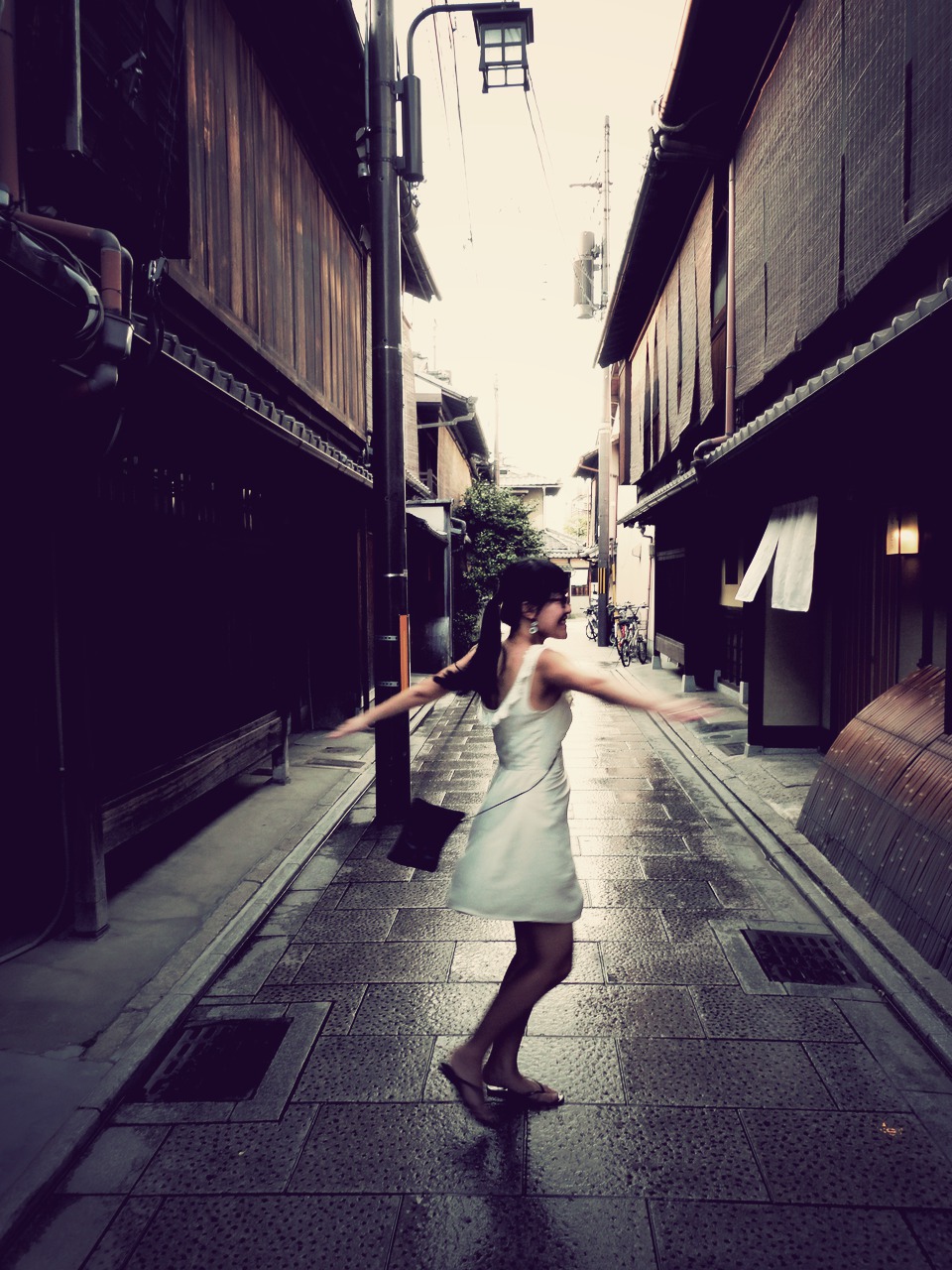
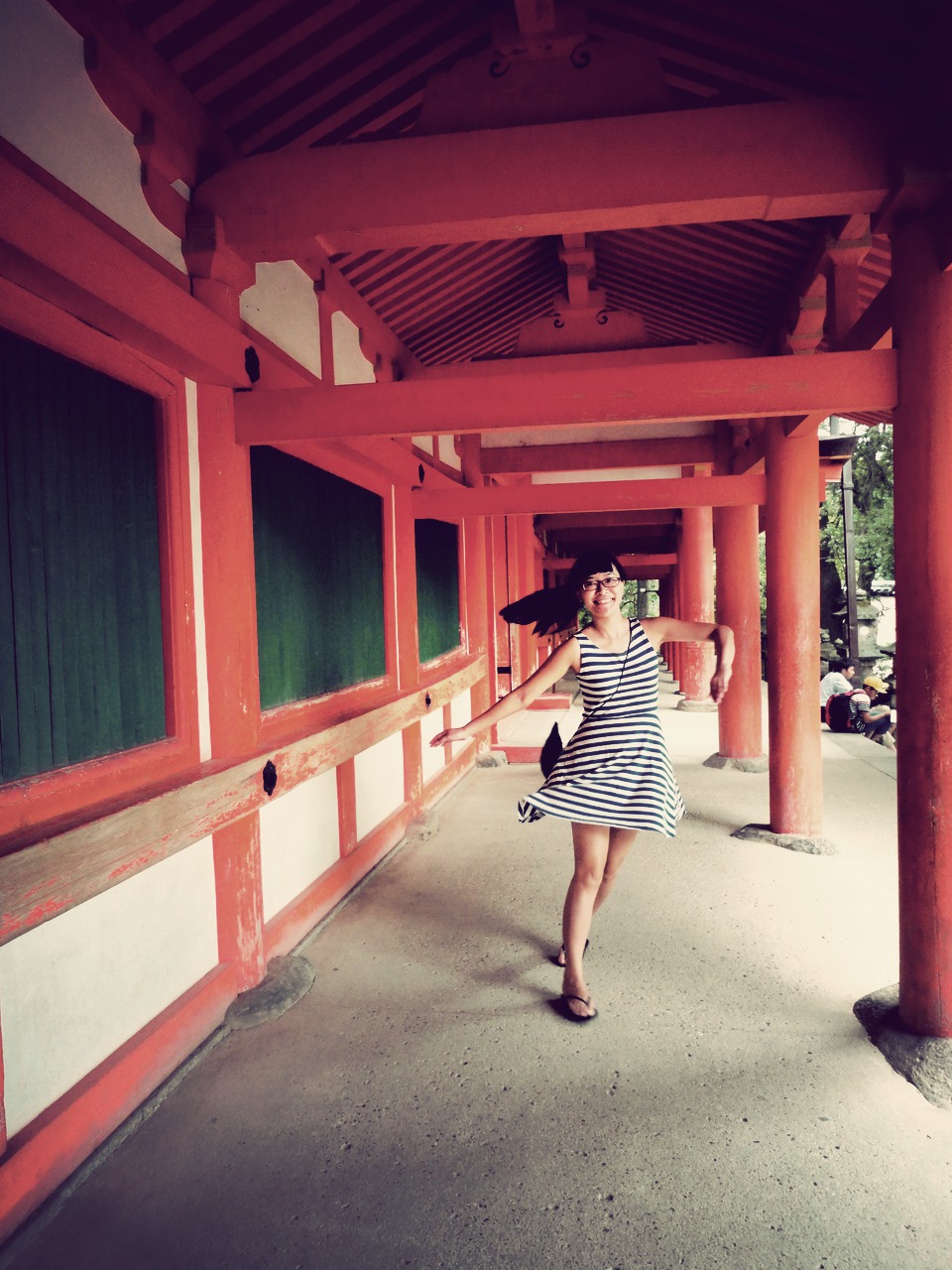
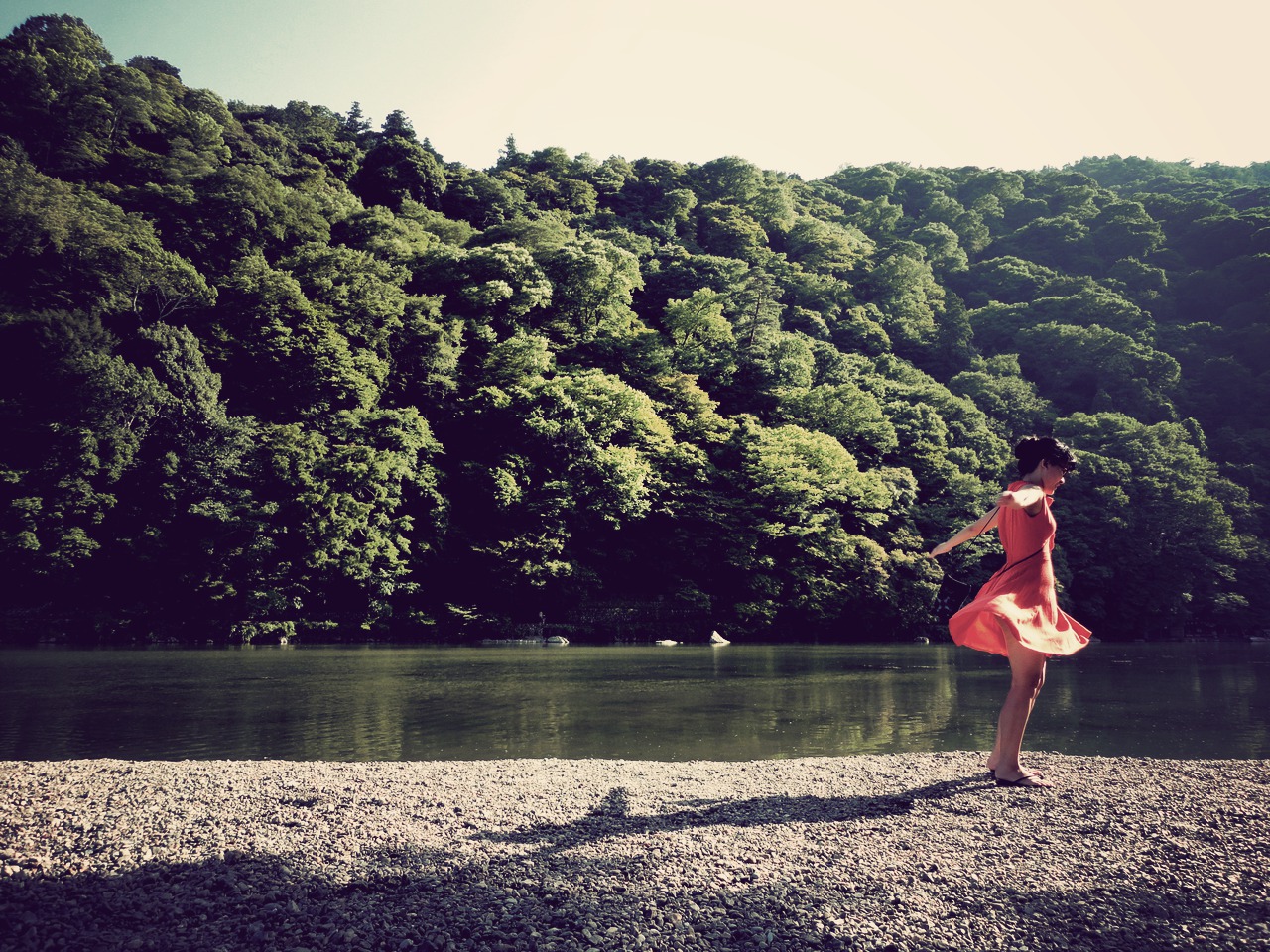
One of our more playful attempts of taking pictures during our recent trip to Japan is to twirl around the places we love. I wore mostly summer dresses during the trip, since they take so little space in our backpacks and Japan’s summers are notoriously humid. I grew up with the Sound of Music, so the image of Liesl’s dress twirling prettily during her “Sixteen Going on Seventeen” dancing duet with Rolf in the green house is firmly imprinted in my brain. I cannot move as gracefully as she did, but at least I can twirl.

I rarely travel overseas during summer, so every time I see the photos of my twirling dresses I remember the sun warming my cheeks, the light breeze on my shoulders, and the beads of perspiration on my forehead along with the most prominent memory of each new place. As a bonus – I got to live my childhood fantasy!

kyoto geisha
At one of the alleys of geisha houses in Gion, Kyoto, where we eavesdropped on maikos plucking the delicate strings of the shamisen.


At Shirakawa-Go, a traditional village deep in a valley on our way to the Japan alps.


At one of the temples in Nara, while one of its free-ranging deers was watching me.


At Arashiyama’s river bank in Kyoto, where Twosocks and I could not find even one cigarette butt among the pebbles.

Have a nice weekend, armchair travelers and adventurers on the road!

Jakarta, 16 November 2013
Gypsytoes

comment 0

Trickery at Jakarta Biennale

The Jakarta Biennale opening night was an event best enjoyed in shorts, slippers, and hair pulled up in a bun. Underground parking lots are a rather unusual place for public gathering, yet it is the center stage of the bi-annual contemporary public art exhibition. Beads of sweat formed on my forehead and slowly trickled down my chin. It was easy to get lost in all the art displays, but for one’s own sake, it was best to stay alert. Most of the crowd moved sluggishly, but there were zig-zaggers with flaming cigarettes between their fingers and cameras poised in the air. There were puddles of water on the ground from one of the performances and the slippery cement floor proved to be rather tricky for those in heels.  One needs to be tactical in maneuvering the atypical art space, just like how one would in the streets or markets of Jakarta.

If the intention of the brains and hearts behind Jakarta Biennale is to convey a microcosm of Jakarta through art, I think they are definitely successful. Although I still may not completely understand what the artists are trying to convey, I think I “get” them because I too live, breathe, and have to use trickery – siasat – to make Jakarta my own. I am quite a literal person and usually find myself completely at loss in deciphering the symbolism of art, but for once, it felt effortless to connect with art and feel that the installations, performances, and paintings speak to me.

Take the ‘Trash Squad’ installation by Wok the Rock, for instance, which showcases videos of and orange vests worn by a punk troop that cleans up after the mess left by people hanging out at 7-Eleven. As a Jakartan who has been guilty of making fun of the convenience shop-turned-hang-out-space and yet enjoyed the affordable, 24 hour place to be with friends and take a stab at being an urban anthropologist, I can relate to the playful attempt to disrupt stereotypes against the punk community in the one hang-out space that can be accessed by people from different social background.

Amenk’s ‘I Need Just More Affection ModjokIndehoj’ mural reminds of Tiza Mafira’s recent Jakarta Globe article on the habit of Jakartans to mix-up English and Bahasa Indonesia in daily conversations. In between drawings of a young family in swimsuits and a hijab wearing woman tilting her head for a kiss, the phrases ‘Broken Hearted Sontoloyo’, ‘United of Manja’, and ‘Come back to me ayang’ sneakily indicate that the mixed language could be really on its way to become Jakarta’s vernacular.

The most attention grabbing piece we saw last night was definitely Melati Suryodarmo’s ‘Sweet Dreams Sweet’ performance, which is responsible for the aforementioned puddles of water. Pairs of intertwined, white-clad performers silently lied on the floor, sat stiffly, dipped their feet into a bucket of blue paint, and walked in slow motion around the area. Eerie. And definitely confusing, at first, but then some form of understanding quickly clicked in upon reading the description of the performance as ‘when diversity is imposed to become uniformity’.

I went with Twosocks and his little brother, and the three of us unanimously voted Saleh Husein’s ‘Arabian Party’ as our favorite. The installation is a gallery wall full of black and white paintings that traced down Arabic influences in Indonesian politics and culture throughout history. Not only that are the paintings captivating, it is also a breath of fresh air in the age of FPI screams and shouts to learn about the commitment of young Arab Indonesian youth way back in 1934 to call Indonesia their homeland.

Above the parking lot, merriment also ensued. DJs were spinning classic Indonesian tunes, queues snaked to grab free, piping hot putu mayang from street carts, the Jakartan governor Jokowi came, and many were waiting in anticipation for OM Iler PMR (Irama Teler Pengantar Minum Racun – how awesome is the name?), a band that I’m not familiar with yet eager to see just because of the name. However, my trickery in maneuvering Jakarta Biennale’s opening has come to its limit. My asthmatic lungs couldn’t take the cigarette huffs and puffs that permeated the air no more, so we retreated from the celebration rather soon.

The Jakarta Biennale festivities, luckily, continues until 30 November 2013. Exhibitions, Saturday night concerts, artist talks, street art tours, community gatherings, and art workshops will spread in Taman Ismail Marzuki, Komunitas Salihara, Cemara 6 Galeri, the Art and Ceramics Museum, and Jakartan streets. I’m looking forward to drop by, with my hair up in a bun and rubber slippers, to enjoy more of the trickery the artists have up their sleeves in engaging with Jakarta, the city of many faces.


Jakarta, 11 November 2013

Gypsytoes


P.S: for more info on Jakarta Biennale 2013, visit jakartabiennale.net or @jakartabiennale on Twitter.