comments 30

Don Antonio Blanco: Beauty and Freedom of an Artist

A thing of beauty is a joy forever, tulis seniman John Keats dalam Endymion, puisi yang dibuatnya tahun 1818.  Kalimat ini tertulis di tembok museum Antonio Blanco di atas bukit di tepi sungai Campuan, Ubud. Memasuki galerinya kita akan melihat bahwa Antonio Blanco, pelukis eksentrik berdarah Catalonia Spanyol itu memang begitu terobsesi akan keindahan, terutama keindahan tubuh perempuan.  Sebagian besar karya lukisnya menampilkan tubuh perempuan bertelanjang dada. Sebagian besar adalah istri sang maestro sendiri, seorang penari Bali yang santun, Ni Ronji.

Di masa awal kejayaan pariwisata Bali, perempuan Bali juga merupakan daya tarik yang kuat bagi datangnya wisatawan. Dalam ‘Bali-a- Breast’, sebuah artikel yang saya baca di museum ini, pada masanya dada perempuan Bali adalah keindahan dalam arti sesungguhnya. Keindahan yang terbentuk dari kebiasaan bekerja keras dan berjalan jauh dengan tangan terangkat memegang panggulan di atas kepala. Konon ini adalah bentuk olah raga yang sempurna untuk menciptakan payudara yang indah. Keindahan jasmani dalam karakter pribadi yang kuat memberi pesona yang luar biasa pada mereka. Seorang dokter asal Jerman yang pertama kali memperhatikan ini kemudian  menampilkan ulasan serta foto-foto perempuan Bali dalam sebuah penerbitan di Eropa. Keindahan ini, bersama dengan alam dan budayanya  yang menakjubkan melambungkan Bali menjadi surga bagi para wisatawan. Dahulu semua perempuan Bali memang tidak menutupi dadanya. Hanya pekerja seks yang menutupinya dengan tujuan memancing rasa ingin tahu dari calon konsumennya. Lukisan-lukisan Antonio Blanco juga menunjukkan penghargaannya yang mendalam terhadap tubuh perempuan. Lukisan-lukisan yang sedemikian indahnya sehingga menarik perhatian orang dari berbagai kalangan mulai dari Soekarno, Mick Jagger, sampai Michael Jackson. Raja Spanyol bahkan begitu terkesan dan memberikan Antonio Blanco gelar ‘Don’.

The Work of the Maestro

Antonio Blanco adalah seorang petualang yang begitu bebas. Telah dijelajahinya berbagai belahan dunia sampai ia membaca tentang pulau Bali di buku ‘The Island of Bali’ karya Covvarobias. Tahun 1952 akhirnya ia sampai di Ubud dan jatuh cinta pada sungai, sawah, dan keteduhan budayanya. Seperti semua pejalan kaki, ia pun berbicara banyak dengan penduduknya. Ia bersahabat dengan Raja Puri Saren Ubud yang kemudian memberinya sebidang tanah untuknya tinggal di dekat sungai Campuan.  Di sanalah ia membangun pondok, melukis, menulis puisi,  dan memberi warta pada dunia tentang indahnya Ubud.  Di sana ia memeluk agama Hindu dan jatuh cinta pada Ni Ronji, seorang penari Bali yang membuatnya semakin mantap untuk menghabiskan sisa hidupnya di pulau nan cantik ini. Bersama Ni Ronji ia memiliki empat orang anak, Tjempaka, Mario, Orchid, dan Mahadevi. Ia menetap di Ubud sampai akhir hayatnya di tahun 1999 yang dilakukan dengan upacara ngaben yang khidmat . Darah seni lukis sang Ayah terwariskan pada putranya, Mario Blanco. Putra yang telah dikelilingi oleh kesenian sejak masa kanak-kanak ini telah mulai melukis sejak umur lima tahun. Berbeda dengan sang Ayah yang kebanyakan melukis perempuan, maka Mario tertarik untuk melukis obyek benda. Perlahan sang anak yang berbakat ini akan berhasil keluar dari bayang-bayang sang ayah dan meraih gelar kemaestroannya sendiri.

One Proud Son, Mario Blanco

Sore itu Ubud sedang agak mendung saat saya mengunjungi The Blanco Renaissance Museum.  Pelataran museumnya sangat  rindang dan sambil berjalan kita akan mendengar lagu-lagu opera klasik sebagai latar. Di pintu museum terdapat sebuah gerbang besar yang sangat unik. Rupanya gerbang ini adalah replika tandatangan dari Antonio Blanco.
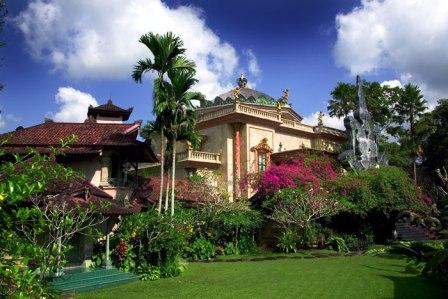
The Blanco Renaissance Museum

Dalam cahaya lampu yang temaram kita akan menikmati barisan lukisan dengan pigura-pigura yang unik hasil desain sang maestro sendiri. Suasana seni sangat kuat terasa di setiap area museum dengan nuansa perpaduan Victorian dan Bali. Dari galerinya kita bisa lanjut mengunjungi studio tempat seniman flamboyan ini bekerja. Disini banyak lukisan-lukisan yang belum dipigura. Dindingnya juga penuh lukisan dan coretan coretan puisi beliau maupun ucapan penyemangat dari sahabat-sahabatnya.

Where works of beauty were created

Di sana saya sempat membaca sedikit buku biografi sang seniman. Terdapat sebuah foto yang menampilkan Antonio Blanco muda sedang belajar menari kebyar. Saya sangat menyukai foto itu, foto yang menampilkan seorang pemuda yang sangat ekspresif dengan keliaran seorang seniman yang begitu terbebaskan. Masih banyak yang bisa dilihat di area museum; perpustakaan, galeri Mario Blanco, amphitheatre, dan sebuah teras dimana terdapat foto-foto keluarga Blanco. Di teras itu mbok Ketut, penjaga museum, menghidangkan minuman dan sambil memandangi taman bercerita-cerita tentang kehidupan keluarga Blanco. Sungguh senja yang sejuk.

Young Antonio

Museum Antonio Blanco memberikan saya nuansa yang berbeda dari museum seni lukis lain. Selain saya sangat menyukai lukisan beliau, terdapat nuansa kreatifitas, petualangan, kebebasan, dan kecintaan pada keluarga serta pada keindahan yang sangat kental.  Saya selalu mengagumi mereka yang kreatif dan terbebaskan. Dan sore itu, saat Ubud agak gerimis, saya menaruh hormat yang dalam kepada sang maestro.


Twosocks, April 2010

Regards to my  travelmates, Tata and Dita, you guys are awesome!

comments 3

Prague: Where Fairy Tales Are Alive

The Tropical Travelers arrived in Prague!

The Mean Girl shook me violently and I abruptly woke up all panicked, thinking that robbers were hijacking the bus we took from Vienna to Prague, the last leg of our winter escapade. Luckily robbers were not the case, the emergency was the stunning view of a completely frozen lake that mirrored perfectly the snow covered barren trees and grounds. Everything was white. And still. This must have what Narnia would look like under the White Witch’s reign. We were so mesmerized that we did not have the time to snap a photo, but I took it as a sign that Prague would be magical.

Prague's Hradcany behind a snowy slope

And indeed it was.

The Vltava River

Hands down, Prague was the most captivating place I’ve ever been to. There was a magnetic aura that attracted us to the point of being hypnotized. It was beautiful, but its beauty was not mild or traditional. It was striking, bold, powerful, even hinting on dangerous, but the kind of danger that would give you a thrill. It was beautiful in the way the devil must be beautiful. Praha, as the Czech calls it, would lure and seduce until you succumb to its spell.

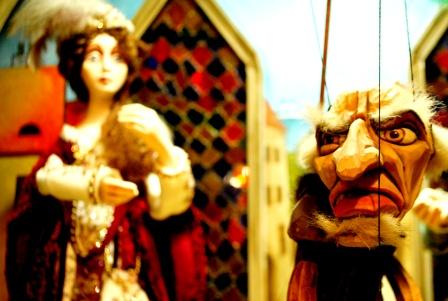
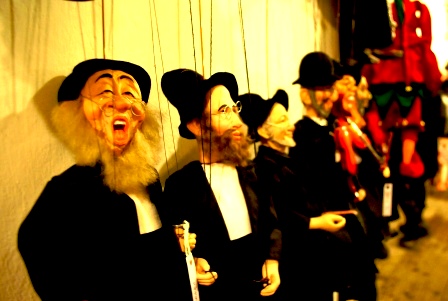
The Pied Pipers of Prague

There was something to see in every Prague’s every nook and cranny. More than that, everything you see comes with a legend. Not fun, light, and feel good fairy tales. Gory, bloody, vicious legends – the proper fairy tale.

Beauty and the Grim

Take the Astronomical Clock at the Old Town Square for instance, one of Prague’s iconic landmark. The clock has been the city’s pride since its construction in the 15th century by the ever talented Master Hanus. The city councilors became so proud of the clock and were so determined to ensure that no other cities in Europe could have any clock that rivals it that they ordered for Master Hanus to be blinded with a hot knife.

Master Magnus lost his eyes for creating this astronomical clock

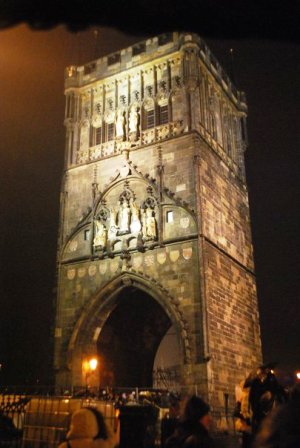
Or the St. Charles’ Bridge, the most popular among all the bridges that connects the Old Town and the Lesser Town. The bridge, adorned with 30 statues of saints and patron saints, have been standing for six centuries – at a heavy price. Centuries ago, when St. John of Nepomuk was thrown from the bridge, one of the arches fell and could not be repaired by anyone or anything – until the devil himself came to one of the builders and offered his aid. At a price, of course: the soul of the first person to cross the fully repaired bridge. The builder thought he could outwit the devil when the time came, so he agreed. But alas, the devil was more cunning. He assumed the shape of a human and told the builder’s wife that her husband had a terrible accident and was waiting for her at the end of the bridge, so she ran with all her might and became the first to cross the repaired bridge. She died the next day, together with the baby in her womb, and the builder was left in remorse although the bridge remained until today.

The restorer of the St. Charles Bridge lost his wife to the devil

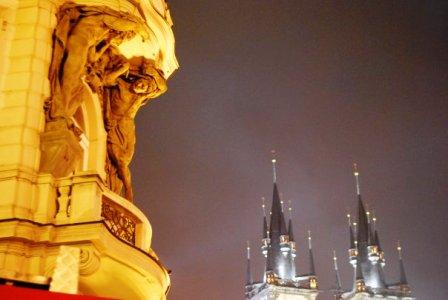
Heads of 27 Bohemian Lords were once hanging here

The church where the Jesus statue in the above photo was carved in also held grave stories. The church in the Old Town was rumored to be where the heads of 27 beheaded Bohemian lords were buried, after being displayed in public for ten years in the bridges across the Vltava river. Legend has it that the lords still roam about Prague on the anniversary of their death, the 21st of June.

Fairy Tale?

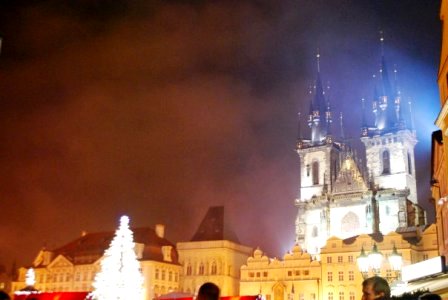
The church tower in the same photo, belonging to the Church of Our Lady before Tyn, is not free of ghosts either. An old wicked rich lady inadvertently killed one of her chambermaids because she knelt down and prayed upon hearing the bells of the church while attending to her employer. The wicked old lady got away because of her wealth, but she still felt haunted by the chambermaid whenever she heard the church bells chime.

One of them created the Golem

The Jewish quarters also held one of Prague’s most famous legend: the one of the Golem. Having endured perils and threats for years, Rabbi Low decided to protect his people once and for all by creating an artificial man out clay. For seven days and seven nights he proceeded with his two most talented pupils, and concluded the process by putting the Shem, a holy parchment with secret symbols, in the golem’s mouth to wake him up. The golem then came alive and became a protector of the quarters. Once a week the Rabbi would take the Shem out of the golem’s mouth to let him rest during Sabbath, but one day he failed to do so because his daughter was very ill. The golem became restless and started running amok, destroying everything in his sight. Fortunately Rabbi Low could stop him before he hurt anyone, but then he decided that the golem was far too dangerous to be left alive and reversed the ceremony until the golem became nothing but a clay figure.

Prototypes of a girl golem and a boy golem

You can wander around the cobbled narrow alleyways of Prague and felt a chill run down your spine, the pull of sinister magic so strong you couldn’t avert your eyes. In Prague, legends of yesteryear and today’s reality overlapped and I felt that for four days I was living both at once. In a city like this, keep your eyes alert. Who knows, perhaps you can spot baba jaga, the Czech with, amidst the crowd.

Baba Jaga in our midst!

Den Haag, 26 March 2010

Gypsytoes – of a surreal trip in January 2010

P.S:  This is the last leg of The Tropical Travelers’ winter escapade, which started with a very, very cold night in Brussels, a short day in Bratislava, and a quest for Sacher torte in Vienna!

comments 5

Next Dusty-Nation: Berlend, Berlain

“What if Justin Timberlake moved to Europe?

He’d probably choose Paris or Berlin”

What if he moved to Europe?

My ears perked up. I was in my room, pondering where to travel for my birthday. My last two birthdays were spent on the road: I sailed on the Musi river and roamed the Kemaro Island in Palembang when I turned 24 and got spooked out by Semarang’s Lawang Sewu as I turned 25. Although this year I am already away from home, I still felt the itch to venture to an unknown place but had no idea where to go for a short weekend trip.

I was leafing through my Lonely Planet when my playlist arrived to Erlend Oye’s live performance of KAKKMADDAFAKKA’s hilarious song ‘What If Justin Timberlake’ and caught my attention. I’ve been to Paris, but what about Berlin? True, Berlin was not in my top ten list, but this was Erlend Oye speaking.

Erlend Oye!

You see, I worship Erlend Oye. The Nordic skinny musical genius, of both Kings of Convenience and The Whitest Boy Alive, had me hooked ever since I watched him air-trumpeting in the absolute best rendition of Bob Marley’s Waiting in Vain. I also found very soon after that listening to their songs while writing essays make me super productive that I have been able to finish an essay in a day. Even as I am writing this I am still amazed of how the Kings’ tunes carried me through 4,000 words of sexual rights as human rights in less than 12 hours! I am not exaggerating, though. The Octopus is actually trying out my Kings of Convenience quantum learning technique.

But I digress.  The song went on to wonder what would happen if JT moved to Bergen, but Norway is too expensive and only The Claw would want to pay a pilgrimage to Oye’s hometown with me (hopefully by the end of the year, fingers crossed for you, Claw!). I then remembered that Oye lived in Berlin for a while, so it was settled then and there. The Mean Girl, being an absolute Germanophilia, shrieked in glee when I told her about my plans and off we went to Berlin for my birthday!

Berlin, Baby!

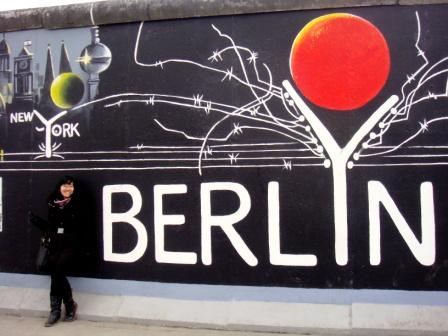
It was a fantastic way to turn 26. We stood with the birds on top of the frozen river in Potsdam’s Sanssouci Park, were flooded by the wisdom and creativity of the largest open air gallery in the world – the East Berlin Wall, and faced the darkest slice of human history in the Sachssenhausen concentration camp; all of which will be retold in due course.

Why due course, you ask? Because I am going to Madrid and Barcelona for a week with The Mean Girl and The Human GPS, starting from tomorrow! The Spain Stories will too make an appearance here, just wait and see.

Viva la Espana!

Until then, let me underline once again, it pays to listen to Erlend Oye. 🙂

Nordic skinny musical genius!

Den Haag, 18 March 2010

A very psyched Gypsytoes

comments 4

Vienna: On the Quest for Sacher!

The tropical travelers left Bratislava with high spirits, ready to be awed by the majestic Vienna and each with his and her own idea. The Octopus loves pop art and would like to see the works of Hundertwasser, Vienna’s quirky architect. The Mean Girl, a Germanophilia, couldn’t wait to have German words caress her ears. The Human GPS wanted to be caressed as well, but by German pork wursts. I think Kittybangbang was looking forward to the palaces. I, on the other hand, had one very specific idea in mind.

The Vienna Vibe

I wanted to taste the original Sacher torte.

Austria is also famous worldwide for its strudel and schnitzel, but only the torte has traceable origins. This chocolate cake was invented in 1832 Vienna by Franz Sacher, the owner of the Sacher hotel and café that are still standing until today. Going to Vienna means that I would be able to taste the original Sacher torte, one of the world’s best chocolate cakes, based on its inventor’s original recipe in its very place of birth.  For a chocolate connoisseur like moi, the only experience that can top this is meeting the Oompa Loompas of Willy Wonka’s chocolate factory – but unfortunately they are fictional characters. I could just imagine savouring a slice of the torte bit by bit, with a cup of marille tea beside my plate and the waltz playing in the background.

A box of Sacher torte

We went to Hotel Sacher on our very first day in Vienna in pursuit of the torte fantasy, but unfortunately December was a very popular month and the café had a waiting list for at least two hours. The only option left was to purchase a cake from the adjacent shop, so my tropical traveler comrades kindly agreed to chip in and we bought a small whole torte to go, which came in a prettily wrapped wooden box. The Human GPS nicely volunteered to carry the cake in his backpack with paper napkins and a silver knife from the kitchen of our gracious host. We only had to find a breathtaking Viennese landmark to be the perfect backdrop for the Sacher experience. The fantasy was growing bigger and better!

Sacher torte purchased!

Unfortunately, it was not that easy to find the right site for the Sacher experience. Not that the places we visited were not brilliant enough, but something always got in the way.

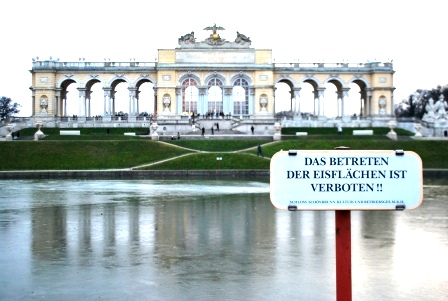
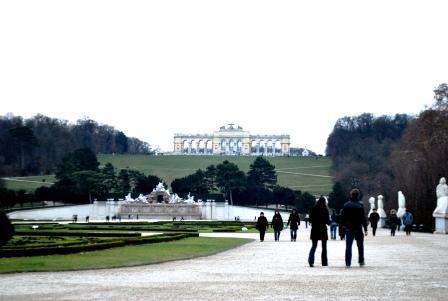
The Schonbrunn Schloss, Vienna’s summer palace, was so majestic even in winter that I no longer feel that impressed by Versailles. The palace had a hill with a zoo, winding mazes, a pond, and a grand version of a gazebo on its backyard! The beauty of Schonbrunn its understated elegance, you could feel that you were standing amongst the blue bloods used to magnificence, There was a frozen pond on top of the hill, which would look great on camera if we devoured the Sacher then and there while looking at the palace and maze below. Alas, the days of winter were short and the sun was setting already. So the Sacher stayed untouched.

Perfect Spot #1: Schonbrunn Hilltop

Or perhaps the Schonbrunn backyard?

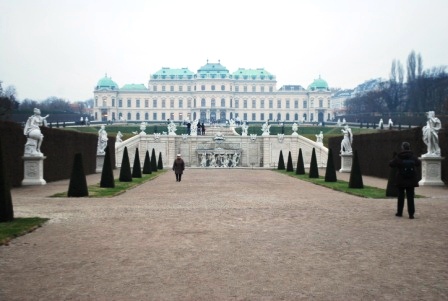
Learning from the Schonbrunn experience, we came earlier to the baroque Belvedere palace the next day. The winter palace was not as awe-inspiring as Schonbrunn, but it did have a lovely garden embellished with homoerotic statues and statuettes that would be more impressive in any other season. We were not that picky though; we were about to unwrap the torte box and settle in one of the benches when we realized that sinister looking crows were perching by the dozens in the barren trees. I loved gothic vibes, but it was not the right mood for indulging in chocolate cake. Again, the Sacher remained intact.

Perfect Spot #2: Belvedere

If only there were no crows!

After being mesmerized by the majestic architectures of Viennese royalty, our next stop was the Hundertwasser Haus, the more contemporary architectural icon of Vienna. The Haus was five stories tall and had yellow, blue, dusty pink, white, and grey paints. The floors looked uneven and it was not a trick for the eye, they were really made uneven. Trees grew outside, inside, and above the Haus, which apparently was really inhabited by real people despite of being whimsical enough to be the Mad Hatter’s house! Hundertwasser was Austria’s most renowned artist and architect and rightfully so, I believe, since his surrealist touch even made the Spittelau’s district heating plant became quirky and looked like Willy Wonka’s chocolate factory. Speaking of chocolate, the Sacher experience was yet to be had, for the popularity of the Haus left no space for us to sit and eat.

Perfect Spot #3: The Hundertwasser Haus

Willy Wonka's chimney?

These delays to the Sacher experience were frustrating for me, but they actually posed a threat for The Human GPS. We were excited to visit the United Nations headquarter and roamed its insides, an opportunity granted by our diplomat host, but when we were about to enter the gates we were reminded of the extensive security procedure we had to go through… and of the knife in the backpack! Imagine, had we forgotten, the Human GPS could have been arrested then and there for carrying a weapon to the U.N.! So we took out the knife and hid it amidst the shrubberies not too far from the gates and only then put on our best tourist face and went in.

Perfect spot #4: Before the flags at the U.N. headquarter

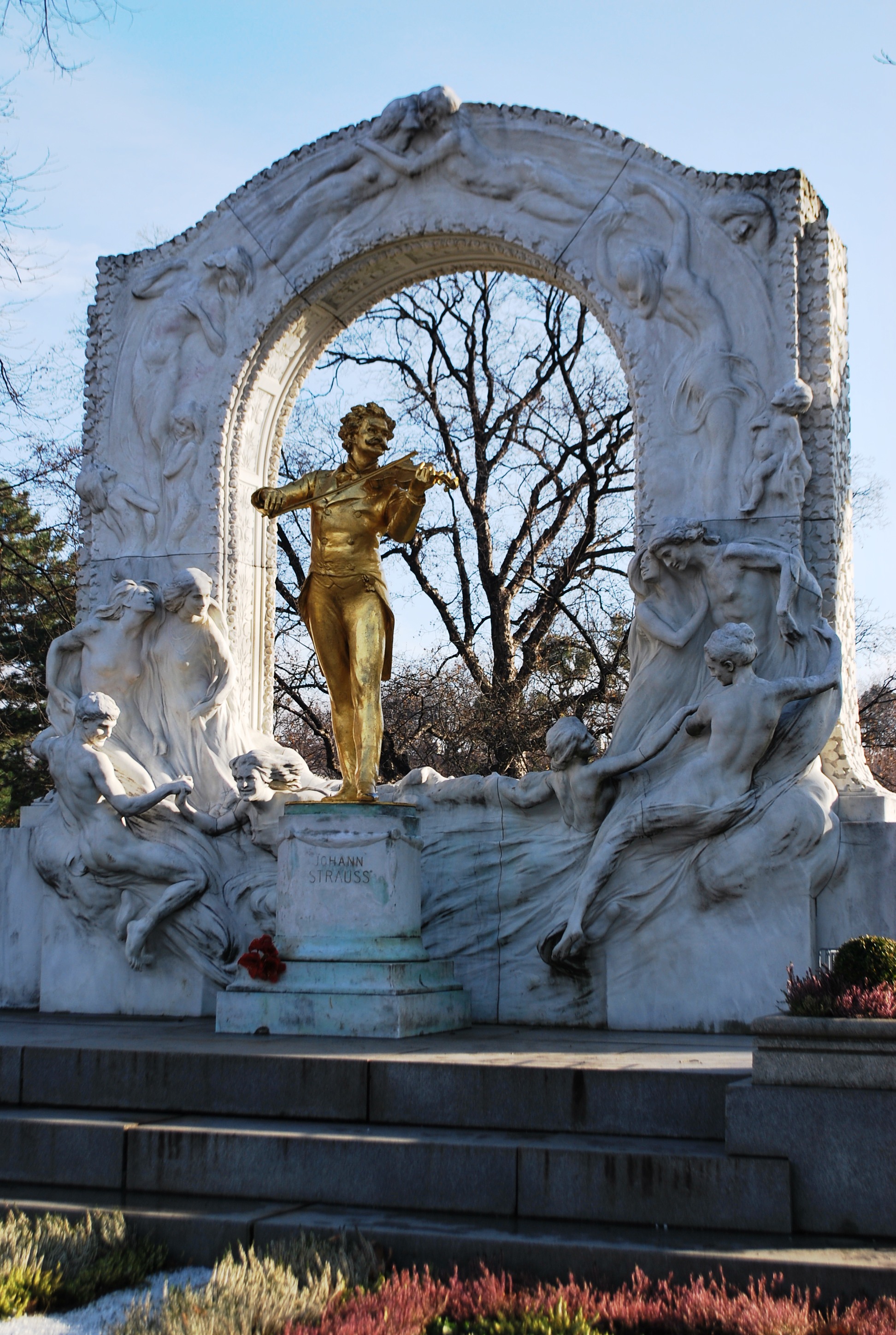
I started to think that we might have to have the Sacher experience in Prague, but our lovely guide the Spittelau Princess came to the rescue and took us to the Vienna Stadtpark to see the Johann Strauss statue. The winter sun was at its brightest when we arrived, creating sparkles in the duck pond and warming our faces. With the grass and the flowers, the gazebo and the sun clock, it almost looked like spring. Finally, the perfect spot.

Perfect Spot #5: The Stadtpark

Let the Sacher experience begin!

Sacher Unwrapped!

We settled on the bench and took off our gloves, bracing the biting wind for this experience. Unwrapping the box was fun, but it was even more fun to find a perfectly smooth, round, dark chocolate torte nestled inside the artistically penned wooden box amidst a paper haystack. The cake was cut into small pieces and we at long last scooped the slice into our mouth!

Finally!

The cake was spongy, with a biscuit base, apricot filling, and gingery dark chocolate coating. It felt wonderful to sink your teeth into it and felt the coating melt in your mouth. Truth be told, it was not the best chocolate cake I’ve had my entire life. The sponge was quite dry and later on I found that the torte is supposed to be accompanied by a dollop of whip cream to moisten it. But still, the gingery taste and apricot filling were exquisite. It may not rank first on my list, but it is among the top ten. And having it under the winter sun, in a park bench with great friends, looking at ducks swimming and next to the statue of a famous composer made the Sacher experience my absolute highlight in Vienna!

The witness to our Sacher moment: Johan Strauss

Den Haag, 14 March 2010

Gypsytoes – of a trip in December 2009


P.S: The last leg of the tropical traveler’s winter adventure is coming soon: Prague!